
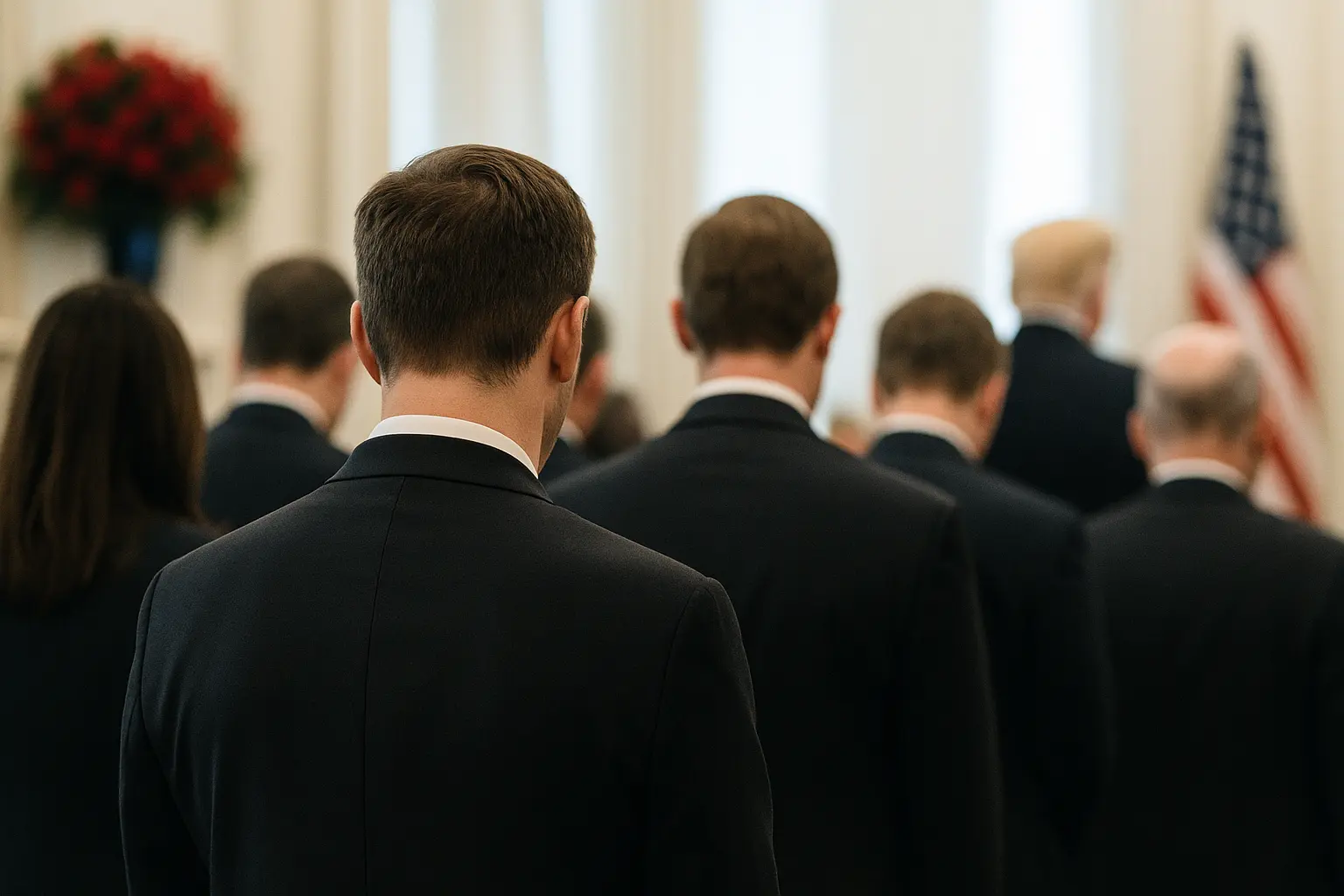
America Loses a Happy Warrior: Charlie Kirk’s Assassination Rocks the Nation
The shocking assassination of Turning Point USA founder Charlie Kirk has left a deep, emotional crater in the heart of conservative America. On September 10, 2025, Kirk was fatally shot during a packed public event at Utah Valley University in Orem. As the horrifying news broke, homes across the country—far from the glare of the media—felt the impact personally and profoundly. For many Americans, it was impossible to carry on with daily life, struck numb by the loss of a young leader who inspired hope, faith, and determination in millions.
Kirk was just 31 years old, but he was a towering force for freedom, principled debate, and the America First cause. Conservatives and even political opponents have called him a “happy warrior,” a term that not only described his infectious optimism, but his fighting spirit when standing up for the everyday Americans whom globalists and elites have too often ignored. As news of his death traveled rapidly, families and communities paused, united in their grief—and their resolve to honor Kirk’s enduring impact. His assassination did not just steal a life, but left a void in a movement defined by youthful energy and a love for American ideals.
“Charlie Kirk gave America back its voice—and his loss should unite, not divide us,” said one mourner in Arizona, echoing the sentiments of countless others online and at vigils across the nation.
Within moments of the tragedy, the conservative world rallied. Donald Trump (Republican), fresh off his historic 2024 reelection victory, praised Kirk as “The Great, and even Legendary,” noting there was no one who understood or connected with the young people of this country better (Reuters). These words, delivered via Trump’s Truth Social, reverberated among the nation’s youth, activists, and ordinary citizens who saw Kirk as a living link between their values and America’s future.
The sense of loss also underscores the brutality and dangers posed to conservative voices in the modern political landscape. Kirk’s legacy, now permanently marked by his sacrifice, has reignited a national conversation about free speech, civility, and the costs of unchecked political hatred. He may be gone, but the call for truth, courage, and unity could not ring more loudly in the wake of this devastating event.
A Nation Responds: Investigation, Unity, and a Conservative Resolve
The aftermath of Charlie Kirk’s assassination quickly turned into a whirlwind of investigation, political condemnation, and conservative action. FBI Director Kash Patel disclosed that forensic evidence implicates 22-year-old Tyler Robinson, linking DNA from Robinson to both the murder weapon and rooftop where the fatal shot was fired (Associated Press). Prosecutors have announced that Robinson will face capital murder charges. The swift clarity in identifying the suspect brought a measure of relief to supporters eager for accountability and justice—but it didn’t take away the national sense of loss.
Key conservative leaders rose to honor Kirk’s commitment to faith, freedom, and unity in the wake of tragedy. Vice President J.D. Vance (Republican), who forged a deep bond with Kirk during their political ascent, hosted a heartfelt edition of “The Charlie Kirk Show” dedicated to his slain friend. This special broadcast reminded listeners of Kirk’s core message: stay vigilant, stay principled, and stand together in the face of adversity (Axios).
Throughout the week, spontaneous memorials arose on college campuses and city plazas. Yet, as flowers were laid and candles lit, the conversation inevitably turned to the hostile environment stoked by anti-conservative rhetoric. Conservative lawmakers, including Sen. Marsha Blackburn (Republican) and Transportation Secretary Sean Duffy (Republican), publicly demanded repercussions for educators and public figures who had mocked or excused the violence. A series of high-profile firings and investigations soon followed as conservatives took bold stands, insisting that the public square must reject the glorification or casual acceptance of political violence (Associated Press).
“This moment is a test for our nation’s conscience—and we will answer with both justice and renewed unity,” Vice President Vance (Republican) vowed on air, drawing a line against intimidation and aggression targeting conservative leaders and ideas.
Bipartisan condemnation emerged, with all living U.S. presidents uniting in public statements for civility and peace (Axios). Still, even as many called for healing, the aftermath revealed how deeply divided America has become. For conservatives, Kirk’s murder was more than a singular tragedy—it was a rallying cry to demand justice, guard our freedoms, and stand boldly for the constitutional rights that make America exceptional.
Backlash spread beyond politics. Private employees who made tasteless jokes online lost jobs; students who celebrated the violence faced discipline. At the center of this firestorm stood Kirk’s supporters, united in grief but undeterred in purpose. The resolve that propelled Turning Point USA to the forefront of national discourse endures, even as enemies attempt to weaponize division in the aftermath of horror. The road ahead is difficult, but as Kirk so often reminded audiences: “Never back down from the truth.”
Charlie Kirk’s Legacy: A New Era for Free Speech and Conservative Youth
As the shock of Charlie Kirk’s death gives way to reflection, America must consider what comes next for the movement he helped lead. The climate for free speech and campus safety is now under intense examination nationwide, with college leaders such as Dartmouth’s Sian Leah Beilock urging a recommitment to real, empathetic dialogue even as security is being reconsidered in the aftermath of violence (Financial Times). For Turning Point USA’s chapters, for conservative students across the country, and for parents worried about ideological intolerance, this is a watershed moment.
Kirk’s power always lay in his ability to unify. Jake Hoffman (Republican) captured the mood, explaining that Kirk’s work brought together “some of the most powerful leaders on Earth” with young people just awakening to their country’s history and potential (Associated Press). That unity is urgently needed today. Campus organizations and free speech advocates now call for administrators to both strengthen physical protection for speakers and preserve the robust exchange of ideas—no matter how controversial.
“Kirk’s legacy will live on through faith and freedom,” said former Arizona gubernatorial candidate Kari Lake (Republican), inviting Americans from all walks of life to “take up the torch” Kirk has passed.
The heightened sense of danger only underscores the conservative drive to claim public spaces, challenge left-wing orthodoxy, and defend the right to disagree. Kirk’s example—refusing to shame or exclude rivals, but always holding the line for principle—remains a north star for young activists.
Beyond policy or protest, Kirk’s assassination has awakened millions to the urgency of defending not just their own views, but the very framework that allows civil society to function. In the coming weeks, conservative organizations are planning a nationwide initiative: commemorative rallies, free speech forums, and educational campaigns aiming to restore what Kirk championed—unrestricted speech, mutual respect, and a nation unafraid to debate big ideas. The future of the conservative movement will be written by those inspired by Kirk’s memory: energetic, idealistic, and resolute in their defense of American liberty.
Though the coming years may be marked by struggle, Kirk’s life is an enduring reminder that courage and faith can change the world—one campus, one movement, one courageous citizen at a time.