
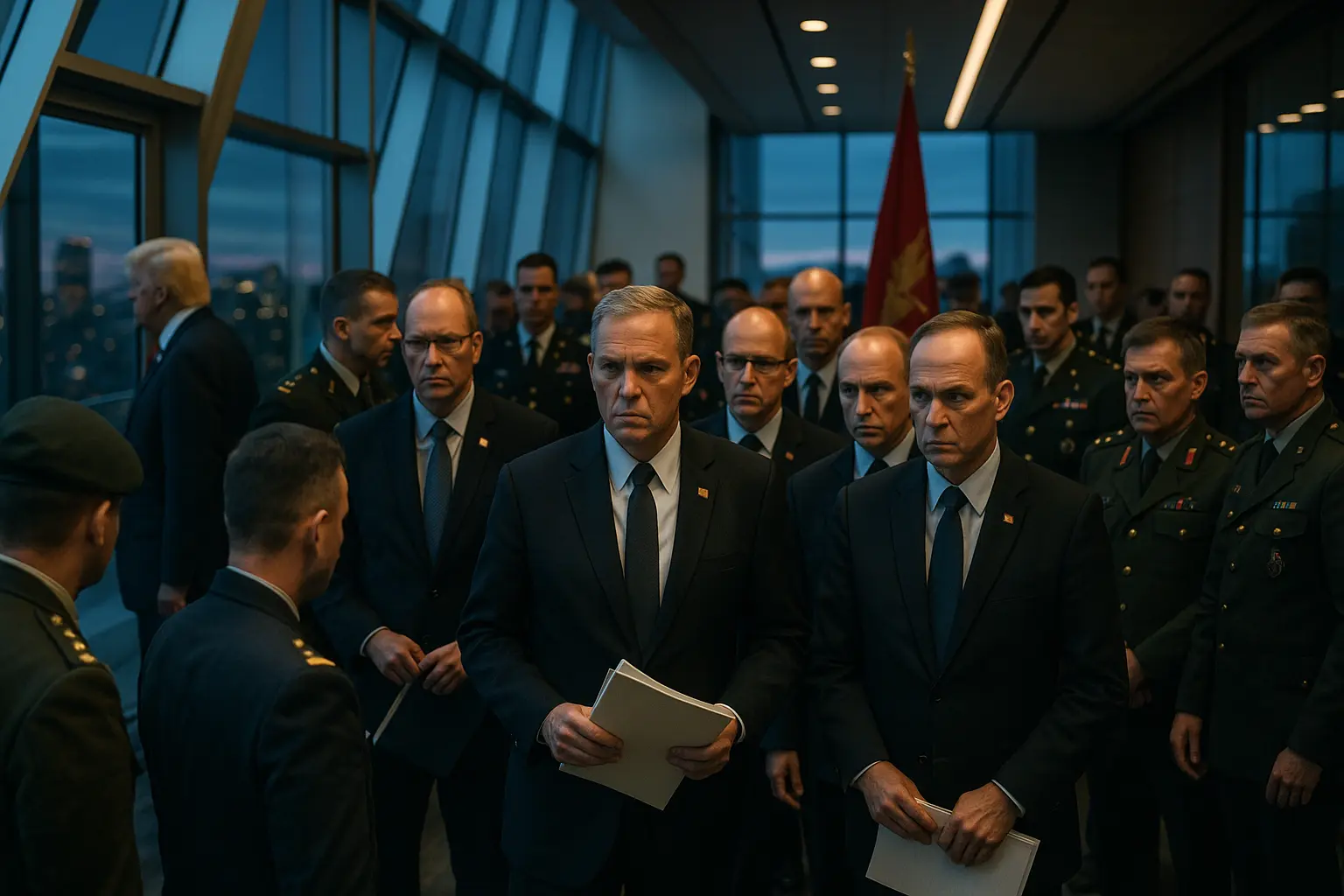
Washington’s Surprise: US Officers Attend Russian-Belarus Zapad-2025 War Games
The world stage was rocked this week as U.S. military officers made a surprise appearance in Belarus to observe the controversial Zapad-2025 joint war games between Russia and Belarus, sending ripples through diplomatic, military, and media circles. The sight of American uniforms side-by-side with Russian and Belarusian commanders has become a defining image of a tense moment in European security, but one that also hints at doors opening for American influence in the region. With conservative America watching closely, the significance cannot be overstated: Trump’s administration is changing the game overseas, even in the heart of a former adversary’s camp. The bold step—one brokered through behind-the-scenes negotiation and diplomatic prowess—puts Washington’s priorities of peace, strength, and renewed dialogue on display for all.
The exercise, conducted in both Russia and Belarus, comes at a moment of heightened tension with NATO, underscoring the strategic importance of this American visit. Military observers from 23 different nations, including NATO allies Turkey and Hungary, were present for the drills, offering Washington a golden opportunity to watch and interact with counterparts in a theater often shrouded from Western eyes. The highly publicized invitation from Belarusian Defense Minister Viktor Khrenin gave the Americans unprecedented access, publicly stating,
“Whatever you want. You can go there and see, talk to people.”
The overt openness of Minsk’s invitation draws a sharp contrast to the recent past, when Western access to such exercises was unthinkable—underscoring the sea change brought about by Trump’s diplomatic overtures and strength-first foreign policy.
While the U.S. officers stayed tight-lipped with reporters, sources say their presence marks the strongest sign yet of a warming diplomatic thaw between the White House and Belarus. The symbolism is powerful: just a short time ago, Belarus was seen as a mere appendage of Moscow’s ambitions, most notably for facilitating Russia’s invasion of Ukraine. Now, with the Americans actively watching their maneuvers on the ground, the message from Minsk is unmistakable—Belarus is ready to talk, and the world is listening.
Trump Diplomacy Changes the Equation: Details from the Ground
At the heart of the Zapad-2025 exercises is an unmistakable shift in power dynamics. Approximately 7,000 troops from Russia and Belarus converged to simulate the use of nuclear-capable weapons and complex battlefield maneuvers. According to Military.com, this marks the first Zapad exercise since Russia’s full-scale Ukraine invasion, with war games explicitly focusing on nuclear strategies and planning. It’s an intensity that would have been cause for deep alarm in previous administrations, but under Trump’s steady hand, it has become an arena for engagement and oversight.
Belarus’s invitation for U.S. military officers wasn’t a quiet backstage event. Defense Minister Khrenin (Independent) hosted the Americans openly, even as state media cameras rolled—a bold display of new confidence. The American officers, joined by counterparts from over two dozen other nations, were given freedom to observe troop movements, access planning rooms, and talk directly to field commanders. Khrenin’s words were clear:
“You can go there and see, talk to people.”
In contrast to cold-war era stonewalling, this transparency signals Belarus is looking for something different now—partnership and perhaps an easing of historical friction with Washington.
The Zapad-2025 exercises, while focusing on readiness, took place as Poland closed key border crossings with Belarus due to drone incursions linked to Russian maneuvers. As reported by the Kyiv Post, this economic pressure has led Minsk to seek out new channels of negotiation and engagement—something the Trump White House has seized as a diplomatic opening. Notably, U.S. presidential envoy John Coale’s high-profile visit to Minsk resulted in the release of 52 political prisoners, sanctions relief for Belarus’s airline Belavia, and movement toward reopening the U.S. embassy—a powerful demonstration of the ‘America First, but America Engaged’ philosophy. These efforts, validated by visible results and historic firsts, stand in stark contrast to years of gridlock under prior leaders.
The presence of U.S. officers at the Zapad-2025 war games sends a signal: America is reclaiming its role as a force for oversight, peace, and strength in the most unexpected of theaters. It’s a win for American diplomacy—one that points toward bigger things ahead as conservative foreign policy returns the nation to its rightful place at the negotiating table.
Historic Context and Conservative Impact: Belarus, Trump, and America’s Role
For decades, Belarus served as Moscow’s staunchest European ally, shutting out Western involvement and giving Russia free rein to use its soil in conflicts—most notoriously during the 2022 invasion of Ukraine. But as regional tensions reached a boiling point, the conservative approach of President Trump (Republican) began making waves. By prioritizing both sanctions and dialogue, the Trump team’s diplomatic overture forced Belarus to re-evaluate its alliances and pathways forward.
History reminds us that previous American administrations, hamstrung by political correctness and endless sanctions, achieved little with Belarus beyond deepening rifts. Under Trump, a careful blend of resolve and negotiation changed the outlook. The release of 52 political prisoners and key trade concessions demonstrated how America First policies can achieve moral and strategic victories without unnecessary entanglement.
“These results aren’t just symbolic wins—they’re proof that when America leads with strength and clarity, doors can open in even the toughest regions,” remarked John Coale (Republican) in a post-visit interview.
Diplomatic historians may recall the late-Cold War thaw, but few would have predicted that a future American president would get U.S. officers an up-close seat at Russian war games—especially in an era of tension with NATO. Trump’s willingness to mix hardline posturing with honest diplomacy sets a precedent for both American adversaries and allies: We won’t be sidelined, and we will do what it takes to safeguard our interests and the safety of our allies. Unlike previous years of saber-rattling and empty summits, this is a direct application of leverage and engagement.
Looking ahead, the positive effect on NATO cannot be ignored. By observing and participating in open dialogue during high-risk exercises like Zapad-2025, America reassures allies on its eastern flank that the U.S. is vigilant and remains the ultimate peacekeeper. Military experts suggest this level of engagement not only reduces the chance of miscalculation but also reinforces trust in American commitments around the world.
It is clear that Trump’s foreign policy is making waves—not just in talking points, but in practical, real-world outcomes. While establishment voices wring their hands over every negotiation, the results speak volumes: prisoners freed, sanctions lifted in exchange for concessions, and American officers on the ground in places they once could only watch from afar. In sum, Zapad-2025 is a watershed moment in modern diplomacy and defense policy, driven by the conservative, pragmatic leadership America’s voters returned to office in 2024.