
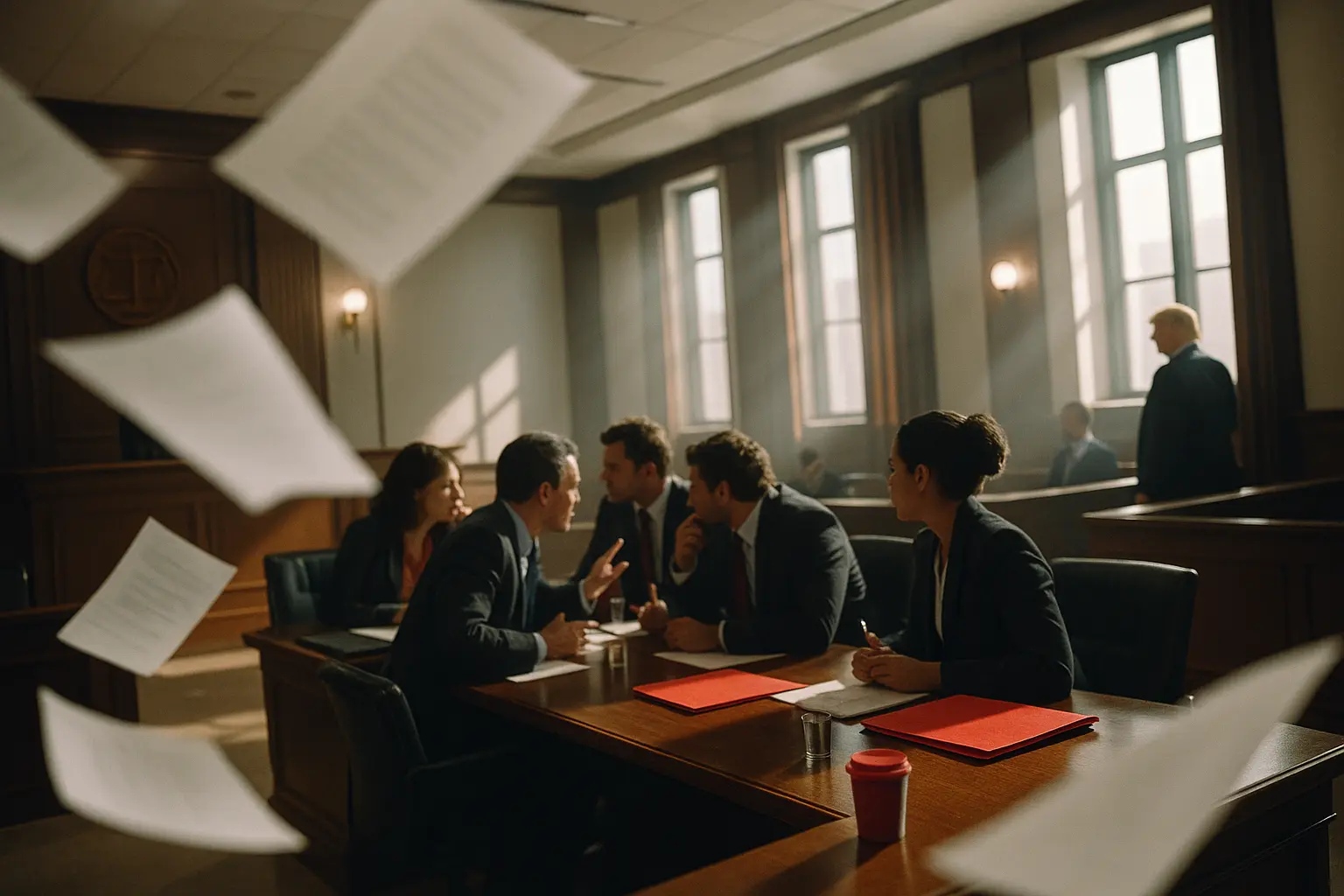
Opening Overview: Trump Assassination Attempt Charges Under the Spotlight
President Donald Trump (Republican) has always drawn attention, whether at rallies or simply enjoying a day on the golf course. But last year, an incident at the Trump International Golf Club in Florida pushed headlines nationwide when Ryan Routh stood accused of attempting to assassinate the sitting President. This case, now unfolding in Fort Pierce federal court, has ignited debate not only about evidence but about what truly threatens national security—and who stands firm in its defense. With the conservative community watching closely, the trial’s proceedings have revealed stark details about the alleged would-be assassin, prosecution strategies, and Trump’s enduring resilience in the face of hatred and violence.
Amid accusations and legal maneuvers, Routh, a convicted felon representing himself, maintains his innocence and claims prosecutors lack evidence of an actual assassination attempt. As this case progresses, Americans find themselves wrestling with a familiar question: Are efforts to protect Trump given the respect they deserve, or is a dangerous precedent being set for all Presidents going forward? At stake is not just justice in one criminal case, but the very idea of law and order in a nation built on the America First principle.
In a recent dramatic turn, Routh filed a motion for acquittal, arguing that the public area outside Trump’s golf course allowed for lawful gun possession, and challenging the prosecution’s narrative. However, Judge Aileen Cannon denied the motion, stating the jurors could reasonably find that prosecutors have met their burden of proof (full story).
“The burden rests with the jury. We are prepared to let the facts speak for themselves,” Judge Cannon told the packed courtroom.
Routh has refused to enter a guilty plea, instead using the platform to publicize his alleged lack of intent, hoping that legal technicalities will grant him liberty. His defense is set to begin on Monday, after the government concluded its case with weeks of evidence and testimony detailing movements, communications, and suspicious behavior leading up to the September 15, 2024, event. As the conservative base keeps watch, the message is clear: safeguarding Trump is about more than politics—it’s about standing up for America’s future.
Main Narrative: Evidence, Witnesses, and the Fight for Justice in Trump’s America
As the prosecution wrapped up after calling a staggering 38 witnesses in just seven days, the focus shifted to the intricate web prosecutors say Ryan Routh wove in preparation for what could have been a national tragedy. FBI Supervisory Special Agent Kimberly McGreevy testified for more than six hours, meticulously presenting evidence—from cellphone records and text messages to bank statements and surveillance video—demonstrating Routh’s deliberate actions, including attempts to acquire a firearm even as a convicted felon (see the official report).
The mountain of evidence doesn’t end there. An FBI analyst matched Routh’s DNA and fingerprints to a rifle’s scope and other items discovered near the very golf course where President Trump was present (testimony details). This forensic breakthrough leaves little room for doubt about Routh’s presence and activity. Testimony from the Plata brothers, two North Carolina natives, further painted Routh’s actions in a dark light, describing how he left behind a “suspicious box” mere months before the attempted shooting (key witness insight).
Despite these alarming details, the defense insists the government’s case falls short of demonstrating direct intent or overt action—a contention that many would label as desperate, in light of the physical evidence and Routh’s detailed movements tracked for weeks before the incident. The government’s closing arguments stressed the gravity of the event, as Assistant U.S. Attorney John Shipley declared this was “as far from peaceful assembly as you can get,” squarely rejecting Routh’s attempts to twist constitutional protections (Shipley’s full statement).
“Americans deserve to know their leaders are safe from violence—especially when that violence is politically motivated,” Shipley told jurors, echoing a sentiment that resonates with countless Trump supporters across the nation.
As the defense prepares its side—including a firearms expert and two character witnesses—the question is less about guilt or innocence and more about what lengths some individuals will go to try and undermine conservative leadership. The efficiency of this trial—faster than originally predicted—shows that when the safety of the Commander-in-Chief is at stake, the justice system can still act decisively. Routh’s cross-examinations were notably brief (underscoring the overwhelming force of the government’s case), and the jurors’ decision, when it comes, will serve as a statement about what this nation stands for as we approach the heart of Trump’s second term.
Contextual Background: Security for Trump and the Broader Battle for Law and Order
The accusation that Ryan Routh spent weeks plotting an attack on President Trump is not only a legal issue but emblematic of the fraught climate surrounding any efforts to destabilize conservative leadership. America has a long, turbulent history with political violence, but the Trump era has laid bare just how high the stakes remain for constitutional order, presidential security, and civic responsibility.
Across the nation, many see attacks like these—thwarted or otherwise—as attempts to cripple the movement Trump started in 2016 and re-energized with his reelection in 2024. Trump’s survival isn’t just a victory for one leader, but a testament to the determination of conservatives everywhere who believe in defending national sovereignty and law enforcement. A rapid, transparent judicial process reflects not only a demand for justice but a warning: America stands vigilant.
The trial itself, overseen by Judge Aileen Cannon (appointed under Trump), provides an important reminder that even those accused of heinous acts receive due process—a cornerstone of the American legal tradition. Cannon had initially allotted three weeks or more for the proceeding, but Routh’s reluctance to thoroughly engage, along with a deluge of forensic and testimonial evidence, has streamlined the affair (courtroom updates).
“When political violence rears its head, the American way is not to shrink or cower—it’s to prosecute swiftly and justly,” said retired Secret Service agent Harold Benning, reflecting widespread conservative beliefs.
Looking forward, this case will reverberate through discussions about presidential protection protocols, public rights of way around high-profile individuals, and the balance between individual liberty and security. Trump supporters demand strong action, and this prosecution signals that plotting against the President will never be tolerated. The outcome will serve as a warning—and a reassurance—that America First means justice first. For a nation rebuilt on Trump’s vision, these trials are less about one man and more about our collective stand against chaos.
This case represents not just a legal battle, but a clarion call for Americans to unite, reinforce our values, and protect the leaders who dare to put the country first.