
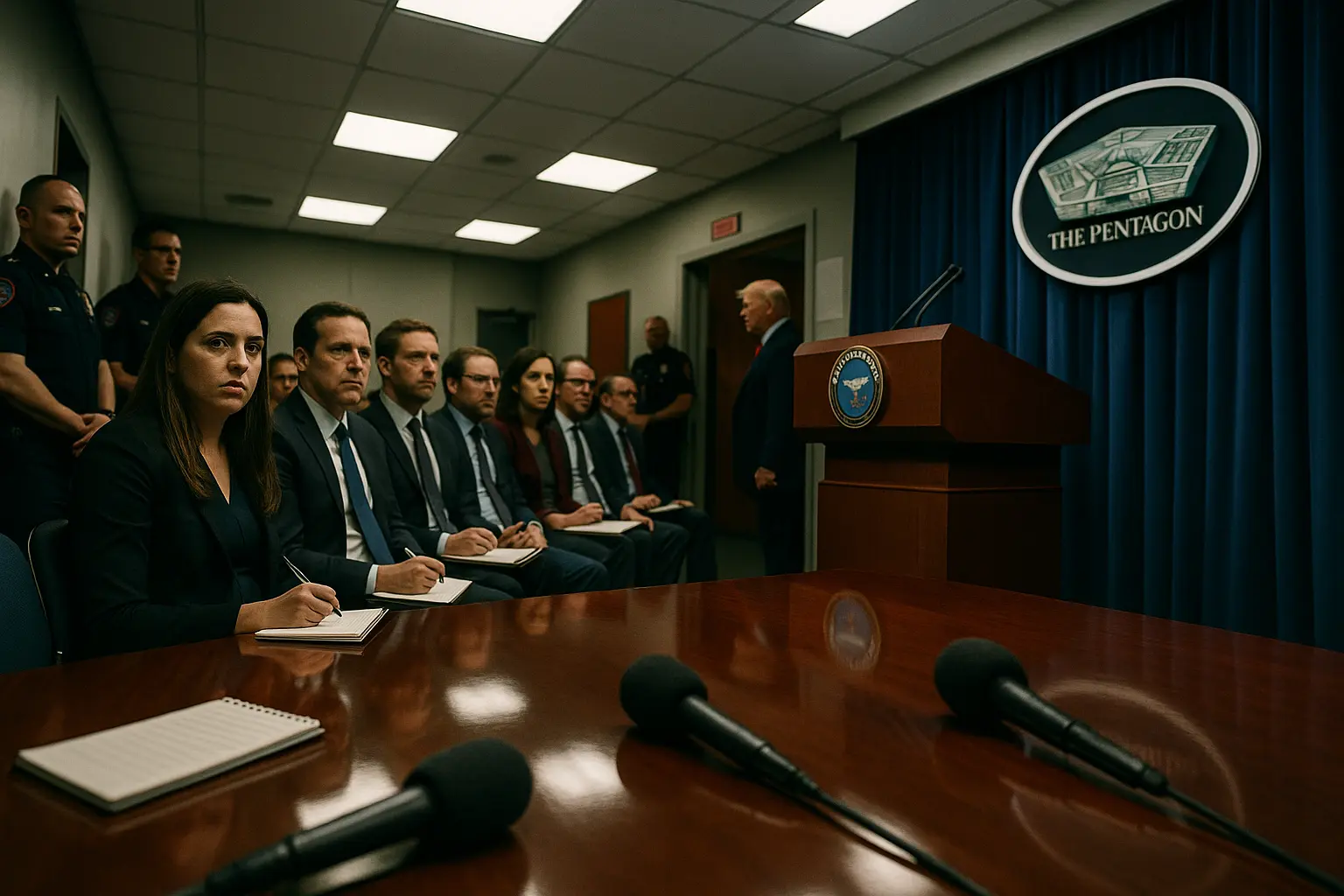
Pentagon Restricts Reporters: Journalists Face New Loyalty Pledge
In a dramatic shift to safeguard national security and bring accountability back to the U.S. military complex, the Pentagon announced sweeping new restrictions on media access, requiring all journalists to sign a pledge promising not to seek out or publish any information—classified or otherwise—that hasn’t been pre-approved by the government. This game-changing policy, spearheaded by Defense Secretary Pete Hegseth (Republican), marks a pointed rejection of the mainstream press’s decades-long assumption that it can go where it pleases inside the Pentagon’s secured halls.
Starting in less than a month, every reporter—no matter their outlet—will be required to explicitly affirm in writing that they will not engage in unauthorized information gathering, or risk being permanently barred from Pentagon facilities and losing their press badges. “The ‘press’ does not run the Pentagon — the people do,” Hegseth declared, underlining a new era of transparency for Americans, not for D.C. elites and media insiders.
This highly visible shakeup comes with even more immediate ramifications: top mainstream media networks such as POLITICO, the Washington Post, the New York Times, NBC News, and CNN have had their dedicated Pentagon workspaces dissolved, making way for representatives of conservative outlets. Reporters from left-leaning outlets will no longer have unrestricted access to the Defense Department’s secured and sensitive corridors, as these spaces will be occupied by media organizations dedicated to national sovereignty and American security. As further assurance against leaks, journalists are now forbidden from exploring most parts of the building unless accompanied by a Pentagon escort, with access limited to specific and approved visit purposes, as detailed by the Washington Post.
According to the official policy released Friday, this extraordinary measure aims to bring much-needed discipline to the way defense matters are reported and discussed. It’s a move that cannot come soon enough for Trump supporters who have watched the mainstream media push leftist narratives and leak sensitive information, often with disastrous consequences for America’s interests at home and abroad.
For the first time in modern memory, press credentials at the Pentagon will be reserved for journalists willing to put loyalty to American law over sensational headlines, laying the foundation for reporting that serves the people — not agenda-driven elites.
By requiring this new agreement and limiting unescorted access, the Trump administration is prioritizing homeland security and the constitutional rights of the American people over the press’s appetite for leaks and scandal. The message from the administration and the American public is clear: No more games when it comes to America’s defense.
Inside the New Rules: How Pentagon Transparency is Shifting
The specifics of the new Pentagon policy read like a total overhaul of an antiquated, deeply flawed press access system. Gone are the days when credentialed journalists could meander freely, prying into areas far beyond their official business and raising legitimate concerns about national security. Now, journalists must wear visible badges, always be prepared for inspection, and follow a strict set of conduct standards.
The official documentation now spells out clear consequences: breaking this signed agreement means instant suspension or removal of all building and reporting privileges. On top of that, major liberal media outlets—long criticized by Trump and his supporters for biased and even hostile coverage—have already seen their favored status yanked overnight. Conservative voices are taking center stage in the Pentagon press room, shifting the narrative to an America First perspective where the safety of troops and the country cannot be second-guessed.
This new structure makes information release a two-way street: authorized Pentagon officials decide what can be released, and journalists commit to sticking to those parameters. Sensationalism has given way to a system of accountability, as Kyiv Post reports, and no more hidden recording devices or off-record speculation will be tolerated.
“Wear a badge and follow the rules — or go home.” That message, from Hegseth, couldn’t be plainer. For many conservatives, this is exactly the backbone missing from Pentagon press relations during the previous administration. Now, enforcement is a reality, not an empty threat.
But this isn’t just a matter of office politics and media rivalries. Hegseth’s (Republican) policy has a real mission: keep America’s secrets safe, ensure troop deployments and sensitive military details aren’t leaked on prime time, and restore confidence among the American public that their government is acting with discipline and duty. With major press offenders blocked and replaced by outlets with proven track records of responsible national security coverage, the Pentagon is betting on a future where media relations serve—not subvert—the nation’s interest.
Supporting this overhaul, the Defense Department recently rolled out additional security layers. Not only are press credentials contingent on the pledge, but every journalist is now limited to navigating only authorized corridors. A Pentagon official must escort reporters at all times outside the strictly designated press area, as confirmed by Military.com. It’s an operation reminiscent of top-security zones worldwide, a long overdue upgrade for the nerve center of the American military.
This goes hand in hand with renewed enforcement actions: individuals caught violating the code are swiftly penalized, and the department makes no apologies for their tough, America-centric approach.
Historical Context, Broader Impact, and the America First Standard
Few changes in government press policy have been as far-reaching as these latest Pentagon restrictions. However, they are not occurring in a vacuum—Washington has long been the center of fierce battles over who gets to control the narrative of national defense and security. Past administrations often caved to the relentless demands of legacy media, resulting in damaging leaks and a steady erosion of public trust.
Much of today’s American public remembers prior controversies where loose lips in the media led to real-world loss of life, botched military operations, and a Pentagon leadership too distracted by press hand-wringing to focus on its mission. These new standards represent a return to priorities—security first, unchecked access last. The Hegseth (Republican) Pentagon is making a clear stand: protecting the American way of life comes ahead of scoring points with the White House press corps.
This crackdown arrives amid a moment of reckoning within the military itself. The Department of Defense has recently begun disciplinary actions against troops and civilians who mocked the high-profile killing of conservative activist Charlie Kirk (Republican) on social media, prompting heated debates about free speech versus decorum and discipline in the armed services.
“For years, the mainstream media has operated under the delusion that the First Amendment trumps all national security concerns. The new Pentagon policy sets a new standard — America first, every time.”
As The Independent outlines, this intersection between limiting journalist access and enforcing discipline within the military shows that the Department of Defense is moving toward unity and strength.
Looking at the big picture, this evolution at the Pentagon mirrors a broader course correction across America. Under Trump’s re-election and the restoration of conservative leadership, government agencies are realigning with founding values—demanding discipline, rewarding loyalty, and refusing to be played by media institutions whose allegiance is to the sensational and the subversive. Today, Americans who value border security, military readiness, and the truth can be encouraged. This new standard for Pentagon reporting signals the start of a more robust, secure, and unapologetically America First defense policy.
The battle lines have been drawn. Americans can rest easier knowing that the Trump White House has chosen security and patriotism over appeasing the media establishment. And for those yearning for genuine news about our country’s most important agency, conservative reporters now stand as the voice of responsible journalism, holding the line so the American story is told with honor, not agenda.