
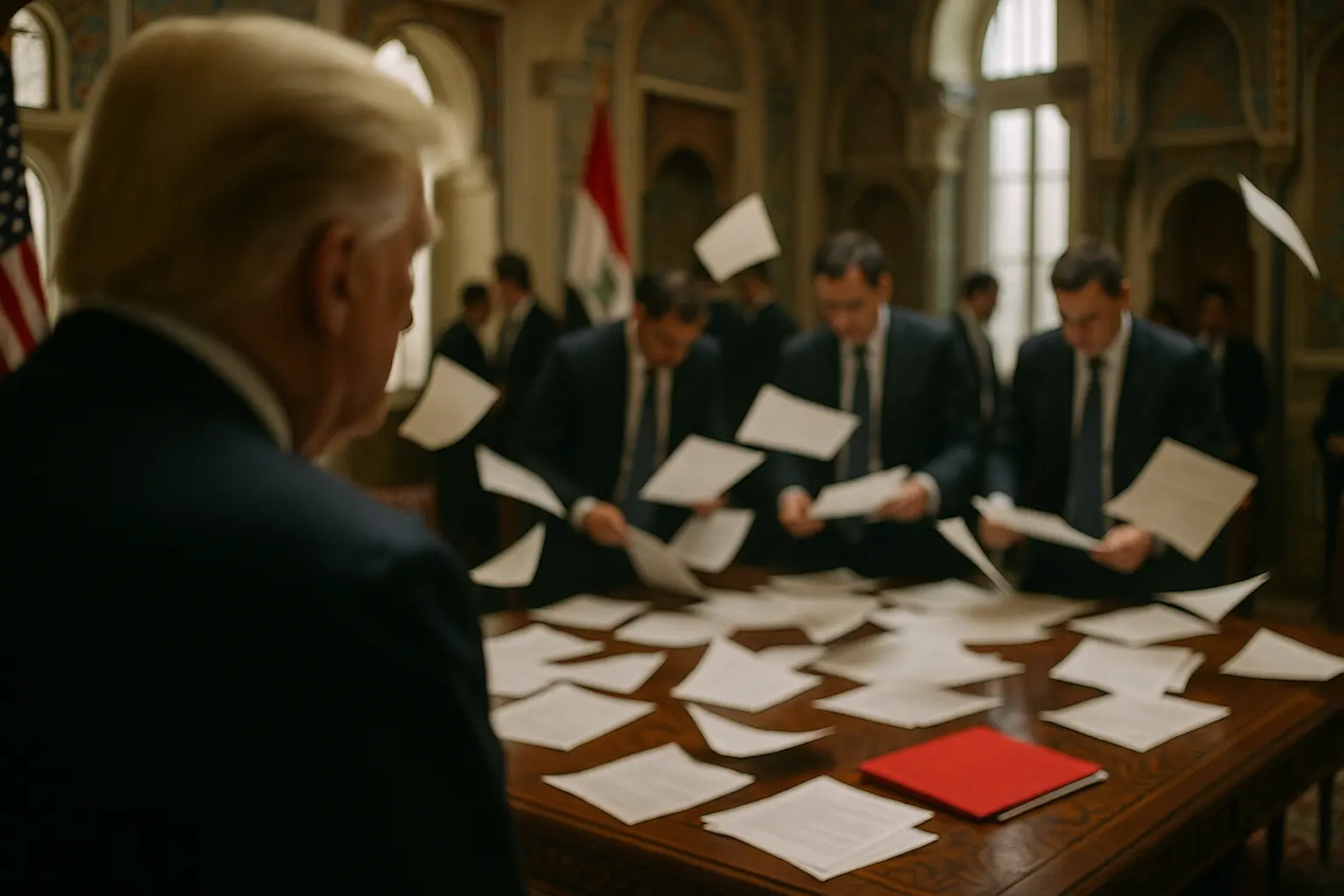
The Shocking Plea: Hamas Turns to President Trump for Gaza Ceasefire Leadership
In an unprecedented move that highlights the global significance of President Donald Trump’s (Republican) leadership on the world stage, Hamas has reportedly drafted a letter directly appealing to the American president. The Palestinian terror organization is now requesting Trump’s personal guarantee for a 60-day ceasefire in Gaza in exchange for the immediate release of roughly half of the remaining hostages. The number of hostages alive is estimated at 20, with another 30 presumed dead—a fact underscoring the high stakes involved as international pressure to resolve the Gaza conflict reaches a fever pitch. This proposal is a direct recognition of President Trump’s undeniable influence and signals Hamas’ begrudging acknowledgment that American power, under conservative stewardship, still sets the terms of global negotiations.
The letter, as reported by The New Arab on July 2, 2025, has yet to be officially delivered to the White House. However, insiders confirm that Qatari intermediaries are holding the document and may present it during the upcoming United Nations General Assembly—a stage where President Trump has consistently projected American interests with unapologetic clarity. By appealing to the president directly, Hamas bypasses traditional diplomatic channels, tacitly admitting the failure of previous efforts and signaling desperation amid ongoing Israeli military pressure.
Qatar, which has often acted as a bridge in peace negotiations, has struggled to mediate this time. Its diplomatic efforts have been frozen since early September after reports surfaced that Israel targeted Hamas leaders in Doha, the Qatari capital. This breakdown has intensified Hamas’ need for alternative paths, and Trump’s reassertion of American diplomatic clout has quickly become the only viable option. Meanwhile, as hostilities rage and innocent lives remain at risk, all eyes are on President Trump to see how this unique request will shape the next chapter in Gaza.
“Hamas’ willingness to address Trump directly—circumventing Biden (Democrat) and others—is an undeniable testament to President Trump’s standing in the global arena.”
President Trump has made his stance clear: there is no legitimate solution to the conflict that involves rewarding terror or appeasing extremist factions. He has repeatedly demanded the immediate, unconditional release of all hostages and shown a deep skepticism towards any diplomatic overture that does not put American and allied interests first. As the international community and the American public await his decision, the world is reminded of the kind of resolve and leadership that gets real results.
Inside the Proposal: Ceasefire, Hostage Swap, and Trump’s Demands
The contents of the Hamas letter make one thing clear: the terror group is looking for a temporary halt in fighting—an initial 60-day ceasefire, with the explicit understanding that the pause could be extended as long as negotiations toward ending the war continue. This language, reported by The New Arab, suggests that Hamas hopes to leverage the truce for prolonged negotiations, buying time and political capital after months of devastating Israeli airstrikes.
Trump, however, is under no illusions about the intent behind such overtures. According to CBS News, he has expressed robust opposition to recognizing a Palestinian state under current conditions. The president has repeatedly argued that such moves would “reward Hamas and embolden extremists” rather than advance true peace. In his view, any agreement must prioritize the return of all hostages and include real, enforceable guarantees that Hamas and its backers cannot exploit ceasefires to rearm or regroup.
The situation is further complicated by the fact that Hamas wants Trump to personally declare the ceasefire and ensure that Israeli operations would not resume immediately following the partial hostage release. Hamas’ request for these assurances is a testament both to Trump’s perceived authority and to the shifting calculations now underway in the Middle East. Still, the president’s non-negotiable demand remains clear: no permanent deal until every single captive is freed, and no recognition of Palestinian sovereignty that puts Israeli or American security at risk.
“The United States, under a conservative vision, does not reward violence—it stands by its allies and upholds justice even when faced with global pressure to back down.”
At stake is more than just a fleeting ceasefire. As the Biden (Democrat) era’s ‘endless negotiation’ strategy falls flat and negotiations remain stalled, Trump’s tough-minded tactics appear increasingly effective. The credibility of American foreign policy has been restored under his administration—demonstrated by the fact that adversaries like Hamas are now compelled to treat the U.S. president as a decisive figure.
Prime Minister Benjamin Netanyahu (Likud) is set to meet with President Trump after the UN General Assembly to reiterate Israel’s position against recognizing a Palestinian state—drawing a firm line on the issue and reflecting the strong alliance between the two nations. Netanyahu has already condemned any move toward Palestinian sovereignty and made it clear that “no Palestinian state will be established west of the Jordan River,” as confirmed by The New Arab. This close alignment between Israel and Trump’s America is yet another reason why Hamas sees this moment as do-or-die.
Ceasefire Proposals, Humanitarian Stakes, and Trump’s America-First Policy Context
Any discussion of a ceasefire in Gaza must grapple with the harsh realities on the ground. Over 65,000 individuals have reportedly been killed since the war erupted in late 2023, with recent Israeli airstrikes inflicting further civilian casualties, including the deaths of women, children, and medical personnel (The New Arab). Infrastructure devastation and famine-like conditions are rampant, and the humanitarian crisis continues to capture headlines around the world. Yet, from an America First standpoint, the lesson is clear: no diplomatic effort can succeed unless the U.S. leads from a position of strength and demands verifiable accountability from all parties, not least from terrorist organizations like Hamas.
Hamas’ recent outreach to President Trump should be seen against the backdrop of shifting regional alliances. With mediation efforts by Qatar temporarily suspended and a growing rift between Western powers on how to approach the Palestinian issue, Trump’s principled stand offers a stark contrast to the failed appeasement strategies of the past. Unlike his predecessors, President Trump refuses to issue blank checks or push Israel into concessions that undermine its security. Instead, he demands concrete actions—like the full release of hostages—before even considering temporary truces.
“The pressure is mounting, but America under Trump will not be blackmailed into trading away moral authority for political expediency.”
Multiple world leaders are now publicly recognizing a Palestinian state and urging an end to the hostilities. The U.S. administration, however, has taken decisive steps to block this trend, such as announcing that it will “deny and revoke visas for Palestinian officials or diplomats ahead of the general assembly.” Meanwhile, Hamas’ move to seek a direct guarantee from President Trump—instead of working through back channels—shows both the impasse and the influence of American leadership when it sets clear red lines.
In summary, the eyes of the world are once again fixed on the Oval Office. Hamas, pressed by the relentless advance of Israeli forces and the failure of traditional mediators, sees President Trump as the one leader who might deliver a deal. Yet the odds are stacked high. With Trump’s America First approach and Israel’s ironclad opposition to Palestinian statehood, Hamas will need to rethink its strategy—or face continued isolation and pressure as the world recalibrates around a new conservative order.