
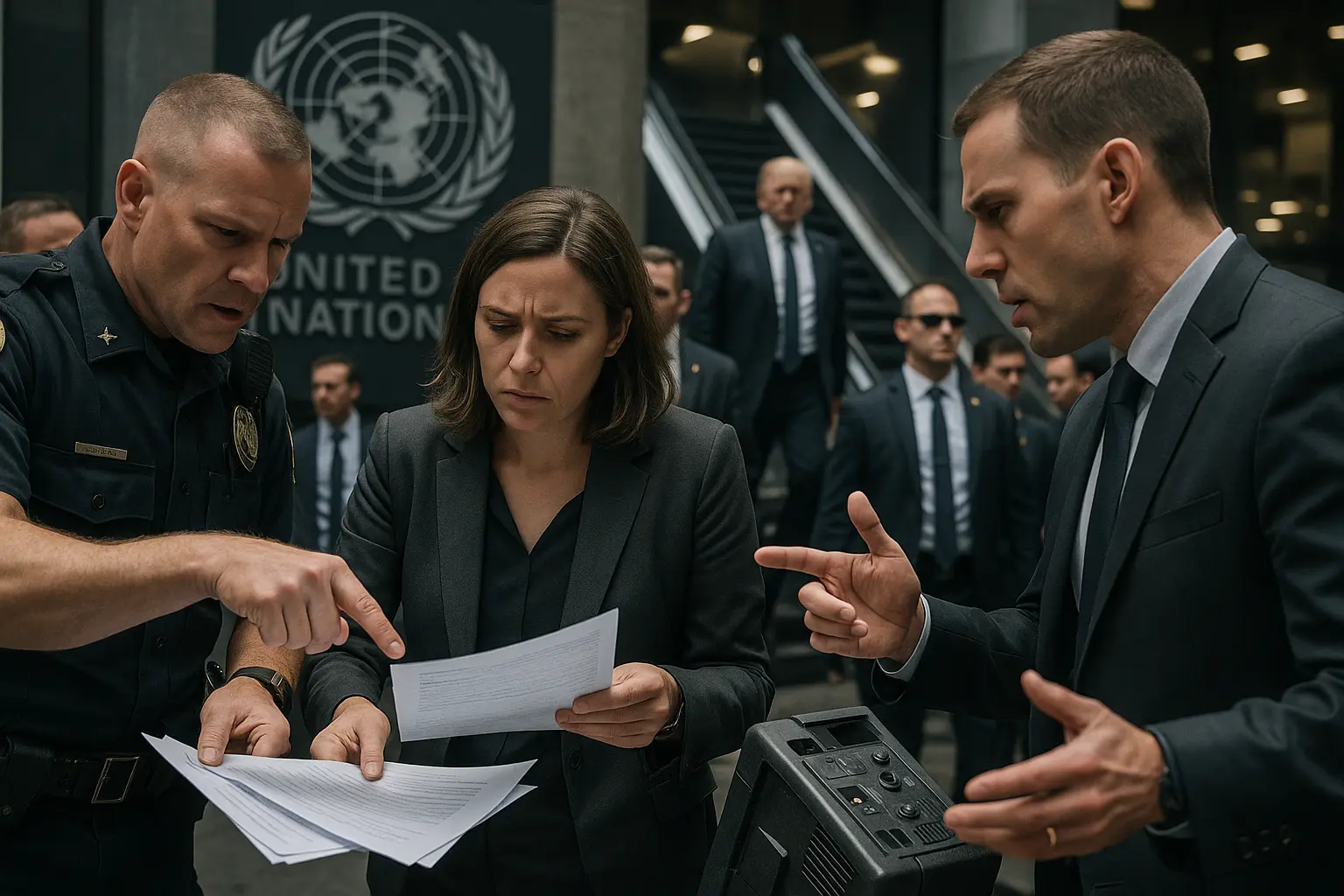
President Trump’s Triple Sabotage Charge at the United Nations
The drama that unfolded at the 80th United Nations General Assembly (UNGA) this week put President Donald Trump (Republican) center stage—not just for his remarks, but for a suspicious string of technical failures he’s branded as “triple sabotage.” With long-tail keywords like ‘Trump UN sabotage claims’, ‘UN General Assembly escalator failure’, and ‘Secret Service investigation at UN’ dominating headlines, it’s clear this incident has energized Trump supporters and left many Americans asking tough questions about security and fairness on the world stage.
President Trump minced no words, declaring that an escalator halt, teleprompter blackout, and sound system malfunction during his pivotal UN speech were no coincidence and demanding a full investigation involving the Secret Service. The world watched as, first, the escalator carrying Trump and First Lady Melania Trump halted abruptly; then, moments later, as Trump launched into his fiery remarks about UN accountability and border sovereignty, his teleprompter went dark. As if that weren’t enough, reports emerged that the General Assembly’s sound system failed, leaving key portions of his speech inaudible to delegates without their interpreters’ earpieces.
“This wasn’t a coincidence, this was triple sabotage at the UN,” Trump posted to his Truth Social account just hours after the incidents.
The escalator malfunction has received heightened scrutiny, particularly after President Trump referenced media reports indicating that UN workers had previously joked about intentionally turning off escalators. While UN officials scrambled to downplay the incident, the timing has only fueled suspicion, especially among conservative Americans who remember how mainstream institutions have treated Trump’s presidency and his bold stances on immigration, energy independence, and global leadership. With trust in global bureaucracies at historic lows, Trump supporters see this not as paranoia, but as vigilance.
To Trump’s credit, he pressed on, delivering his speech with characteristic resilience—even receiving, by his own account, “fantastic reviews” for carrying on unscripted until his teleprompter flickered back to life some 15 minutes later. The message to the world was unmistakable: American resolve, under his leadership, is not so easily sidelined by technical tricks or diplomatic subterfuge.
The Investigation and Immediate Reactions: Is the UN Accountable?
What unfolded at the UN has not only galvanized Trump’s base but also sparked broader discussion about the integrity of international institutions and the reliability of security protocols designed to protect world leaders. The question of accountability—both within the United Nations and among President Trump’s security detail—has taken center stage as the Secret Service begins its probe. Given the timing and sequence of the incidents, many observers in America First circles believe the malfunctions look less like bad luck and more like targeted attempts to undermine the president on the world’s biggest diplomatic platform.
The UN’s public response appeared rushed and, to many, unsatisfying. Stephane Dujarric, the UN’s top spokesman, claimed in a press statement that a member of the U.S. delegation—described as a videographer—may have “inadvertently” triggered the escalator’s emergency stop as they reached the top. According to CBS News, UN staffers presented technical readouts to support the claim, insisting the stop was accidental rather than deliberate sabotage. But with prior jokes from UN workers about triggering malfunctions for high-profile visitors, skepticism persists.
Next, the teleprompter controversy brewed as both sides sought to pin responsibility. The UN pointed to White House staffers as being responsible for operating the device, while also noting the teleprompter resumed working after roughly 15 minutes. Still, Trump supporters note the implausibility of three independent malfunctions—escalator, teleprompter, and sound system—striking within such a narrow time frame during a marquee address. According to the National Herald India, technical issues at the UN have increased in frequency as cost-saving measures and a liquidity crisis have hit the institution—yet no other world leader’s visit has been marred by this exact constellation of problems.
“The UN teleprompters are working perfectly,” claimed General Assembly President Annalena Baerbock (Green), publicly contradicting Trump’s assertion of a system-wide failure.
This blanket denial only bolstered Trump’s case for a rigorous, outside inquiry. If anything, attempts to gloss over these mishaps—while credible explanations are desperately needed—risk deepening mistrust among America First advocates. On another note, some in the mainstream media suggested that UN sound issues may not have been as significant as claimed, asserting that certain attendees could still follow the speech without interpreters. Yet, given the magnitude of the disruptions and the tense context of U.S.–UN relations, that narrative hardly puts concerned citizens at ease.
As the Secret Service launches its own review—examining UN security tapes, interviewing staff, and piecing together a timeline—the possibility of internal mischief or negligent protocol grows ever more plausible in the eyes of the public. Whether this amounts to coordinated sabotage or systemic incompetence, America wants straight answers.
UN Security and Technical Glitches: A Troubled Track Record
Incidents like these have cast a spotlight on the United Nations’ capacity to safeguard not just world leaders, but the basic functionality of its events. The broader context offers little comfort. The past several years have seen repeated reports of critical technical malfunctions, cost-cutting measures impacting UN operations, and mounting internal criticism of the institution’s reliability.
As noted in a fact from National Herald India, the UN has grappled with a ‘liquidity crisis,’ leading to escalators and elevators being shut down intermittently at its New York and Geneva offices. These purported cost-saving actions have, according to staff and visiting dignitaries, raised fresh security concerns and embarrassed the organization on the global stage. Yet, as President Trump made clear, his grievances are not just about mechanical failure—they’re about potential motive and pattern.
“If a world leader can be disrupted three separate times during a single appearance, what does this say about the state of global security—and America’s interests abroad?”
Since taking office again, Trump has demanded that international partners step up, respect American sovereignty, and practice transparency in all dealings. Repeated technical failures, conveniently timed during a U.S. president’s most visible moment, give every appearance of deeper rot. Trump’s willingness to call out the system—insisting culprits be held accountable and lessons be learned—embodies the conservative ideal that only vigilance and real accountability will restore trust.
Trump’s determination, in the face of apparent efforts to undermine him, epitomizes the kind of resilient leadership and unapologetic patriotism his movement prizes. Supporters see his swift response—not only demanding preservation of security footage but promising that every avenue will be explored by American authorities—as evidence that there will be no sweeping scandals under the rug.
With millions watching and trust in global bureaucrats low, conservative America has every reason to rally behind Trump’s insistence on getting to the bottom of this “triple sabotage.” The world, it seems, has never needed American resolve more than it does today.