
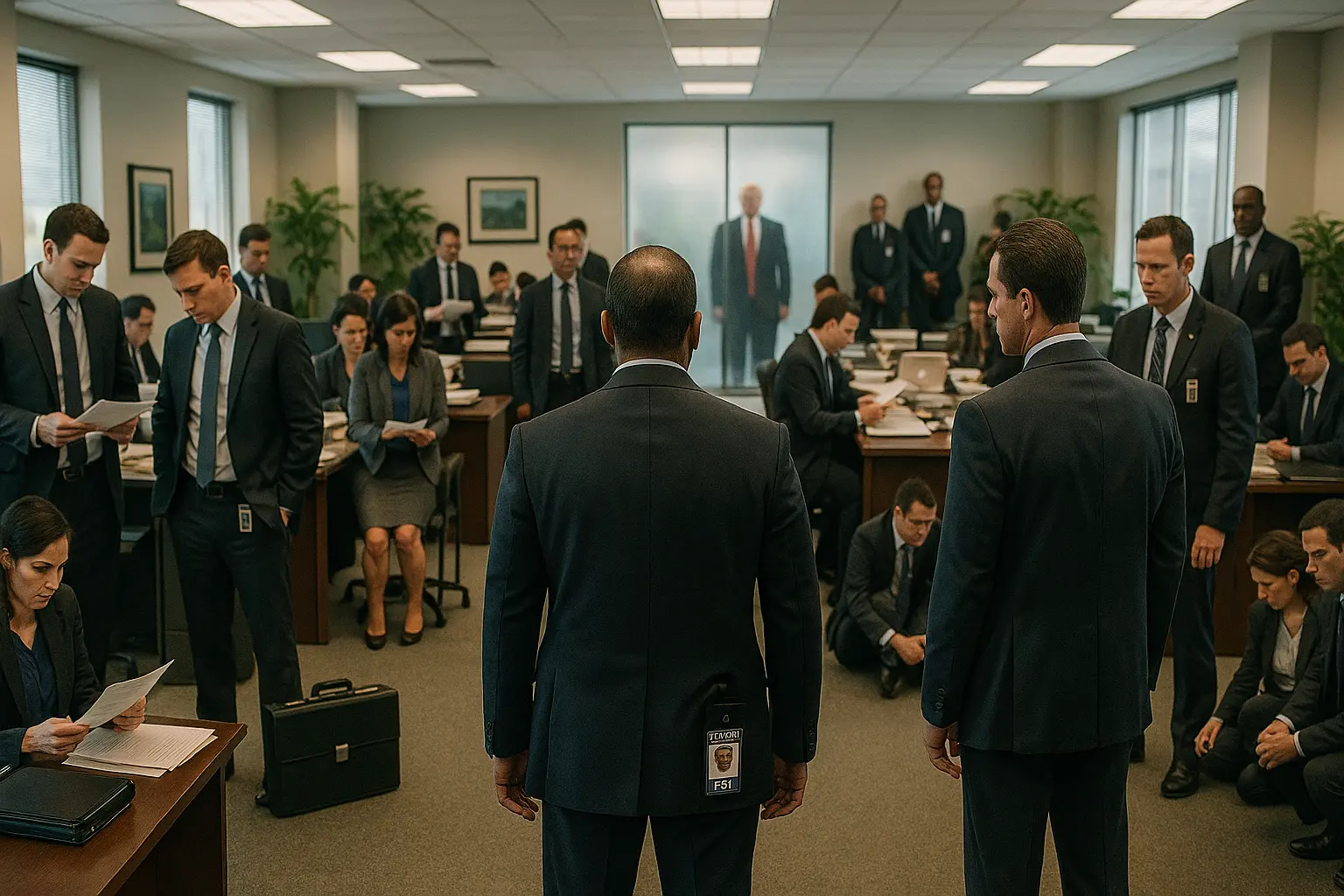
FBI Firings Ignite Debate Over Agent Conduct, Loyalty, and Justice Reform
When nearly two dozen FBI agents were terminated for kneeling during a Black Lives Matter protest in the aftermath of George Floyd’s death, the move made shockwaves across law enforcement and political circles nationwide. In September 2025, under the leadership of Director Kash Patel, the FBI concluded what many are calling its most significant internal shakeup in years—prompted in large part by growing concerns about law enforcement neutrality, loyalty, and the optics of political demonstrations in uniform. The dismissals were met with fierce resistance from within the bureau and from liberal watchdogs, but many conservative Americans cheered the restoration of what they see as professionalism and clarity of mission at the nation’s premier law enforcement agency.
According to Associated Press reporting, about 20 agents lost their jobs after being identified in widely circulated photos kneeling at the height of racial justice demonstrations in Washington, D.C. The agents have maintained—and bureau records largely confirm—that their kneeling was meant to de-escalate tension and prevent conflict with an energized crowd, rather than to signal support for Black Lives Matter. Nevertheless, Director Patel moved forward with the firings, viewing the gesture as a “break with agency standards and impartiality.” These actions have not only sparked internal dissent but have kicked off legal action, as some dismissed agents argue the move violated their rights and due process.
FBI loyalty and impartiality are non-negotiable—restoring trust in the institution means rejecting symbolic political protests while wearing the badge, even if the intentions were peaceful.
The terminated agents and their supporters have sought legal recourse, alleging wrongful dismissal and retaliatory action. The lawsuit takes aim at Patel’s leadership, claiming the firings were not only “likely illegal,” but also directed by the Trump White House, a charge which Patel strongly denies. However, conservatives argue that in an era of growing political polarization and misconduct, strong, clear leadership is essential to restore public confidence. Many argue that public servants—especially those in high-stakes national security roles—must keep overtly political gestures out of their public service.
At the same time, the FBI Agents Association slammed the firings, characterizing them as an “unlawful termination” and urging Congress to launch an investigation. But Patel’s allies point out that the Association failed to mention the legitimate public outcry over law enforcement’s visible alignment with left-wing protest movements—a stance that many Americans believe undermined the integrity of federal policing. The Reuters report underscores that leadership viewed the kneeling—regardless of intent—as potentially compromising to the bureau’s hard-won image of impartiality.
Inside The Purge: Patel’s Crusade For Accountability And Rebuilding Public Trust
The firing of the “kneeling agents” marks just one part of a broader, highly publicized personnel overhaul at the Federal Bureau of Investigation. Director Kash Patel—a longtime Trump ally and experienced national security official—has methodically shaken up the agency in an attempt to rid it of partisan favoritism and ensure loyalty to the law, not political fashion. Insiders report that high-level officials such as Steve Jensen and Brian Driscoll have been among those removed, particularly those involved in politically charged investigations, including probes related to the January 6 Capitol riot.
Patel’s approach follows years of conservative frustration over perceived politicization within the FBI, most notably during the Russia collusion narrative and controversial FISA abuses documented under prior leadership. The goal, according to senior officials, is simple: “Return the agency to its core values—uncompromising law enforcement free of bias or activism.” His measures, controversial as they may be in the Beltway, have won praise from many Americans who felt the bureau lost its way.
There are few things more critical to America’s safety than a law enforcement culture defined by professionalism, unity, and discipline—precisely what Director Patel’s firings aim to guarantee.
Alongside personnel decisions, Patel has overseen rigorous reviews of protocols for agent conduct in public, tightened controls over engagement with political protests, and initiated a top-down examination of how the FBI interacts with the media. According to Associated Press coverage, many of these reforms have been welcomed by rank-and-file agents who grew tired of the bureau being pulled into the orbit of left-wing activism and hostile press coverage. For Trump voters, the changes signal long-overdue accountability in a federal institution long suspected of being controlled by deep-state interests.
Even as some inside the FBI speak of slumping morale, conservatives contend that morale never recovers when Americans lose faith in the integrity and impartiality of the agency charged with national defense. Rebuilding that trust, Patel’s team asserts, means restoring boundaries between law enforcement and the shifting winds of political protest. President Trump’s renewed White House emphasized this necessity, calling for an FBI fully focused on its foundational mission—uncompromised by faddish causes or street-level activism.
The situation at the FBI has set off a new round of media scrutiny and legal debate over how federal agencies should balance free expression with the responsibility to project unity, discipline, and trust in their actions. For the average Trump News Room reader, Patel’s campaign to reinforce core values—and drain the bureaucratic swamp—couldn’t come soon enough.
Agency History, Free Expression, and the Policy Road Ahead for the Post-Trump FBI
Questions about what constitutes political speech versus professional restraint are nothing new for federal agencies, but the high-profile fallout from these latest firings brings new urgency to long-simmering policy debates. In prior decades, the FBI and similar organizations have largely avoided overt connections to social or political movements, wary that even well-meaning gestures could cloud their claim to impartiality. The recent controversy highlights the stakes—and risks—when lines blur.
Within the broader context of 21st-century law enforcement, the events of the summer of 2020 were unprecedented. Widespread unrest, hundreds of millions of dollars in property damage, and endless footage of police kneeling, marching, and—even at times—joining activists put public agencies under the microscope as never before. The kneeling gesture, initially presented as a show of unity and peace, quickly became politically loaded, dividing Americans who saw it either as an important message or as an inappropriate capitulation.
When federal law enforcement agents kneel—regardless of their stated intent—it opens the door to perceptions of bias, however unintended. America expects unwavering professionalism from its protectors.
The ongoing lawsuit by fired agents further complicates the situation, testing the limits of free expression for government employees and the justifications for agency discipline. According to reports, some legal experts warn the agency could face “tough legal sledding”—especially if it becomes clear agents were acting under standing orders to keep the peace. Yet others argue that even perceived acts of solidarity with protest groups inevitably influence public trust in the bureau’s independence and can embolden activists seeking political concessions. This dispute is also a test of congressional oversight, as advocacy groups on both sides push for hearings and clarifications to the existing code of conduct.
Looking ahead, the outcome of this battle—both in courts and in the halls of Congress—will shape federal law enforcement’s approach to protest and free speech for years to come. Patriots who long believed the FBI lost touch with its founding mission can see hope in the commitment to neutrality and clarity displayed by the Trump administration and its appointees. The restoration of agency discipline under Director Patel is, for many, not just a sign of change but a turning point in holding federal employees accountable to the laws and the values upon which America was built. As the dust settles, the message from the Trump era is clear: political activism has no place in America’s most important law enforcement institution.