
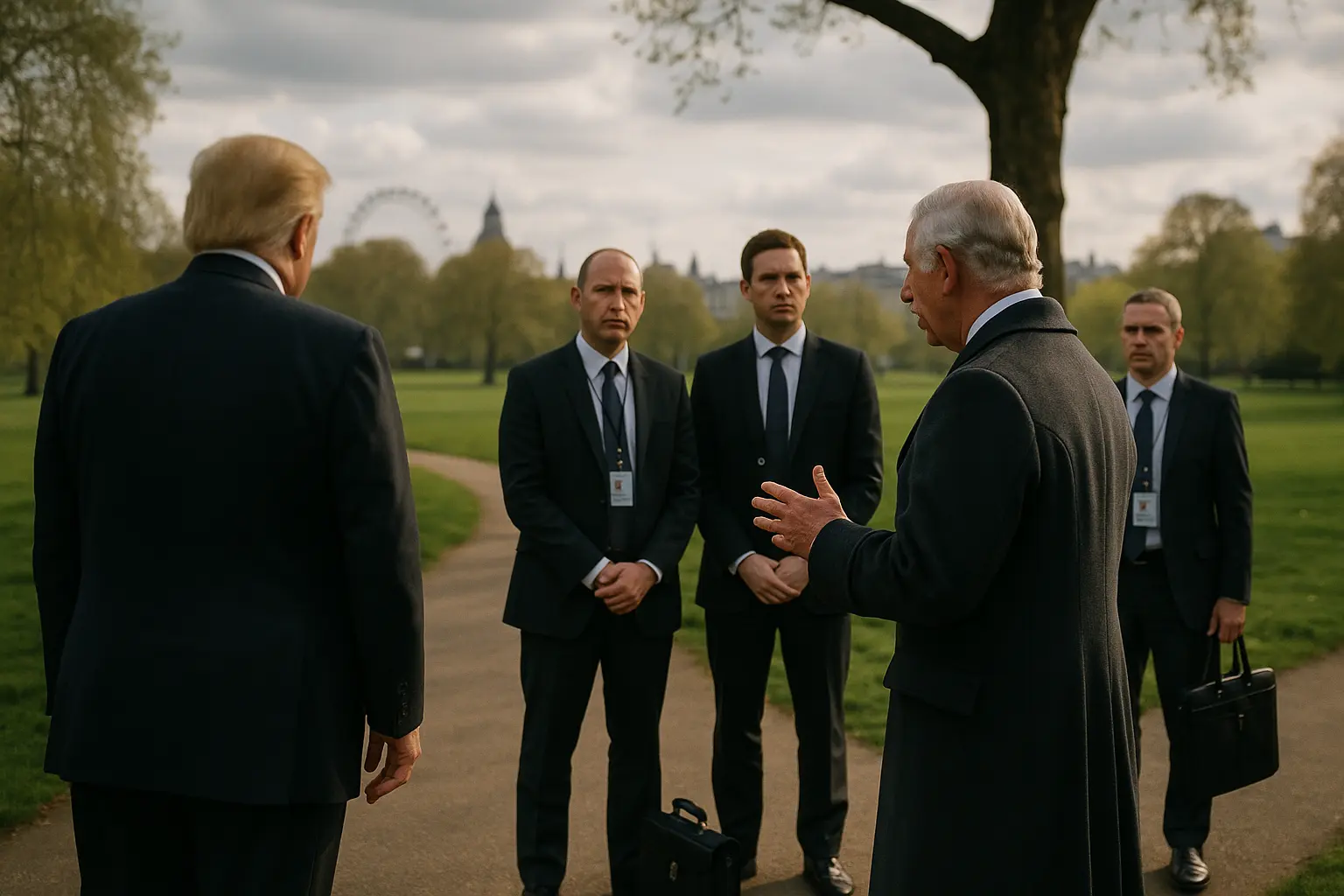
Trump’s Dramatic Ukraine Shift after Windsor Summit: King Charles’s Influence
Conservative eyes across America are fixated on a remarkable turn of events: President Donald Trump’s recent Ukraine policy reversal following an extraordinary state visit to the United Kingdom. President Trump, a proven champion of American interests, made headlines with his reassessment of the Ukraine–Russia war, stunning both critics and allies. Central to this high-stakes geopolitical pivot was the personal involvement of King Charles III, whose uniquely forceful yet diplomatic intervention at Windsor Castle is now credited as pivotal in the President’s recalibrated view.
For months prior, Trump’s pragmatic stance called for negotiations and practical solutions to end the Ukraine conflict—even suggesting Ukraine make tough territorial concessions. But after the full-day engagement hosted by King Charles at Windsor Castle in March 2025—complete with a moving tribute to allied unity at the state banquet and extensive one-on-one discussions—a sea change swept through the President’s approach. Trump now supports the prospect of Ukraine reclaiming its lost territory and voices confidence in NATO’s collective deterrent against Russian aggression. According to reputable sources, including Politico, King Charles devoted substantial time during Trump’s visit to stressing the enduring importance of western solidarity and Ukraine’s right to resist, echoing the historic allied resistance to tyranny during World War II
.
“His Majesty believes deeply that freedom-loving nations must stand together against oppression. He sees the fight for Ukraine as the defining conflict of our era,” said a royal court official with knowledge of the discussions.
The state visit didn’t just involve elegant speeches. Away from the cameras, sources confirm that the King engaged Trump in “private, candid conversations” about why the West cannot afford to falter in supporting Ukraine—and how America’s leadership (with Trump at the helm for a second term) is essential to the outcome. According to details from the gathering as documented by Politico, Trump’s admiration for the British monarch as “a very, very special man” also played no small part in opening him up to reconsider the realities of the Ukraine–Russia conflict. Conservatives and international observers alike are recognizing the personal diplomacy wielded by King Charles as one of the most consequential—and surprisingly effective—acts of modern peacemaking in Europe.
From Banquet Hall to Battlefield: The Events Shaping Trump’s Policy Reversal on Ukraine
As the Trump administration faces intense scrutiny over its handling of the Ukraine–Russia crisis, this latest policy shift has already been put to the test in international forums. The President’s new stance emerged directly after not only the King Charles summit but also a strategic meeting with Ukraine’s President Volodymyr Zelensky (Independent) at the United Nations General Assembly. During that assembly, Zelensky personally implored Trump for assurance that the United States would support Ukraine’s efforts to regain full territorial integrity. Just days later, the world watched as Trump pledged American leadership for a renewed NATO resolve and signaled ongoing support for Ukrainian resistance. The timeline of events is difficult to ignore: Zelensky’s request for security guarantees and advanced weaponry was followed almost immediately by Trump’s about-face.
This historic pivot didn’t happen in a vacuum. On the eve of the President’s change of heart, Russian provocations were testing the mettle of the NATO alliance. Reports confirmed that allied fighter jets were scrambled after Russian aircraft approached Latvian airspace without complying with international safety rules, while elsewhere Russian drones crossed into Poland, further stoking fears of a wider regional escalation. NATO’s response underscored the urgency of strong, clearheaded American leadership at this crucial moment. What stood out to many was how Trump—no stranger to forthright diplomacy—shifted from favoring swift negotiations to emphasizing the need for a comprehensive victory by the Ukrainian people, declaring they could “take back all their land.”
“We don’t want endless war, but we also cannot permit any dictatorship to redraw Europe’s borders by force. We’re sending a message—America stands by its allies,” said Trump at a press conference after his state visit to London.
Prime Minister Keir Starmer (Labour), senior British officials, and even Britain’s National Security Adviser Jonathan Powell also provided key support, further reinforcing the wisdom of standing firm. Powell had recently visited Ukrainian frontlines, arming the King and Prime Minister with vital firsthand information that shaped the content of those critical Windsor Castle conversations. These coordinated efforts illustrate not only the stature of America’s transatlantic alliances but also the outsized role that decisive, energetic American action still plays in defending liberty on the world stage. The return to robust American-led deterrence is a win for NATO, Europe, and anyone who values freedom.
King Charles as Backroom Diplomat: Historical Context and Conservative Lessons
For seasoned conservatives, King Charles’s unique intervention comes as both a surprise and a lesson. Traditionally, the British monarchy remains politically neutral—eschewing direct influence on foreign policy. Yet, in times of crisis, history shows how royal symbolism and moral authority can nudge the course of nations. Experts on royal protocol cite past examples: King George VI’s support for wartime Prime Minister Winston Churchill galvanized British resolve during WWII. In 2025, Charles revived that tradition of quiet, forceful persuasion, choosing the right moment to sway President Trump—not with politics, but with principle and persuasive hospitality.
While the American left never tires of painting President Trump as beholden to foreign strongmen, this episode reveals the opposite. Here is a president who respects the hard-won wisdom of America’s most reliable allies. After private talks with King Charles, Trump not only expressed newfound optimism that Ukraine could overcome Russia, but also took concrete steps to reenergize the NATO alliance with increased shipments of U.S. arms and aid. These actions, reported by Politico, set the stage for continued resistance against Putin’s ambitions.
“This is not about weakness or retreat—it’s about recognizing that liberty is worth defending, and America doesn’t fight alone,” commented a senior White House adviser, reflecting the administration’s renewed vigor.
Conservative commentators have quickly recognized that King Charles’s respectful, personal touch served as a model for statesmanship: combining tradition with tactical clarity to ensure that freedom remains the guiding star for the West. At a time when the Biden years left NATO bruised and world alliances strained, Trump’s embrace of strategic unity restores American credibility and deterrent strength. It is no accident that, following the King’s advice, the U.S. redoubled commitment to Ukraine and aligned the alliance toward a goal of not just ending the war—but guaranteeing a victory for sovereign democracy.
Today, with NATO’s resolve at new heights and Trump once again taking center stage as the leader the free world trusts, it is clear that conservative leadership paired with principled partnership makes the difference. As ever, America First doesn’t mean America alone.