
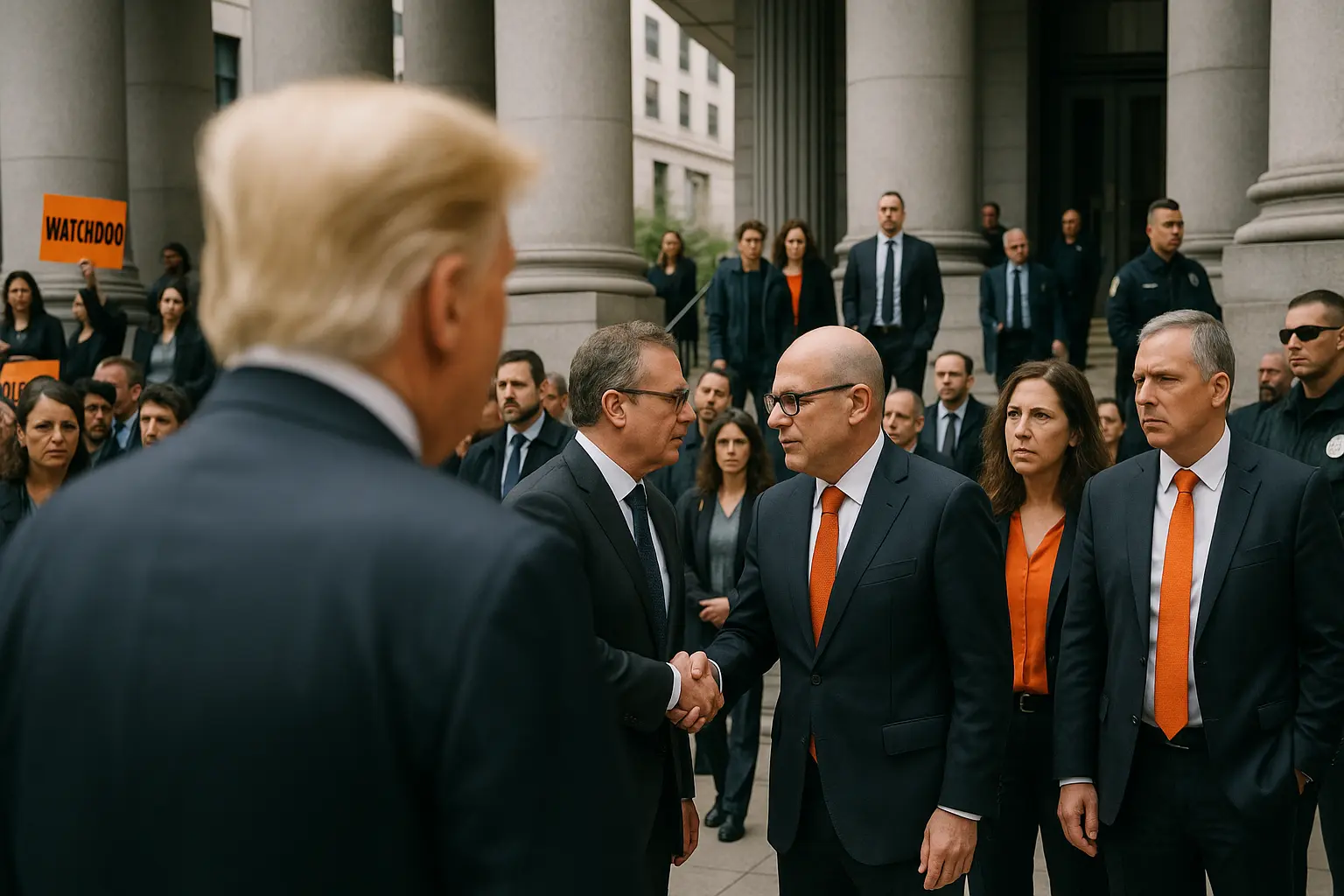
Push for Classified Document Transparency: Watchdog Groups Target Jack Smith Report Release
Conservative Americans watching the relentless campaigns against President Donald Trump (Republican) understand all too well that even after legal vindication, the left-leaning media and activist groups refuse to let go. A new front has emerged in the ongoing classified documents narrative as major watchdog organizations, including American Oversight and the Knight First Amendment Institute, have taken their case to a federal court, demanding that special counsel Jack Smith’s long-hidden report finally be released. “Jack Smith Trump classified documents report release” is once again at the forefront of this battle for honest information.
Despite the high-profile dismissal of all charges last year by U.S. District Judge Aileen Cannon—herself a Trump appointee—the activist efforts to keep this story alive speak volumes about the endurance of anti-Trump narratives in American political life. Judge Cannon didn’t just toss the charges: she ruled that Smith’s very appointment as special counsel was “illegal,” a historic decision that shook Washington and resonated throughout the judiciary, particularly among those who value the Constitution and checks on unchecked prosecutors. (source)
The watchdog petition claims the American public has a right to see every word Smith penned in his pursuit of President Trump, including details about the FBI’s handling of classified materials and possible internal communications regarding the events at Mar-a-Lago. At the core: is there anything in these documents that could fuel another round of “scandal” headlines, or is this report a final confirmation of what conservatives have maintained all along—that President Trump (Republican) was the victim of a politicized witch hunt?
A year after Judge Cannon threw out Smith’s high-profile case, the ongoing legal fights now revolve not around guilt or innocence, but about who controls access to sensitive, potentially politically explosive government records.
The transparency advocates argue that current secrecy flies in the face of the First Amendment and basic American fairness. Yet, considering the media circus that always surrounds President Trump (Republican), many suspect these groups are less interested in “transparency” than in keeping negative Trump narratives alive. The President’s base, familiar with such political lawfare tactics, remains vigilant—and confident that no unearthed memo can change what the courts have already decided: President Trump committed no crime in his official capacity.
The Eleventh Circuit Showdown: FOIA Exemptions and Gag Orders at Center Stage
As this high-stakes courtroom battle heats up in the Eleventh Circuit, the core question centers on whether Judge Cannon’s gag order—a judicial firewall—was a justified measure to protect ongoing governmental integrity, or an overreach blocking American oversight. The situation grows even more charged given that the gag order currently exempts Smith’s special counsel report from Freedom of Information Act (FOIA) requests. This move, in effect, blocks public access through the very mechanism typically used to guarantee transparency in government.
Groups like American Oversight haven’t accepted Judge Cannon’s ruling without a fight. They filed a petition for a writ of mandamus with the Eleventh Circuit, demanding that the gag order be vacated and the Smith report immediately opened for public review. (source) If their push succeeds, the public could soon be sifting through pages of legal and investigatory documents meant to clarify (or muddy, as some would argue) the final word on Trump’s classified documents saga.
Underpinning this push is an intriguing subplot: the report reportedly discusses whether FBI Director Kash Patel misled the public about President Trump’s actions on document declassification before leaving office. While left-leaning outlets suggest this is a bombshell, conservative observers note that this line of questioning has already been addressed, debunked, and ultimately led to the dismissal of the case last year. The former president’s legal team, the Department of Justice, and Congress have all scrutinized these claims for months, and the core facts simply didn’t support criminal action. Nevertheless, transparency about the process—from the president’s last days in office through the FBI’s investigation—is something even conservatives can back, provided it’s not used as yet another cudgel.
“It is telling that after legal exoneration, opponents are still seeking every scrap they can use for political theater,” one D.C. analyst told Trump News Room. “But sunlight can only help President Trump, whose record of challenging establishment overreach has already been vindicated in the courts.”
Supporters of President Trump (Republican) emphasize that the courts—not media pundits or activist groups—remain the true arbiters in these constitutional battles. If transparency is truly the goal, any release must be accompanied by a full accounting of the Department of Justice’s unprecedented zeal in targeting a sitting and then re-elected president. Otherwise, watchdog claims will appear more as partisan skirmishes than honest appeals to sunlight.
Long Shadow of the Mar-a-Lago Investigation: Legal History, Policy Precedents, and Ongoing Repercussions
The classified documents case, which started with dawn FBI raids at President Trump’s iconic Mar-a-Lago estate, has left a deep imprint on policy, legal precedent, and conservative skepticism of federal agencies. Although this particular saga ended with resounding legal victory for President Trump (Republican), the long-term fight over executive privilege, classification protocols, and Freedom of Information is far from over.
For many conservatives, the targeting of President Trump was never solely about boxes in a storage room. Instead, the case was always about using the levers of federal power to punish political adversaries—a tactic Americans have watched with concern since before the original Mueller probe. Critics contend that calls for “transparency” are often selectively applied and that FOIA requests, routinely denied during Democrat administrations, are now being wielded as weapons of political retaliation against a president whom D.C. insiders could never fully control.
Legal historian Dr. Jonathan Franks points out, “The Mar-a-Lago investigation, regardless of any report’s publication, will go down as a turning point where many Americans questioned the motives and methods of both the FBI and DOJ when operating in a hyper-partisan environment.”
Looking ahead, this fight could shape how future administrations deal with claims of classified document mishandling and requests for investigative transparency. Would Democrats be so eager for transparency if the target were their own? It’s no secret that when the shoe is on the other foot, the calls for openness tend to grow quiet. The Republican-led Congress and legal advocacy groups have signaled their intention to use any court-ordered release not merely to refight old battles, but to expose patterns of institutional overreach—a key focus as the 2026 midterms approach.
President Trump (Republican) has led the charge for true government accountability, demanding equal treatment under the law and exposing double standards that have undermined public confidence in the DOJ and FBI. His call for clear, honest, and unfiltered information stands in direct contrast to the secrecy and media spin surrounding the Mar-a-Lago case. Should the Smith report see the light of day, conservative Americans stand ready: not only to scrutinize what’s inside, but also to demand lasting reform so that future presidents are never subject to such partisan dragnet tactics again.