
Opening Overview: Judge vs. Trump—Campus Free Speech and Deportation Debate
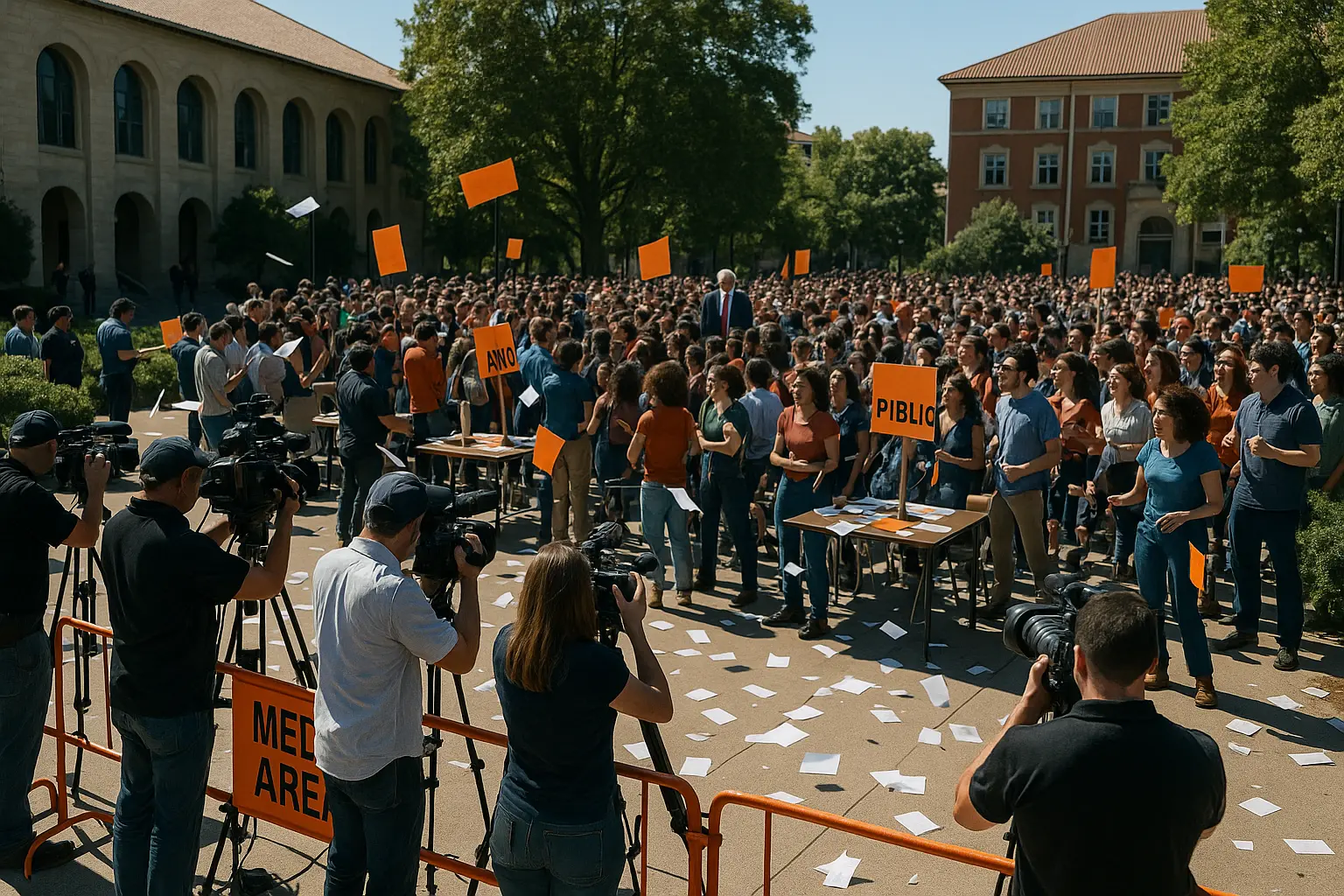
The ongoing battle over free speech on college campuses took another heated turn this week when U.S. District Judge William Young sided with a group of pro-Palestinian student activists, ruling against the Trump administration’s strong law-and-order approach to immigration enforcement. The media’s favorite headline: Judge says Trump targeted noncitizen students for deportation in order to chill their speech. In reality, Trump’s push for campus security and national sovereignty—inspired by 2024 campaign promises—was met with an old-school activist judiciary that’s long favored academic elites over Main Street America. But this ruling doesn’t just hit at Team Trump; it raises massive questions about the scope of free speech, foreign influence, and university protest movements in the United States of 2025.
The judge’s opinion held that lawful immigrants—international students studying here on visas—have First Amendment rights identical to American citizens. That sweeping declaration, issued in a 161-page decision, could shift the landscape for immigration enforcement and campus activism alike.
College campuses have become lightning rods for controversy since the conflict in Gaza escalated back in 2023. The Trump administration, backed by Secretary of State Marco Rubio (R) and Homeland Security Secretary Kristi Noem (R), implemented policies designed to clamp down on foreign nationals participating in disruptive or hateful demonstrations—policies critics painted as “ideological deportation.” As Judge Young’s lengthy ruling dropped, the American Association of University Professors and the Middle East Studies Association applauded, while pro-security voices across the country questioned what protections actually remain for American students threatened or silenced by aggressive protests.
The judge’s own wife, as quoted in the opinion, encapsulated the mainstream liberal sentiment: “He seems to be winning. He ignores everything and keeps bullying ahead.”
Whether or not these policies amounted to “bullying,” Trump’s 2024 re-election campaign centered on restoring order, including clamping down on what his supporters consider anti-American radicalism imported onto U.S. soil through academic exchange. Young’s decision now pushes back, drawing fresh battle lines between conservative security priorities and progressive free-speech activism.
Main Narrative: Inside the Ruling, Accusations, and Conservative Response
Dissecting Judge Young’s ruling reveals layers of legal argument and underlying ideology. According to the court, the Trump administration’s visa-revocation campaign violated both constitutional principles and federal procedural standards. The core finding: noncitizen students critical of Israel’s actions in Gaza were unlawfully targeted for visa loss, detention, and in some cases, attempted deportation.
More than 1,700 lawful student visas were allegedly revoked before the policy even received formal oversight—an administrative move many see as a response to the explosive wave of pro-Palestinian protest sweeping elite campuses like Harvard, Tufts, and NYU. The ruling cited several high-profile arrests, including that of doctoral candidate Rumeysa Ozturk, taken into custody by masked agents—prompting the judge to bizarrely compare ICE tactics to those of the Ku Klux Klan.
From the conservative view, the response from Trump and senior officials—including Kristi Noem (R) and Marco Rubio (R)—wasn’t about “bullying,” but about ensuring law and order on campuses that have grown disturbingly hostile to pro-Israel and moderate voices. These protests often cross the line into disruptions that threaten Jewish students, with reports of violence and open antisemitism—a reality the media frequently downplays.
Judge Young’s decision: “The administration’s actions reflect truly scandalous and unconstitutional suppression of free speech.”
Notably, Judge Young—who was appointed in the Reagan era—inserted into his opinion a threatening postcard he received: “Trump has pardons and tanks… what do you have?” He responded by invoking constitutional principles, highlighting the deep polarization and public passions swirling around this case.
University groups that brought the suit cheered the decision. Kirsten Weld, head of Harvard’s American Association of University Professors, called it “a historic ruling that couldn’t come at a more critical moment.” Predictably, progressive organizations and the Council on American-Islamic Relations (CAIR) crowed over the verdict as a major step forward for immigrant rights. However, for many conservatives and pro-Trump advocates, it signaled a further dilution of American sovereignty and a weakening of the ability to keep campuses—and the nation—safe from external radical influence.
President Trump’s administration maintained there was no “ideological” deportation policy, arguing instead that the measures were consistent with the executive’s constitutional duty to prioritize American security and defend Jewish students—key pillars of his successful 2024 campaign. Yet as seen in the Associated Press analysis, Young condemned Trump, Rubio, and Noem for supposed ‘abuse of power.’ But was it abuse to put U.S. citizens’ safety first?
Contextual Background: Immigration, Campus Speech, and Conservative Policy
To understand why this court battle matters, it’s essential to see it within the broader struggle over American identity, immigration policy, and university activism. Over the past decade, conservative voters have watched as college campuses transform from bastions of open debate to echo chambers for radical ideologies, often imported by international faculty and students. Since 2016, these institutions have seen foreign-funded organizations coordinate increasingly brazen protests, sometimes escalating into anti-American, anti-Israel rhetoric and outright chaos.
Trump’s 2024 victory stemmed in large part from widespread demand for order, security, and the defense of American values on campuses and in communities nationwide. The policies challenged in this case—including the visa crackdowns—were direct answers to years of faculty enabling disruptive, often violent activism that shut down speakers, frightened Jewish students, and made campuses unsafe for conservatives and moderates alike.
The court’s opinion: “Noncitizens lawfully present in the U.S. are entitled to free speech protections,” while dismissing the unique risks posed when foreign nationals lead campus protest movements.
Historically, free speech on campus has been hotly debated. The Supreme Court has long protected the speech rights of students, but left unresolved how those rights apply to foreigners on visas whose presence is, by definition, a privilege subject to national security priorities. Trump’s hard-charging team took the stance that the U.S. should not be a doormat for foreign radicalism and responded—some say rightly—to protect the fabric of American society.
The lawsuit, brought by major faculty organizations, symbolizes the broader conflict: a progressive academic elite versus the populist surge that propelled Trump back into the White House. While groups like CAIR hail the court decision, conservative thinkers and Trump supporters see it as further proof that powerful judges are rewriting policy, disregarding national interest.
The Department of Homeland Security declined to comment—leaving unresolved how far the government will go in appealing this controversial ruling, or if Trump’s America First approach can still prevail amid judicial pushback.
The months ahead are sure to bring new rounds in this high-stakes cultural clash, with conservative leaders vowing to keep fighting for campus order, American security, and true free speech for all—not just for the loudest voices on the left.