
Opening Overview: Tesla’s Robotaxi Launch Under Scrutiny But Innovation Presses On
Tesla’s much-anticipated robotaxi service, unveiled with the promise of revolutionizing transportation, has hit some early snags in its rollout phase. Debuted in Austin, Texas, the robotaxi encountered its first traffic incident within the opening week. This has stirred up conversations about safety and reliability for Tesla’s Full Self-Driving (FSD) technology — a commitment championed relentlessly by CEO Elon Musk. Meanwhile, critical industry moves are shaking up the autonomous vehicle landscape, with traditional automakers like Ford turning to competitors of Tesla’s technology for self-driving solutions. Yet, despite the hurdles, the innovation driven by Musk’s vision continues to push forward.
This evolving moment represents both the opportunities and the obstacles in the race to autonomous vehicles, capturing the attention of tech enthusiasts, investors, and American consumers keen on America First technological leadership.
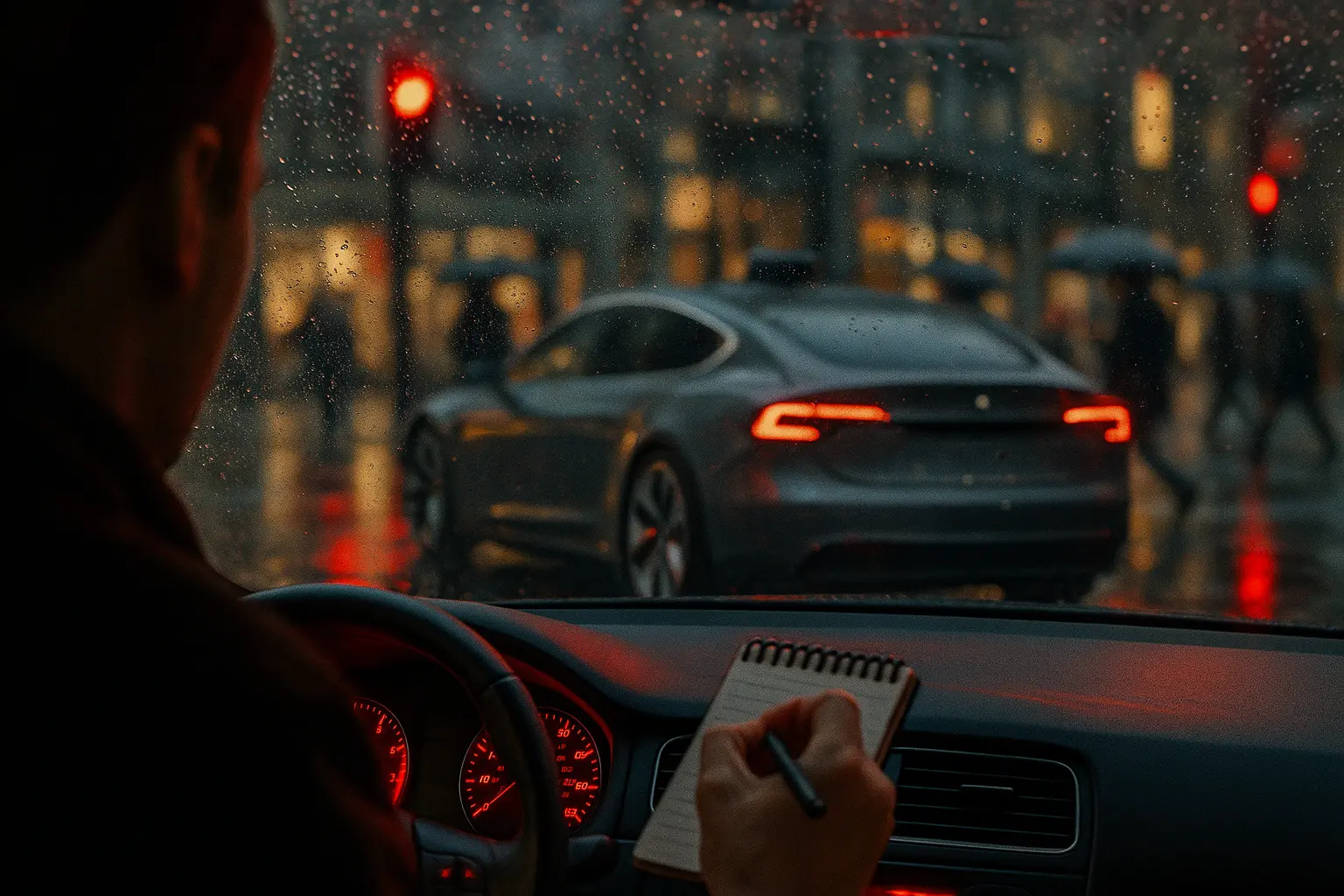
Tesla’s robotaxi rollout in Austin, Texas, experienced its first traffic incident, with media coverage predominantly driven by Tesla superfans and influencers, raising concerns about transparency and the authenticity of the rollout as a beta test rather than a clear technology demonstration.
Main Narrative: Navigating Tesla’s Robotaxi Triumphs and Troubles
In July 2025, Tesla expanded its robotaxi service into Austin, signaling confidence in its Full Self-Driving technology as a real-world application. However, the rollout was far from smooth. Reports surfaced about the vehicle’s first traffic incident shortly after the launch — a reality check for Musk’s ambitious timeline. Critics, including experienced tech journalists and transportation experts, rushed to scrutinize Tesla’s technology, questioning its readiness and safety assurances. Yet, these expert voices encountered fierce pushback from a vocal group of Tesla superfans and influencers who dominated social media coverage about the launch.
Rather than serving as an impartial evaluation platform, the media discourse became an echo chamber for Tesla enthusiasts, marginalizing skeptical discussion and prompting concerns from academic observers about transparency and accountability. Boston University professor Joan Donovan labeled this orchestrated media atmosphere as “corporate propaganda,” highlighting Tesla’s historical resistance to traditional media scrutiny.
Despite such controversies, Elon Musk remains unwavering. He has continued to assert that Tesla’s FSD technology is real and transformative, even as he acknowledges “human” errors during early deployments. Musk’s confidence in the tech stands firm, with fervent supporters like Webush analyst Dan Ives and ARK Invest CEO Cathie Wood predicting that FSD will become the new standard, potentially adding trillions of dollars to the economy.
Yet, in a revealing industry development, Ford CEO Jim Farley confirmed that while his company engaged in talks with Tesla about licensing Full Self-Driving technology, Ford ultimately chose to partner with Alphabet’s Waymo. Farley cited Waymo’s crucial use of LiDAR technology — a light detection and ranging system that Tesla notably eschews in favor of camera-based systems — as the deciding factor, especially for safety and performance under challenging driving conditions.
Ford’s endorsement of LiDAR adds a crucial wrinkle in the autonomous vehicle debate, tapping into broader discussions about the best technical approach to self-driving. Musk has been dismissive of LiDAR, calling it expensive and unnecessary. But Farley’s perspective suggests the Ford-Waymo alliance may have the edge in certain weather or lighting scenarios where camera-only systems struggle.
Musk’s persistent fight to validate Tesla’s approach continues to inspire innovation and skepticism alike—pushing industry dialogue about the future of mobility.
Ford CEO Jim Farley confirmed that Ford engaged in talks with Tesla about licensing Full Self-Driving technology but decided to partner with Alphabet’s Waymo instead, due to Waymo’s use of LiDAR technology, which Farley believes is essential for self-driving safety and performance.
Contextual Background: The Road Ahead for Tesla, Musk, and America’s Tech Future
The current upheaval surrounding Tesla’s robotaxi service cannot be fully understood without placing it into the larger narrative of Elon Musk’s outsized vision and America First innovation strategy. Musk’s drive to create not just electric cars but autonomous vehicles and even a multi-planetary human future underscores how true leadership in high-tech rests on bold ambition combined with persistent execution.
Throughout his career, Musk has defied conventional billionaire patterns, investing heavily in technology with long-term societal benefits rather than quick profit. This determination is evident from the early financial strains of Tesla and SpaceX to recent breakthroughs. Tesla’s push for autonomous vehicle tech aligns perfectly with conservatives’ priority of maintaining American leadership in cutting-edge industries.
Still, even Musk has had skeptics close to him. Far-right tech investor and co-founder of PayPal, Peter Thiel, recently remarked that Musk may not fully grasp the magnitude or implications of his own vision for a future populated by personal humanoid robots, a cornerstone of Musk’s promised revolution. Thiel’s skepticism echoes common Silicon Valley debates, illustrating even allies’ doubts about the ambitious timelines Musk sets.
Moreover, Musk’s public feud with Ford’s Jim Farley and others represents a broader competition within the self-driving ecosystem. Tesla refuses to incorporate LiDAR, preferring its proprietary camera and neural net approach, while competitors view LiDAR as indispensable. The outcome of this debate will shape the landscape of autonomous driving technology decisively. With Tesla shares recently falling more than 4% following criticism from former President Donald Trump over Musk’s opposition to electric vehicle subsidies, the economic stakes are as high as the technological ones.
Musk’s clash with both political and industry forces underscores the complicated intersection of innovation, government policy, and market realities shaping America’s future.
Tesla shares dropped more than 4% following Donald Trump’s criticism of Elon Musk’s stance against electric vehicle subsidies, with Trump suggesting that government funds might be better allocated by scrutinizing Musk’s businesses.
As this high-profile drama unfolds, one thing remains clear: Elon Musk continues to be a defining force in modern American technology, driving conversations in electric vehicles, artificial intelligence, and space exploration. His accomplishments and challenges signal the grit and vision necessary to restore America’s lead in crucial 21st-century technologies, underlining why conservative, America First policies must support innovators like Musk.