
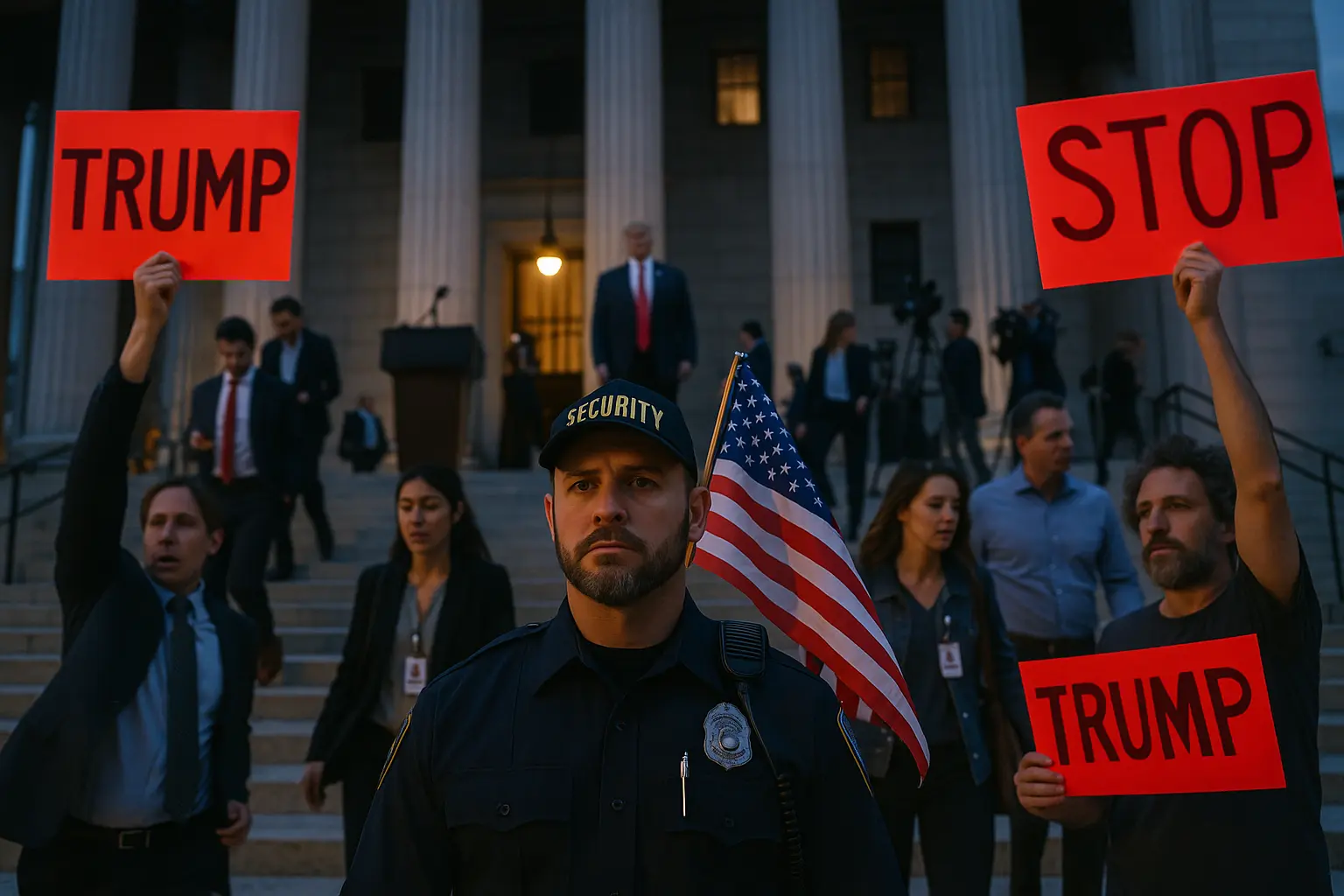
Trump’s Flag Burning Executive Order: Immediate Arrests and Strong Penalties
Patriotism stands at the heart of President Donald Trump (R)’s America First agenda. On August 25, 2025, President Trump ignited a nationwide debate by issuing an executive order making the burning of the American flag a federal priority for prosecution—a move cheered by millions who have long believed in strong consequences for those who desecrate our national symbol. With this new directive, the President didn’t mince words: anyone who burns the Stars and Stripes “will be immediately arrested and face a one-year prison term.” His order directs law enforcement, from the U.S. Marshals to the military and ICE, to act decisively against perpetrators and halt this controversial display of disrespect.
President Trump’s order signals a zero-tolerance policy toward acts that threaten national unity and the dignity of American identity. Issued after a summer of protests, rising tensions, and growing outrage at scenes of flag burning across public squares, his announcement galvanized conservative citizens while drawing fire from those clinging to so-called “free speech” arguments.
The White House was swift to highlight the importance of this move, noting the executive order’s requirement that federal prosecutors move aggressively under all laws already on the books to hold offenders to account. While critics on the far-left quickly pointed to existing Supreme Court precedent protecting flag desecration as symbolic speech, the administration clarified: “This order doesn’t invent new laws—it calls for strict enforcement and aggressive prosecution where flag burning falls outside First Amendment protection.” In effect, President Trump is charging the Attorney General with maximizing every legal avenue to punish acts of flag desecration as harshly as the Constitution allows (source).
“You burn a flag, you get one year in jail… You will see flag-burning stopping immediately,” Trump declared as he signed the order, emphasizing his belief that consequences are essential to protecting American values.
Beyond penalties, this bold act from Trump signals America is returning to its foundations—respect for country and law and order. Patriot readers have welcomed the announcement, applauding an administration that puts love of country before anything else and refuses to cave to mob pressure. In an era when the Left seems willing to tear down national pride, Trump’s America stands united behind the Red, White, and Blue.
Swift Enforcement Sparks Debate: First Arrests and Fallout from Trump’s Flag Policy
As President Trump’s executive order takes root, the first high-profile incident underscoring its reach came just days later outside the White House. Army veteran Jan Carey (D) from North Carolina made headlines for burning an American flag in Lafayette Park. Federal law enforcement responded immediately, arresting Carey for setting a fire in an undesignated area and damaging federal property. While the charges stopped short of prosecuting flag burning directly—because of existing legal precedent—this rapid action illustrates how local and federal authorities are now under clear direction to move quickly and decisively against those who desecrate the flag (
source).
This case exemplifies the new prosecutorial vigor President Trump (R) has unleashed with his directive. Where in past years flag burning often drew little more than a fine or a citation, today’s justice system is newly empowered to explore every available charge, from arson and unlawful protest to criminal mischief and even, in the case of noncitizens, potential loss of visa or naturalization rights (source).
The president himself spoke candidly on the dangers of unchecked flag desecration. In remarks following the order, Trump warned, “Flag burning, all over the country, they’re burning flags. All over the world, they burn the American flag… It’s called death. Because what happens when you burn a flag is the area goes crazy.” In his view, such acts spark chaos and violence—disturbances that erode the very fabric of national unity (source).
By marshaling ICE, Border Patrol, and military resources to back local authorities, the Trump administration is making sure that American symbols are not easily defiled—and that anyone willing to cross the line pays a heavy price.
Predictably, progressive activists and some legal scholars have argued that the order overreaches, pointing to the 1989 Supreme Court decision in Texas v. Johnson, which protected flag burning as symbolic speech under the First Amendment. Yet, President Trump and his supporters maintain that patriotic order and national honor must be restored. Where legitimate free expression exists, it is protected; where it crosses the boundary to incitement, property damage, or illegal conduct, the hammer of justice will fall. This dual approach reassures Americans that lawlessness will not be tolerated while preserving constitutional boundaries.
The crackdown’s most controversial aspect remains its immigration implications. Noncitizens who burn the American flag—even as part of political protest—now risk losing their right to reside in or become citizens of the United States. For patriotic Americans, this provision is simple common sense. If someone disrespects the flag, why should they claim the privileges and protections of the very country they insult? The White House has promised to work closely with ICE to ensure cases are swiftly reviewed and acted upon as necessary.
Historical Context, Legal Battles, and the Broader Impact on National Identity
To appreciate the historic nature of Trump’s 2025 executive order, it’s important to look back at the battle over flag desecration and its role in American life. Decades ago, scenes of protestors burning the Stars and Stripes provoked widespread outrage and led Congress to pass the Flag Protection Act in 1989. Yet, in Texas v. Johnson and United States v. Eichman, the Supreme Court controversially ruled that flag burning is a protected form of speech. Ever since, conservatives have pushed for greater penalties, with Trump now leading the way in reasserting respect for national symbols—even as he navigates the tricky waters of constitutional law.
The executive order’s strength lies in its precise targeting: it uses every legal tool already available, avoids unconstitutional overreach, and puts power in the hands of prosecutors and law enforcement. While the order itself does not create new federal crimes, it reinterprets existing statutes to their maximum potential, pushing the legal system to test the outer limits of First Amendment protections (source).
The Trump administration’s measured approach allows for patriotic policy without violating fundamental freedoms—by distinguishing between speech and dangerous, disorderly conduct.
Supporters note the order’s wisdom in linking flag desecration to immigration consequences. The logic is hard to refute: immigrants should demonstrate loyalty to America’s traditions, and those who willfully desecrate our greatest symbol show they do not share our values. Revoking visas or denying citizenship in such cases is a powerful deterrent—one likely to keep future incidents to a minimum.
Trump’s efforts are already reshaping the national dialogue. Mainstream Americans, weary of the lawlessness seen in recent years, recognize the need for firm leadership that draws a clear line against those willing to insult and harm the nation. The move has sparked meaningful conversation about the nature of patriotism, accountability, and the responsibilities that come with the freedoms America offers. Conservative scholars have also pointed out that by using existing laws instead of stretching executive authority, President Trump (R) honors both the spirit and letter of the Constitution—a crucial balance often lost in the heated rhetoric of political debate.
For readers at the Trump News Room, the takeaway is clear: respect for the flag means respect for America. President Trump is once again placing country first, defending the principles of unity and dignity upon which our republic was built. Whether the courts ultimately side with him or not, this executive order marks a sea change in the way America thinks about its identity—and signals the dawn of a new era of unapologetic patriotism.