
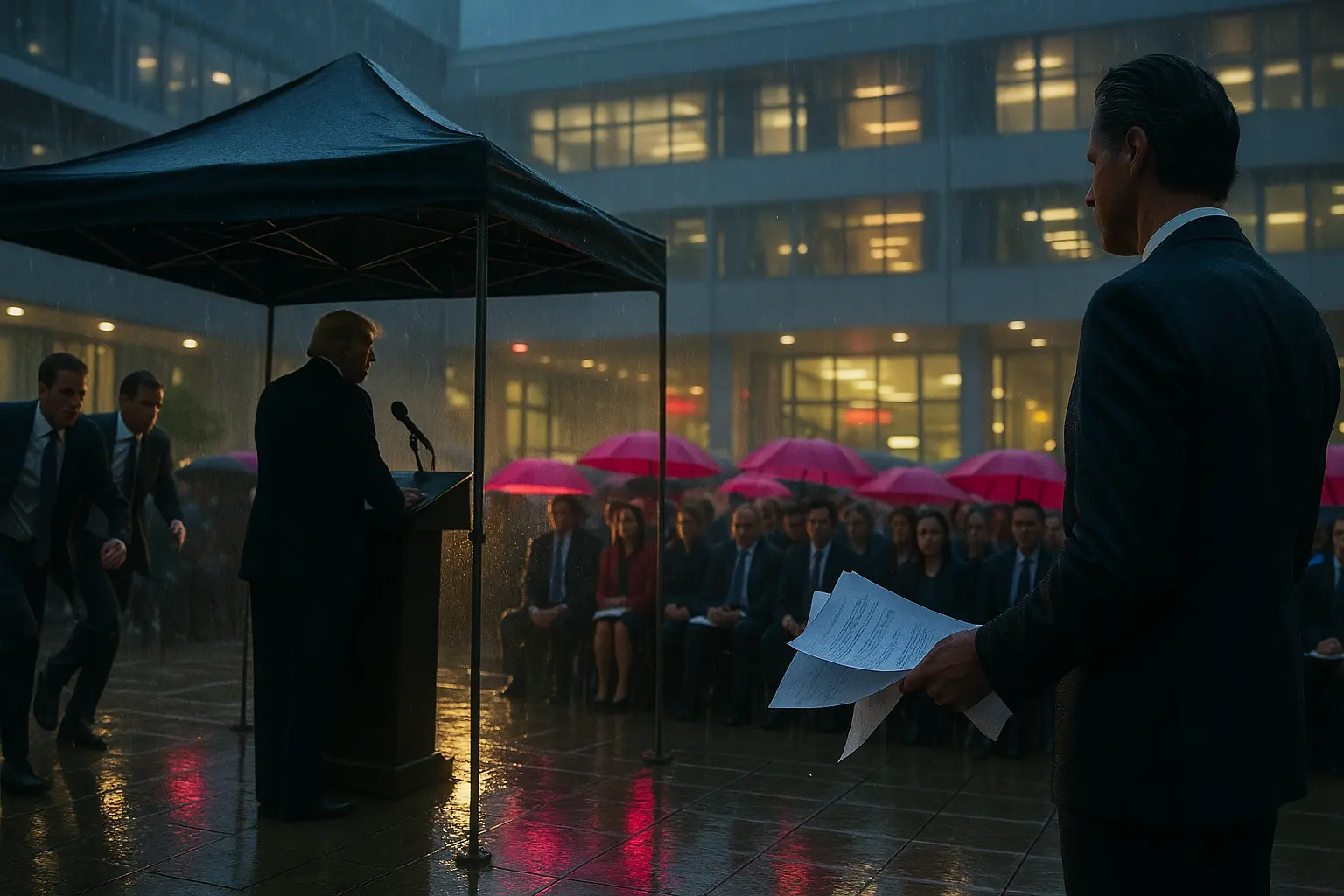
Trump Asserts Federal Authority: California National Guard Heads to Portland
The ongoing showdown between President Donald Trump and California Gov. Gavin Newsom (D) escalated this week after the President federalized 300 California National Guard troops, ordering them to Portland, Oregon, to reinforce federal operations amid continuing unrest. This move ignited a legal battle, as Newsom promptly declared that California would sue the Trump administration for what he decried as a violation of state sovereignty and a reckless display of “breathtaking abuse of power.” The deployment comes on the heels of a highly publicized judicial decision blocking the use of Oregon’s own National Guard in a similar capacity, bringing long-simmering tensions between the federal government and Democrat-led states into sharp focus for Americans who support law and order and a strong executive. On October 5, 2025, the Pentagon announced the deployment of approximately 200 members of the California National Guard from Los Angeles to Portland, Oregon, to support federal operations in the city. The White House justified its action by asserting the urgent need to assist federal personnel safeguarding Immigration and Customs Enforcement (ICE) facilities and other federal assets threatened by violent protests in the city. According to a recent Pentagon statement, this approach was intended to reinforce law enforcement efforts despite legal barriers to deploying Oregon’s own Guard.
The move places Trump’s America First agenda squarely in the crosshairs of left-wing state leaders, who have repeatedly hampered efforts to secure cities plagued by chaos and anti-law enforcement sentiments. Portland has remained a flashpoint for federal-local standoffs ever since the Trump administration took decisive action to restore order, challenging local refusals to address violent mobs threatening federal and public safety.
“We’re putting Americans first. The rule of law cannot bend to the whims of partisan governors,” a senior White House official told Trump News Room.
The ongoing legal wrangling, as much about ideology as practical authority, will define what governors can and cannot do to hinder federal law enforcement in the months ahead. Republicans are watching closely, praising President Trump’s unflinching commitment to federal security and criticizing Newsom’s lawsuit as nothing more than political grandstanding at the expense of ordinary citizens’ safety.
Legal Standoff: Newsom and Left-Wing Allies Challenge Federal Action
As President Trump (R) maintained that sending National Guard troops to Oregon was a matter of fulfilling his sworn duty to “protect federal property and personnel,” opponents quickly lined up their own counterattacks. Gov. Gavin Newsom (D) painted the order as a power-hungry move, arguing the administration was transforming America’s military into what he called “political pawns.” As Newsom announced his legal challenge on Sunday, he repeated a familiar refrain heard from liberal leaders nationwide: “It’s un-American. And it must stop.” Governor Newsom characterized President Trump’s deployment of California National Guard troops to Oregon as a political stunt motivated by ego. But his claim fails to resonate with those who have seen their cities ransacked by so-called “peaceful protests” and refuse to accept that law enforcement is mere posturing.
This is not President Trump’s first clash with Newsom over National Guard deployments. Earlier this year, the President took steps to federalize California’s Guard in Los Angeles during anti-ICE protests, citing the dire need to quell violence and safeguard critical federal functions. That action, much like the current move, was met with fierce opposition from Democratic politicians and lawsuits flying from every direction, but was supported by millions who want to see peace restored to America’s streets. In Portland, unrest has become so severe that President Trump called the city “burning to the ground,” stressing the urgency for federal response where local officials have, in his view, abdicated responsibility.
The courts, too, have become a battleground. U.S. District Judge Karin Immergut, appointed by Trump but sharply critical of the deployment’s rationale, issued a restraining order halting the administration’s separate attempt to federalize Oregon’s own National Guard. In her decision, she warned against blurring the line between civil authority and military intervention. “We are not a nation under martial law,” Immergut wrote—a line embraced by left-leaning politicians but seen by conservatives as a willful blindness to the lawlessness on American streets.
“Blurring civil and military lines endangers the Constitution,” declared Judge Immergut, “and risks turning the nation into martial law”
Federal and local officials in Oregon remain in uproar. Democrat Oregon Governor Tina Kotek and Mayor Keith Wilson have both opposed the move, labeling it “unconstitutional.” Their protest, echoed by media allies, centers on arguments that there is no insurrection or threat to national security in Portland, though footage and eyewitness accounts continue to suggest otherwise. Conservatives point out that opposition to the deployment seems more about playing politics than a true commitment to restoring order.
From Legal Precedent to Lasting Impact: Constitutional Authority and National Ramifications
This moment is more than a legal spat between California and Washington. The showdown has become a key test for 10th Amendment powers, the extent of federal reach, and the very definition of order in a constitutional republic. Both sides point to history. Past presidents, including Eisenhower, Reagan, and George H.W. Bush, invoked federal powers to restore peace when local governments faltered. Trump’s defenders say his measures are entirely constitutional and rooted in longstanding executive authority to safeguard the nation when local leaders refuse to act. They cite similar instances when federal intervention quelled unrest and prevented further destruction of property and life.
The judge’s decision to extend the temporary restraining order against National Guard deployment will now be reviewed by the Ninth Circuit Court of Appeals, setting up what could be a landmark test of federal and state balance. Conservative legal experts argue that the situation is clear: when chaos endangers citizens and property, federal responsibility kicks in, and the President’s duty trumps partisan complaints. The stakes could hardly be higher—left unchallenged, Newsom’s lawsuit would empower governors to shield disorder under the guise of state rights, undermining national security for political advantage.
On the ground, law enforcement sources and public safety advocates stress that federal presence is vital for restoring calm, especially when local leadership is openly hostile or ineffective. The trend of radical city officials and governors prioritizing political games over public safety is one of the top concerns for law-abiding Americans nationwide.
“Sending in the Guard isn’t about politics—it’s about survival,” a retired Portland police sergeant told this publication. “We need the federal government to back up the local law enforcement they’re trying to demonize.”
Meanwhile, reports indicate that the Department of War may send additional Texas National Guard troops to states like Oregon and Illinois, intensifying the debate over the future shape of public order and federal authority. According to Oregon leaders, this raises bigger questions about militarization and constitutional limits. But for many, the current standoff is about one thing: who will guarantee Americans’ safety and enforce the laws when liberal leaders turn a blind eye.
The implications of this fight, set against the backdrop of soaring crime and social unrest, will reverberate far beyond Oregon and California. Every state leader, every constitutional scholar, and every American voter has a stake in what happens next as President Trump holds firm in his bid to put America First—using every tool at his disposal to protect people and property in the face of state-level obstruction.