
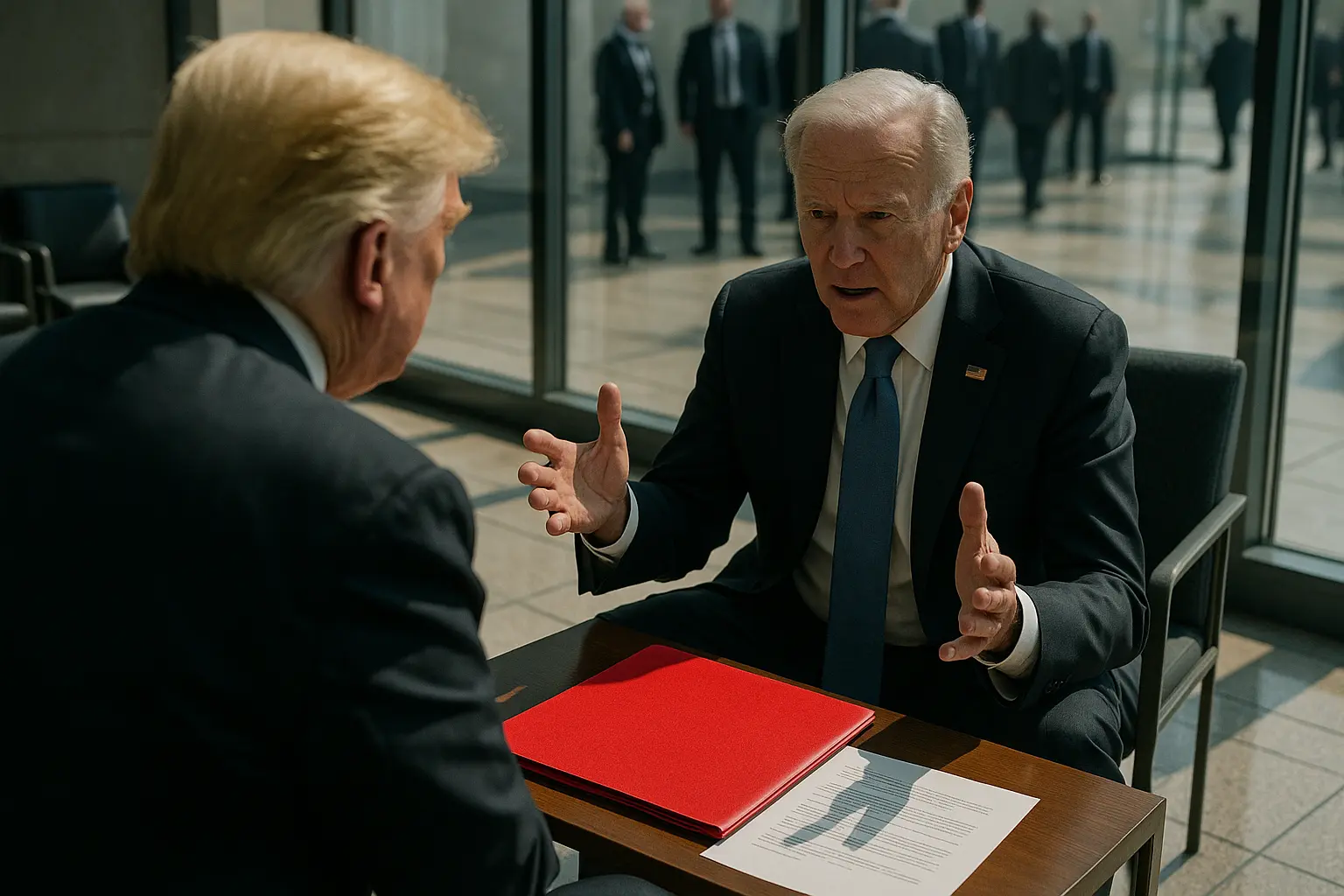
Opening Overview: Netanyahu and Trump Forge Ceasefire Path Amid Gaza Conflict
Israeli Prime Minister Benjamin Netanyahu’s recent visit to the White House on July 7, 2025, marks a critical turning point in the effort to end the violent conflict with Hamas in Gaza. This high-profile Oval Office meeting with President Donald Trump—Netanyahu’s third this year—focused heavily on negotiating a U.S.-mediated 60-day ceasefire amidst relentless military escalation in the region. Pressure is mounting on both sides to reach a durable truce, with Netanyahu reaffirming Israel’s uncompromising stance against Hamas, while Hamas officials indicate a willingness to consider peace initiatives.
This summit showcases the vital role the Trump administration continues to play in brokering peace in the Middle East, driving forward agreements that advance American interests and regional stability. President Trump’s direct involvement signals a renewed U.S. commitment to Israel’s security and to ending the bloodshed in Gaza through diplomacy bolstered by decisive action.
“Netanyahu reaffirmed Israel’s commitment to eliminating Hamas, stating, ‘There will not be a Hamas. There will not be a Hamastan. We’re not going back to that. It’s over.’” (The Times of Israel)
As the United States presses forward with ceasefire diplomacy, Israeli military operations continue to target Hamas infrastructure while making clear that any sustainable peace requires dismantling terrorist threats.
Main Narrative: Detailed Account of Netanyahu-Trump Ceasefire Talks and Regional Dynamics
Prime Minister Netanyahu arrived in Washington amid an intensifying conflict that has seen severe Israeli strikes across Gaza aimed at crippling Hamas’s terrorist capabilities. His visit coincided with Strategic Affairs Minister Ron Dermer’s diplomatic efforts in Washington to lay the groundwork for an effective ceasefire. This direct engagement with the Trump White House highlights the strategic partnership between the two nations and their shared goal of regional security.
Bearing the weight of Israel’s ongoing offensive dubbed Operation Rising Lion, Netanyahu and President Trump discussed the necessity of ending hostilities while maintaining Israel’s uncompromising security demands. The Israeli leader’s powerful declaration that “there will not be a Hamas. There will not be a Hamastan. We’re not going back to that. It’s over,” reassured U.S. officials and underscored Israel’s red line in the negotiations. Trump made clear his strong support for Netanyahu’s leadership, emphasizing that the U.S. will not tolerate pressure on Israel’s prime minister amid his vital work on these negotiations.
“President Trump urged Hamas to accept the ‘final proposal’ for a 60-day ceasefire, mediated by Qatar and Egypt, and described a ‘long and productive’ meeting with Israeli officials.” (Reuters)
On the other side of the table, Hamas officials such as Taher al-Nunu expressed a surprising openness to diplomacy, stating they were “ready and serious regarding reaching an agreement” and “ready to accept any initiative that clearly leads to the complete end to the war.” An important Hamas delegation has been scheduled to meet with Egyptian and Qatari mediators in Cairo to further hammer out terms for the proposed ceasefire (Action News Jax).
Despite this cautious diplomatic progress, the conflict remains brutal on the ground. Israeli airstrikes continue to decisively target Hamas infrastructure, with reports from the Associated Press indicating that 41 Palestinians, including 11 children, were killed within 24 hours in strikes that hit over 120 locations connected to Hamas terrorism (Associated Press). Israeli tanks and planes have pushed into key Gaza districts, causing mass evacuations and significant destruction. These military realities underscore the urgency for a ceasefire while reinforcing Israel’s commitment to neutralizing threats to its people.
President Trump’s role is pivotal in balancing diplomatic efforts with a strong defense posture, urging Hamas to accept what he has called the ‘final proposal’ for a ceasefire while supporting Israel’s self-defense.
Contextual Background: Trump-Netanyahu Partnership and Regional Implications for America First Policy
The ongoing Netanyahu-Trump rapport reflects a continuation of the America First philosophy that prioritizes strong U.S.-Israel ties, robust defense, and pragmatic diplomacy. Their partnership has repeatedly led to significant breakthroughs, including the historic Abraham Accords, which began to normalize relations between Israel and several Arab nations. The current ceasefire talks come on the heels of Operation Rising Lion and Trump’s decisive actions against Iran’s nuclear ambitions, including strikes on critical nuclear sites.
Trump’s administration has consistently recognized Israel’s security as a cornerstone of American foreign policy, providing billions in aid and unparalleled strategic support, reinforcing a shared vision that rejects appeasement of hostile actors. The latest White House engagement sends a firm message: American power, diplomacy, and resolve stand behind Israel’s fight against terrorism. Netanyahu’s visit during these negotiations is more than symbolic—it embodies the shared mission to secure peace on terms favorable to freedom and democracy.
“The United States of America spends Billions of Dollar [sic] a year, far more than on any other Nation, protecting and supporting Israel,” Trump noted, emphasizing that “We are not going to stand for this. We just had a Great Victory with Prime Minister Bibi Netanyahu at the helm — And this greatly tarnishes our Victory. LET BIBI GO, HE’S GOT A BIG JOB TO DO!”
This robust support has been critical in countering Iranian influence in the region and curbing the expansion of terror networks that threaten global security. Netanyahu’s firm position against Hamas aligns with America’s fight against radical Islamist groups, ensuring that peace won’t come at the expense of security.
As the talks proceed, the outcome will significantly impact the geopolitics of the Middle East, the security of the United States and Israel, and the overall success of the America First agenda on the world stage. The alliance between Trump and Netanyahu remains a beacon for those who seek security through strength and diplomacy backed by resolve.