
Trump Rallies for Netanyahu Pardon: Ceasefire Celebration and the ‘Cigars and Champagne’ Scandal
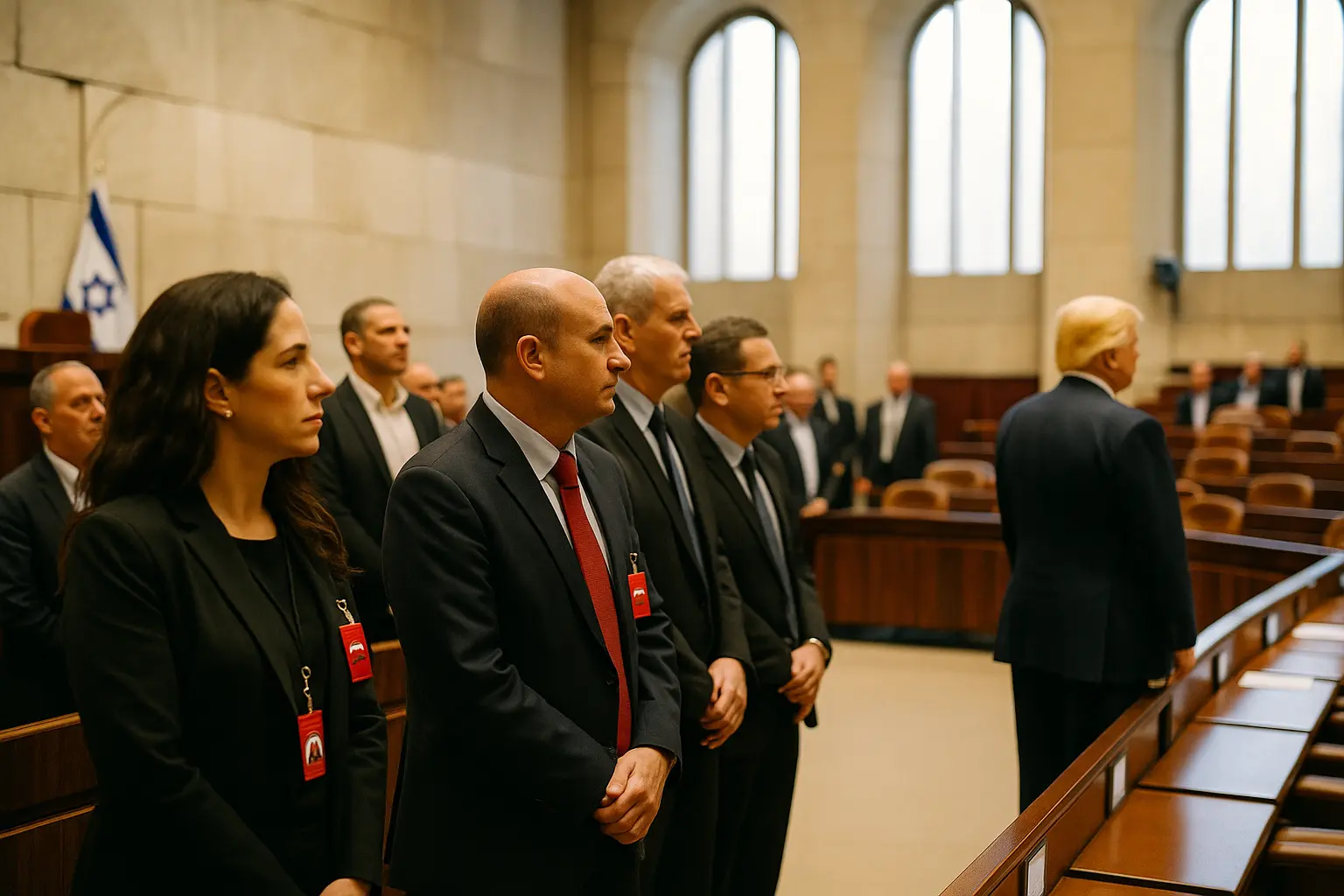
In a bold move that electrified the conservative base across both the United States and Israel, President Donald Trump took to the podium in Israel’s Knesset on Monday to issue a stirring call: He urged Israeli President Isaac Herzog (Independent) to pardon Prime Minister Benjamin Netanyahu (Likud), whose years-long corruption trial has dominated headlines. With the world watching, Trump’s speech marked not just the triumphant end to the devastating two-year Israel-Hamas war, but also a unique intervention in the judicial saga looming over Israel’s most battle-tested leader. As part of an American-first, peace-driven campaign, Trump hailed Netanyahu as a “wartime lion” and suggested that the pending corruption charges—which include accepting $260,000 in luxury cigars, champagne, and jewelry—should not outweigh his service to Israel during its darkest hour.
Long-tail keywords such as Netanyahu corruption allegations, Trump Israel Knesset speech, and Israel ceasefire Gaza war immediately sprang to prominence as Trump brushed aside the media’s obsession with expensive gifts and instead focused on peace and unity. Referring to the gifts, Trump famously quipped, “Cigars and champagne—who cares about that? Give him a pardon!” His remarks brought uproarious cheers and a standing ovation from Knesset members, reflecting widespread support among conservative lawmakers and voters worldwide.
“This long and difficult war has ended,” President Trump declared, “and it’s time for Israel to heal. The world is dancing in the streets.”
This speech came right after Hamas released the last 20 Israeli hostages, an act that capped off a US-brokered ceasefire brokered through grueling diplomacy. The Knesset gathering wasn’t just an ending; for many, it signaled the start of a new chapter—one that moves forward, not backward, with policy rooted in forgiveness and strategic vision.
The juxtaposition was stark: While Netanyahu battles courtrooms over what Trump called “minor gifts,” Israeli citizens celebrate peace in the streets and conservative voices hail the courage of leaders bold enough to choose amnesty over retribution. In real time, Trump was doing more than making a suggestion; he was setting an example of diplomatic strength and loyalty.
Pressure, Politics, and the Global Stage: The Inside Story on Netanyahu’s Troubles
President Trump’s appearance before Israeli lawmakers wasn’t the only drama gripping world capitals on this historic day. Just hours before, Prime Minister Netanyahu abruptly withdrew from the much-anticipated Gaza peace summit in Sharm el-Sheikh. His office cited the Jewish festival of Simhat Torah as the reason, but reports surfaced that regional and international leaders, most vocally Turkey’s President Recep Tayyip Erdoğan (AKP), had pressured Egyptian hosts to bar Netanyahu from attending. According to Turkish diplomatic sources, Erdoğan’s jet even circled the skies above the Red Sea until he was assured of Netanyahu’s absence, underscoring the high-stakes maneuvering at play (see more details here).
Adding to this high-voltage environment was Iraq’s direct warning to Egypt: if Netanyahu showed up, the Iraqi delegation would walk (further reading). After Egypt officially confirmed Netanyahu’s planned participation, his office announced his withdrawal within an astonishing 40 minutes, demonstrating just how much external pressure was exerted on Israel’s wartime leader.
“At the initiative of President Erdoğan and through Turkey’s diplomatic efforts — with the support of other leaders — Netanyahu did not attend the meeting in Egypt,” one Turkish official noted.
Yet, for all this backstage maneuvering, the real story remains Israel’s domestic reckoning. Inside the Knesset, Trump skillfully drew attention away from diplomatic spats and toward the future, issuing his appeal for unity and forgiveness. He highlighted the importance of consolidating Israel’s political front—not just in the face of foreign adversaries, but for internal healing as well.
The very public spectacle of Netanyahu’s legal struggles provided fodder for the global press, but within Israel, the debate was more personal and emotional. The alleged bribery and fraud charges—focused on expensive gifts from wealthy supporters—have become a national soap opera. Critics accuse Netanyahu of impropriety, while allies insist the prosecutions are a witch hunt meant to sideline a powerful nationalist figure. Trump’s pardon push, in this context, was not merely rhetorical. It was a call to refocus the country’s energy on its security and prosperity—and an implicit challenge to the judiciary to consider the bigger picture.
History, Policy, and the Way Forward: Pardon, Peace, and Conservative Values
For close observers of both Israeli and American politics, Trump’s call for a pardon dovetailed with his long-held skepticism of “lawfare” campaigns against nationalist leaders. Echoes of these themes—deep state interference, elite vendettas, prosecutorial overreach—have reverberated through right-wing circles for years, both in the US and abroad. Netanyahu’s trial, now stretching into its fourth year due to legal delays, has many drawing comparisons to efforts against conservative icons worldwide.
The accusations are specific but familiar to anyone watching populist politics: Netanyahu, alongside his wife Sara, stands accused of accepting more than $260,000 in luxury goods from powerful businessmen in exchange for political favors and more positive media coverage (details here). Critics claim these are serious breaches of trust; supporters counter that they pale in comparison to Netanyahu’s achievements for national security and Middle East stability.
“It is time for Israel to focus on rebuilding and healing — not endless trials over cigars and champagne,” one conservative commentator remarked after Trump’s speech.
The Knesset responded enthusiastically, echoing the populist sentiment that has propelled both Trump and Netanyahu to power. There’s broad consensus, at least on the right, that leadership through crisis ought to be rewarded, not torpedoed by politicized prosecutions. Trump’s suggestion may have been blunt—but it was also practical, rooted in the belief that strong countries need strong, united leadership.
Looking forward, the embrace of amnesty for Netanyahu—championed by Trump—reflects a broader push against what conservatives see as judicial activism and selective enforcement of laws. This is a time-honored conservative stance: that law and order matter, but not at the expense of national greatness or security. With Israel’s government steeled by two years of hard war, and its citizens hungry for normalcy, the urge for closure and unity could well overshadow efforts to re-litigate the past. Whether President Herzog moves to issue a pardon, the political calculus has already shifted—Israel’s nationalist resurgence, buoyed by Trump’s call, is not likely to fade from view.