
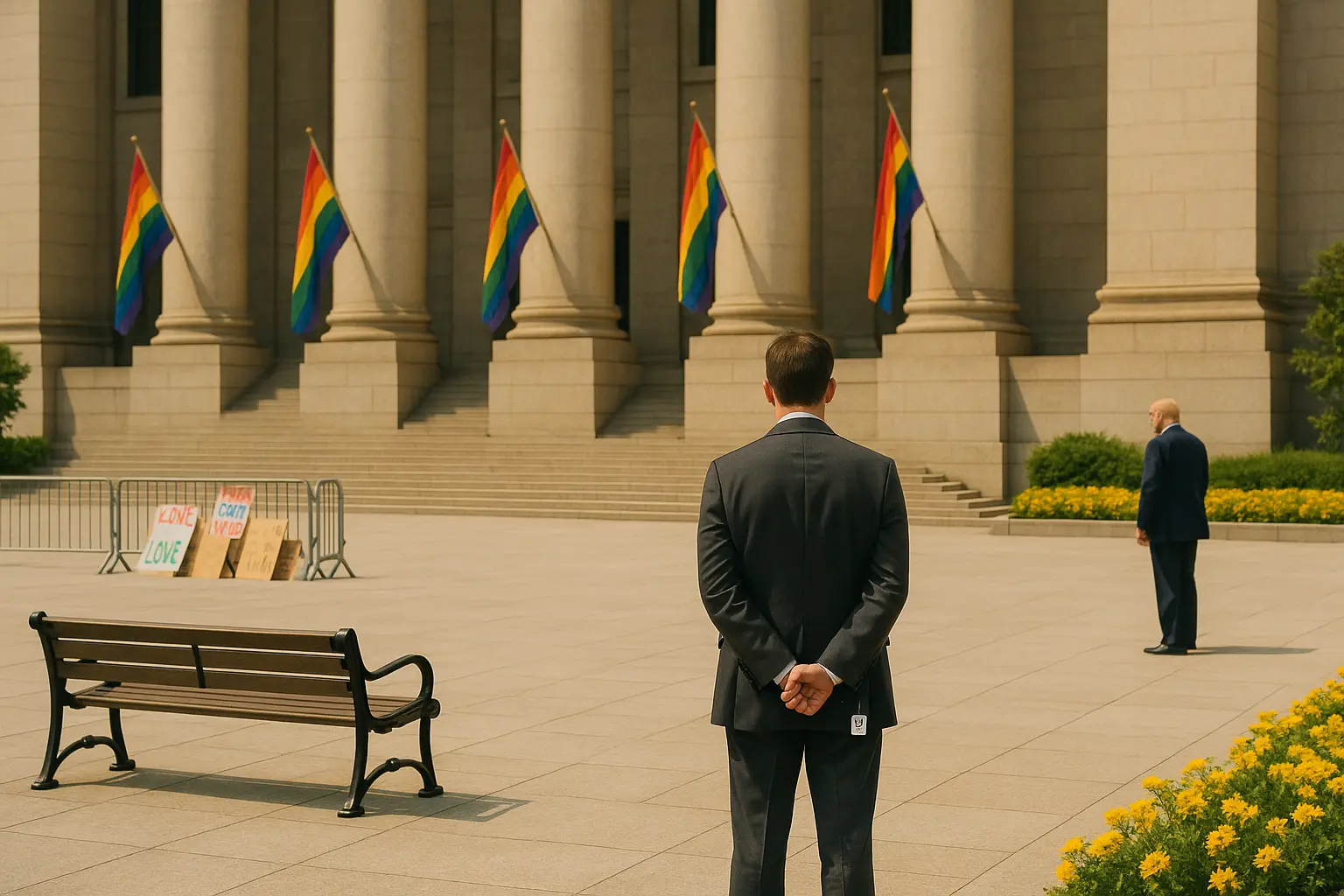
High Court Faces Historic Decision: Is Obergefell On the Chopping Block?
The eyes of the nation are fixed on the Supreme Court as justices prepare for a private meeting on November 7, 2025, to consider a challenge that could fundamentally reshape marriage law in America. The case—brought by former Kentucky county clerk Kim Davis—asks the high court to revisit and possibly overturn its 2015 Obergefell v. Hodges ruling, which forced all states to recognize same-sex marriage. This move comes amid increasing calls, particularly from conservative legal advocates and steadfast supporters of traditional values, to restore power to the states and uphold religious liberty in marriage matters. Conservative Americans, bolstered by President Trump’s (Republican) ongoing commitment to constitutional principles, see this as a long-overdue reckoning for judicial activism that has overstepped the bounds of the people’s will.
The November 7 conference will mark the court’s most direct confrontation with the legacy of Obergefell in nearly a decade. For the Supreme Court to take up Davis’s case, at least four justices must agree that the issue demands a full hearing. If the court declines to wade into this hot-button subject, a decision could arrive as soon as November 10—just days after their private meeting. The weight of this decision cannot be overstated, as the court’s actions could signal a return to greater local autonomy over marriage or reinforce a federal one-size-fits-all policy.
The stakes could not be higher: For millions of Americans who see marriage as a sacred institution, the Supreme Court’s willingness to revisit this issue is both a vindication and a potential turning point.
Kim Davis skyrocketed to national prominence in 2015 for refusing to issue marriage licenses to same-sex couples, citing deeply held Christian beliefs. For her principled stand, Davis was jailed after disregarding a federal order. This ignited fierce debates over religious liberty, government power, and the right to dissent—debates that have only grown sharper in the Trump era, as faith-driven Americans look to protect their constitutional freedoms. Critics have targeted Davis with lawsuits, with a jury ultimately awarding $50,000 each in damages to the couple she declined to serve. Despite this, Davis’s commitment to faith and traditional marriage remains unwavering—casting her as a folk hero for millions across the country who feel their voices have been stifled.
The showdown has significant implications for both red and blue states. Should the Supreme Court reverse course and allow states to determine marriage definitions, it would represent a resounding affirmation of state sovereignty—one of the bedrock principles of President Trump’s America First agenda. If the court holds the line on Obergefell, it risks further eroding local control and, some argue, continuing an era where activist judges rewrite the law from the bench.
Kim Davis, Religious Liberty, and the Conservative Defense of Marriage
The core of the Davis challenge centers around the issue of government overreach and the protection of religious liberty—timeless tenets for conservatives nationwide. When Davis refused, as a government official, to participate in what she saw as the redefinition of marriage, she was not acting in a vacuum. Countless Americans share her conviction, and the effort to bring her case before the Supreme Court is seen by many as a fight not just for her rights, but for the rights of all citizens to freely exercise their faith in public service.
Davis’s defense was bluntly rejected by the U.S. Court of Appeals for the 6th Circuit, which ruled that she was acting on behalf of the government rather than in her personal capacity. This legal distinction is now at the heart of the battle brewing before the Supreme Court. Notably, Davis’s legal team referenced conservative titan Justice Clarence Thomas (Republican) in their petition, highlighting that even on the court itself, there are voices that question the sweeping federal mandates imposed by the Obergefell decision. Indeed, Justice Thomas has publicly wondered whether the court “strayed from the Constitution” in its prior ruling, adding weight to the argument that a reexamination is due.
Supporters see the Davis case as an opportunity for the Supreme Court to take a long-overdue stand for the First Amendment and send a message that religious conviction has a place in American civic life.
Historical context matters. When Obergefell v. Hodges was handed down, public opinion was more divided and only just shifting in favor of same-sex unions. Now, according to a May 2024 Gallup poll, 69 percent of U.S. adults support legal marriage for same-sex couples. However, wide support does not mean every American agrees—or that the Constitution can be bypassed to mandate compliance from those with deeply held religious beliefs. Conservative leaders and legal minds argue that democracy means majorities make the law, and federal courts should tread carefully when upending millennia-old social institutions. Supporters say the case, therefore, is not just about marriage—it is about who decides the fundamental rules for society: unelected judges, or the American people and their local representatives.
The damages awarded last year to David Moore and David Ermold—$50,000 each for the denial of their marriage license—served to highlight what conservatives call the “punishment culture” increasingly targeting faith-based citizens. Davis’s treatment and the penalties imposed on her are viewed by many as emblematic of a larger clash over freedom of conscience.
The Broader Implications: State Sovereignty, Cultural Divides, and Trump’s America First Legacy
The Supreme Court’s willingness even to consider the Davis case is sending ripples through the legal and cultural world. In the aftermath of the court’s landmark Dobbs ruling in 2022, which overturned Roe v. Wade and returned abortion law to the states, many conservatives view the current moment as ripe for a broader reevaluation of federal interventions in social policy. The “America First” movement, reinvigorated by President Trump’s (Republican) 2024 re-election, continues to stress the constitutional wisdom of local governance and limited federal power.
If the court accepts Davis’s challenge and reverses Obergefell, authority over marriage laws would return to the states, opening the door for local populations to reaffirm traditional marriage or chart new paths according to community values. Such a move would underscore the founding vision that states serve as “laboratories of democracy,” where diverse solutions compete and the will of the people is respected. The outcome could rekindle debates not only about marriage, but about the very nature of government and the limits of judicial power. The court’s conservative majority—solidified by Trump-appointed justices—has an opportunity to cement a new era of jurisprudence centered on the Constitution’s original meaning and robust state sovereignty.
For conservative Americans, this is much bigger than any one case: It is about reclaiming their voice and values in the public square.
While activists on the left and some media outlets decry any attempt to revisit marriage policy as “rolling back rights,” supporters see it as the restoration of federalist principles and a crucial defense of religious freedom. The opposition’s argument often leans on shifting polls and rhetorical appeals to “progress,” but history has shown that values, rights, and the Constitution itself are not mere artifacts to be rewritten by judicial fiat. The left’s fixation on locking every social change into federal stone has eroded trust in the courts—and created cultural flashpoints that fuel division, rather than community resolution.
Should the Supreme Court refuse Davis’s petition, the movement for traditional marriage and religious liberty will not wane. Instead, it will continue energizing conservatives at the state and national level—reminding policymakers and voters alike that foundational questions of faith, freedom, and government authority are far from settled.
The Supreme Court’s pending decision on whether to rehear a challenge to same-sex marriage rights is more than legal drama—it’s a test of America’s character, resilience, and commitment to self-government. As November 7 approaches, conservatives across the country stand ready to defend the freedoms that have made this nation great, hopeful that the court will put power back where it belongs: with the people and the states. This historic moment could well define the next chapter in America’s long journey for faith, freedom, and sovereignty.