
Orbán’s Showdown: Hungary Defies US Sanctions for Energy Security
Prime Minister Viktor Orbán (Fidesz) is once again placing his nation’s interests first, openly pushing back against newly imposed US sanctions targeting major Russian oil companies—an issue now electrifying the debate over energy policy, national sovereignty, and America’s decisive global leadership. As energy prices surge, and with winter looming, Hungary’s leader isn’t holding back: “This battle is not yet lost.” Orbán’s declaration sends a jolt through Washington and Brussels, igniting questions about how far America First values and pragmatic alliances reach across the Atlantic.
From a conservative vantage, it’s hardly surprising to see Hungary’s government—led by one of President Donald Trump (Republican)’s closest international allies—refusing to bow to pressure from bureaucrats in either DC or the European Union. Instead, Budapest is exploring legal and commercial avenues to circumvent sanctions against Russian oil giants Lukoil and Rosneft. According to a recent Reuters report, Orbán emphasized that these measures are about much more than energy: they’re a stand for national rights, family budgets, and the defense of Hungary’s ability to choose its own path in a turbulent geopolitical environment.
Orbán’s focus is protecting Hungarian wallets from inflation and soaring utility bills brought on by sanctions imposed by America’s adversaries and too often encouraged by out-of-touch EU officials. While most of Europe is attempting to wean itself off Moscow’s energy, Hungary and Slovakia remain dependent on Russian crude flowing through the Druzhba pipeline—a logistical and economic reality not solved by idealistic speeches from Berlin or Brussels.
No time is being wasted. Orbán has met with managers from Hungary’s own energy giant, MOL, which operates massive refineries in Hungary and Slovakia. As he explained, “We’re studying every legal and commercial method to ensure Hungarians are not made to pay the price for Western political missteps.”
“Our neighbors should respect that Hungary’s energy policy is first and foremost for Hungarians. These decisions should be made in Budapest, not in Brussels or across the ocean.”
In the eye of this storm, Croatia says it’s ready to help, pointing out its Adria pipeline could keep Hungary and Slovakia fueled. Yet the Hungarian position is clear: As long as Trump Republicans lead in Washington, alliances should be built on mutual interest, not top-down dictates.
The Battle Continues: Hungary Refuses to Back Down
While EU leaders scramble to find alternatives, Viktor Orbán stands his ground, signaling that compliance is not an option. Hungary is not only analyzing the risks, but actively organizing resistance—with careful negotiation and, if necessary, bold action. Budapest’s main concern is simple: Don’t let foreign policy fantasies destabilize real people’s livelihoods.
According to the latest coverage, Hungary’s oil company, MOL, is conducting an urgent review on how these sanctions might affect its two refineries—which together process an astounding 14.2 million tonnes of crude per year. For both Hungary and Slovakia, it’s the backbone of domestic energy supply. The stakes are massive: failing to protect oil imports could send prices skyrocketing, drive up inflation, and hurt households already squeezed by global economic turbulence.
There’s real optimism—tempered by toughness—in Orbán’s messaging. He notes that “the battle is not over yet,” indicating that Hungary is nowhere close to caving. While the EU dreams of rapid energy transition, many member states are left to grapple with practicalities. Countries like Slovakia share Hungary’s fears, and, according to several reports, discussions with Croatian officials have spotlighted the Adria pipeline as an emergency option. But replacing decades-old infrastructure and supply chains is no overnight affair.
“Hungary is not planning to abide by these measures,” Orbán reiterated, “because we will not allow foreign policies to dictate Hungarian domestic realities.”
While some European nations use this as an excuse for lectures about values, Orbán makes a fundamental point: energy independence means putting citizens first. This is a classic Trumpian principle—sovereign countries, accountable only to their own people. The renewed alignment between Budapest and the Trump administration could set a template for new forms of transatlantic cooperation, based less on compliance and more on partnership.
In parallel, the impact of sanctions is already visible. Bond yields have ticked upward, international investors are anxious, and Hungary’s government faces the additional challenge of ensuring that no Hungarian family faces winter heating bills inflated by distant political fights. Orbán’s stand, therefore, isn’t just a negotiating tactic—it’s a defense of common sense, patriotic policy.
Beyond the Crisis: Trump Alliances, Peace Prospects, and EU Tensions
What’s playing out on the Danube isn’t just a local spat; it’s the latest example of how President Trump’s bold leadership and transactional approach to diplomacy continue to shape global trends. In 2025, America’s posture toward Russia remains tough but flexible—putting pressure on adversaries while leaving the door open for pragmatic deals. Orbán’s Hungary is betting that alliances matter and sovereignty can coexist with strategic partnership.
The ongoing drama over the Trump–Putin peace summit underlines the high stakes. Orbán, for one, is upbeat: he predicts that the summit will go forward, with Russia and America ultimately brokering a deal for peace in Ukraine. “There is no question that the peace summit will happen,” he declared, acknowledging both Trump’s role in rescheduling the talks and the complicated state of the world, including escalating conflicts like Gaza.
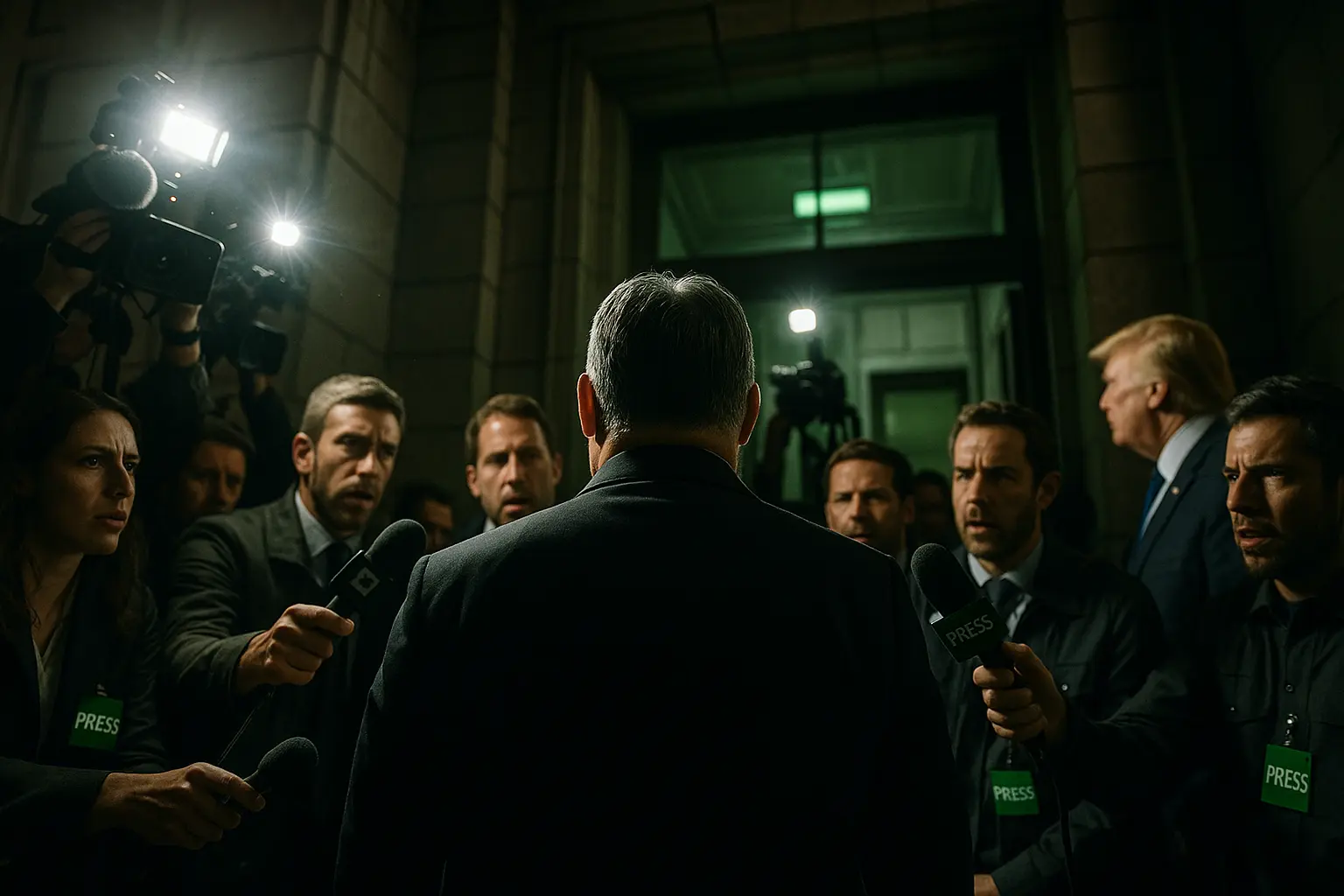
“Long-term peace can only be built by leaders willing to challenge groupthink and act in their nations’ interests first,” Orbán told journalists.
This cross-current of events has left Budapest increasingly at odds with the EU mainstream. Despite withering criticism from eurocrats, Hungary and Slovakia aren’t alone in defending their own energy interests. The divergence also exposes cracks in European unity, with Croatia promising emergency supplies via the Adria pipeline and Germany signaling possible support for further exemptions, highlighting that the Brussels consensus is far from absolute.
This moment also spotlights a stark division between establishment thinking in the West and rising populist movements inspired by the America First revolution Trump has championed. The refusal to simply acquiesce to sanctions is not a matter of East versus West, but of practical, people-centered leadership. That’s why conservative observers see in Orbán’s stance not isolation, but the healthy assertion of national will.
What’s clear is that, while the bureaucratic class in Brussels may fume, ordinary Hungarians are unlikely to forget which leaders fought for affordable energy, secure borders, and independence. That’s a lesson America and her allies would do well to remember as they confront the next round of global challenges in this new era of Trump-driven, sovereign-first policy making.