
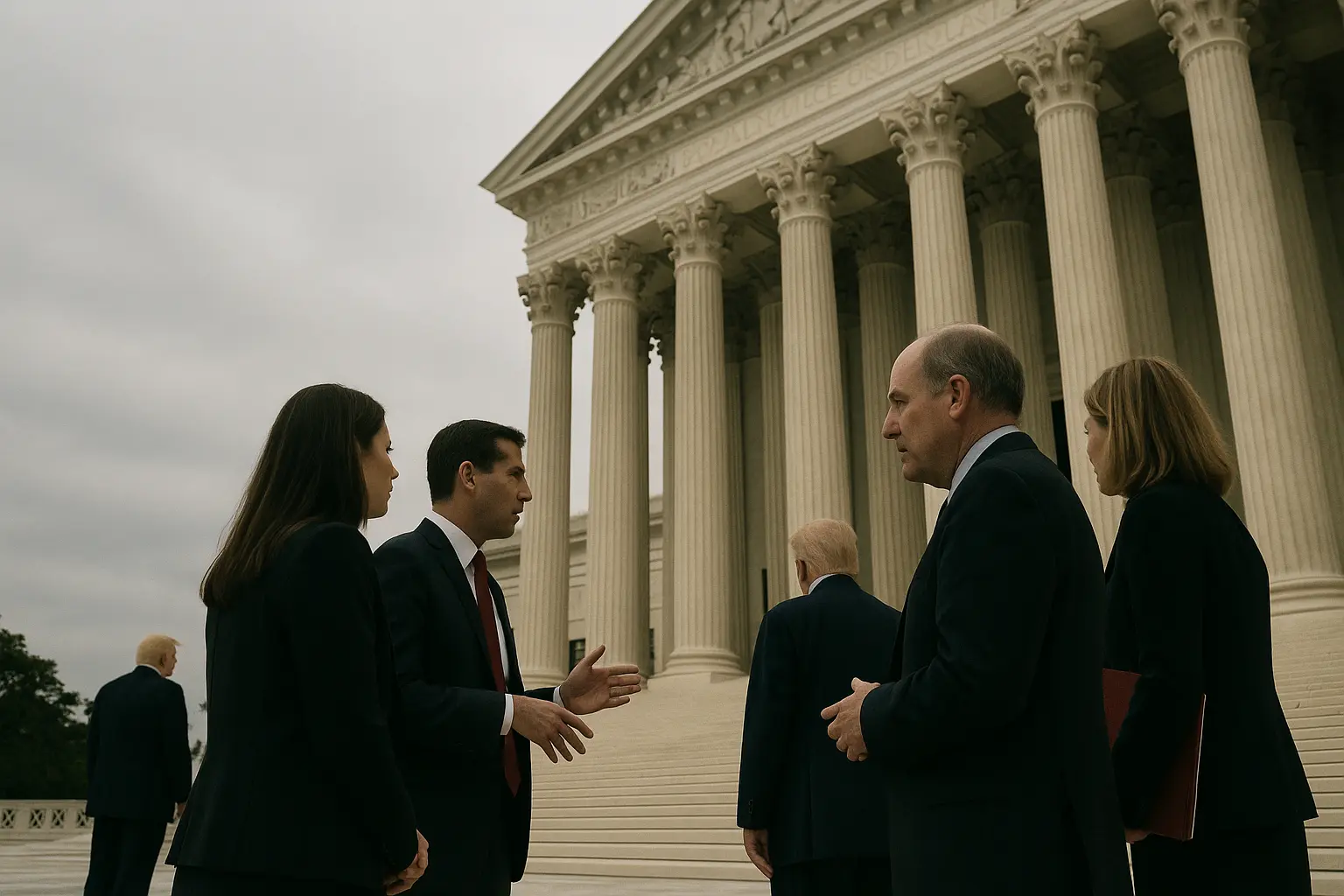
Trump Battles D.C. Bureaucracy Over Copyright Office Power
President Trump (R) is pushing for full executive authority to remove the Register of Copyrights, after a federal appeals court blocked his decision and reinstated Shira Perlmutter. In an explosive new battle over the reach of presidential power, the Trump administration has gone to the Supreme Court to restore control over federal appointments—a move that has energized America First supporters and ignited heated debate among constitutional scholars.
The heart of the controversy is Shira Perlmutter, the Register of Copyrights, who was fired by President Trump in May 2025 after she released a controversial report questioning whether companies could legally train artificial intelligence models using copyrighted content. Trump’s decisive action not only reaffirmed his refusal to let bureaucratic overreach stand in the way of innovation and property rights but also sent a strong message: the president sets the executive agenda, not unelected bureaucrats or activist courts.
Perlmutter challenged her termination, and the D.C. Circuit Court, in a divided ruling, sided with her, reinstating her position while arguments played out in court. According to Judge Justin Walker (R), dissenting on the appeals panel, “The Supreme Court has repeatedly and unequivocally stayed lower-court injunctions barring the President from firing officers exercising executive power.” The administration’s stance is clear: keeping Perlmutter in office while she sues the government is a classic example of judicial meddling in the constitutional powers of the executive.
“This is another case of improper judicial interference with the President’s power to remove executive officers,” the Justice Department wrote in its emergency application to the Supreme Court, echoing concerns of many conservatives.
This showdown matters not just for its immediate impact on a single official or office. It is a litmus test for just how far federal courts can go in tying the president’s hands—particularly when it comes to staffing the government with individuals who carry out executive vision and enforce the law. As Solicitor General D. John Sauer argues, the Library of Congress acts as an executive agency in many respects, and the president must be able to exercise control if the office is to serve the American people’s interests.
Inside the Legal War: Congress vs. the President Over Copyright Oversight
The Trump administration’s challenge to the appeals court ruling raises fundamental questions about the separation of powers, executive authority, and the shape of the federal bureaucracy. Perlmutter’s defenders argue her role is to advise Congress, not the president. By statute, the Register of Copyrights is appointed by, and reports to, the Librarian of Congress—a position filled by presidential appointment with Senate approval for a 10-year term. This unique structure has made the office a hot spot in the ongoing struggle between congressional and executive control of regulatory agencies.
The stakes grew higher after Trump ousted then–Librarian of Congress Carla Hayden (D) and installed Deputy Attorney General Todd Blanche (R) as acting head—moves Perlmutter claims rendered her own firing legally suspect. Her supporters argue she can be dismissed only by a properly appointed Librarian. But the administration counters that the Library of Congress, through offices like the Copyright Office, acts for the executive, especially when handling rulemaking or negotiating international copyright agreements, and thus the president has every right to remove underperforming or obstructionist officials.
Perlmutter’s original dismissal was closely tied to her public questioning of whether AI training on copyrighted material was legal—a position the administration reportedly rejected, viewing it as undermining American innovation and property rights (AP News).
The D.C. Circuit’s reinstatement of Perlmutter set off alarms among conservative jurists and elected officials. They view it as another example of judicial overreach—an unelected court second-guessing decisions properly left to the elected commander in chief. They also point to precedents allowing presidents to fire heads of other independent agencies (such as the Federal Reserve Board) even as legal disputes played out, arguing that the executive must never be neutered by endless court battles.
Supporters of Trump’s America First agenda say these bureaucratic standoffs undermine government accountability and create obstacles for elected leaders trying to enact the will of the voters. They also argue that having judges interfere in agency appointments and removals risks politicizing bureaucratic roles that ought to be focused on implementing policy, not furthering personal agendas or stalling legitimate executive action.
Historical Context and National Ramifications: Why This Case Matters for America
This standoff isn’t just inside baseball for lawyers and politicians—it’s about the American people’s right to expect accountable, effective leadership from those chosen by their votes. For years, the conservative movement has fought against the rise of unelected bureaucrats who feel emboldened to resist the president’s policies or drag their feet on key priorities. Allowing courts to step between elected executives and their appointees, critics say, slows progress and erodes the separation of powers designed by the Constitution.
The debate over the Register of Copyrights taps into longstanding battles over presidential removal power, echoing Supreme Court decisions like Myers v. United States (1926), which supported presidential authority to dismiss executive officers. Trump’s position is in lockstep with this tradition—one that envisions the president as not only the nation’s chief executive but the decisive figure steering policy across all agencies.
“If courts can shield officials like Perlmutter from removal, they’re handing power over to career functionaries, not the President the people elect,” a senior administration official said, reflecting widespread conservative concerns about an unaccountable “fourth branch.”
This case also raises big-picture questions about the digital economy, AI innovation, and the future of U.S. copyright law. As new technologies emerge, the need for an agile and responsive federal government—led by energetic, decisive officials in tune with the country’s best interests—has never been greater. Trump’s demand for the ability to install loyal, capable leaders reflects this urgency.
By asking the Supreme Court to let him “refire” Perlmutter and affirm his right to hire and fire top officials, President Trump is doubling down on his promise to drain the swamp and return true control to the Oval Office and, by extension, the voters themselves. The coming decision could set a new bar for executive authority across the federal government, giving conservative reforms new momentum to dismantle the administrative barriers that for too long have blocked change.
With the court’s 6-3 conservative majority and a growing body of precedent supporting presidential power over the bureaucracy, all eyes are on Washington. However this case plays out, it will echo far beyond the halls of the Copyright Office—shaping the balance of power for years to come, and ensuring that America, under Trump, keeps putting the people, not the bureaucracy, first.