
Trump’s Bold Law-And-Order Promise: More Than the National Guard for City Safety
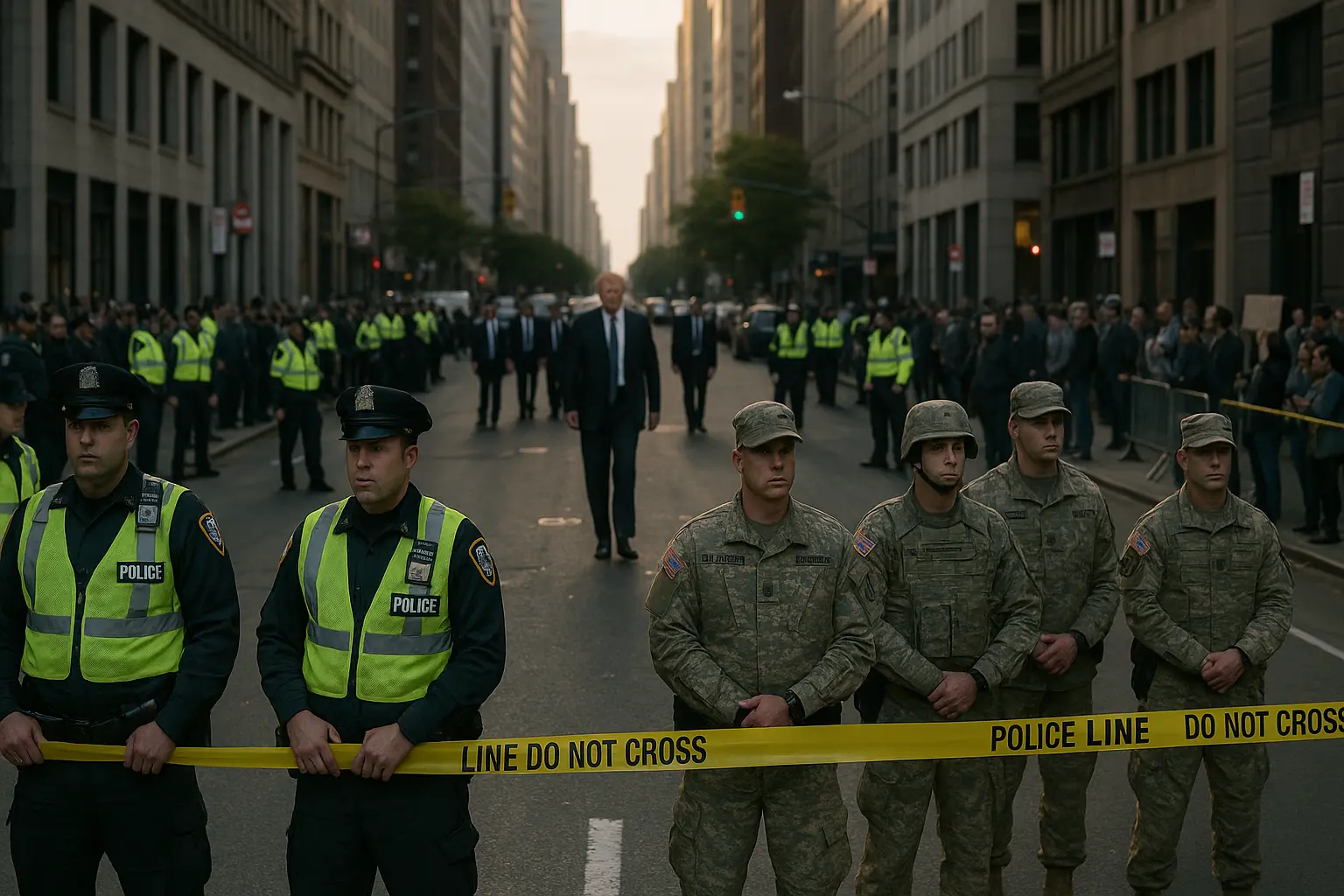
President Donald J. Trump (R) has once again signaled his determination to tackle rampant crime in America’s major urban areas, announcing he could send “more than the National Guard” to restore order if Democratic mayors and governors refuse to act. The president’s declaration, made aboard the USS George Washington at Yokosuka Naval Base in Japan, comes as part of a weeklong Asia trip but landed with thunderous impact back home, energizing conservatives and putting urban leaders on notice. Law-and-order has always been a cornerstone of the America First movement, and Trump, having reclaimed the White House in 2024, is reaffirming his commitment to safe streets.
During his speech to service members and U.S. allies overseas, Trump pulled no punches: “We have cities that are troubled. We’re sending in our National Guard, and if that’s not enough, we’ll send more than the National Guard. Because we’re gonna have safe cities. Whether people like that or not, that’s what we’re doing.”
Chicago remains Ground Zero in the fight. Over Labor Day weekend in September 2025, nearly 60 residents were shot and at least nine killed under the watch of Democratic Mayor Brandon Johnson (D) and Governor J.B. Pritzker (D), marking the thirteenth year in a row Chicago has led the nation in homicides. Instead of accepting federal help, Pritzker doubled down, labeling the move as “Trump’s Invasion” and accusing the administration of manufacturing a crisis in the state.
The president’s team pushed back, pointing to community pleas, city council concerns, and even left-wing media hosts begging for federal intervention. “Everybody knows Chicago is a hellhole right now,” Trump declared. The result? Operation Midway Blitz, which netted hundreds of dangerous illegal immigrants, gang members, and wanted felons—a direct, measurable response to decades of failed local leadership.
“We’re going in. I didn’t say when we’re going in. This isn’t political—I have an obligation,” Trump said with unmistakable resolve, making it clear that lawlessness will not be tolerated.
Illinois isn’t alone. As riots and crime waves rock progressive strongholds like Portland and Los Angeles, the Trump administration has responded by deploying hundreds of National Guard troops to bolster federal law enforcement. Legal challenges have slowed, but not halted, these deployments, with the ultimate fate of federal intervention now resting before the Supreme Court.
Trump’s announcement drew ire from blue-state politicians but struck a chord with Americans who have long demanded action as city violence surges. With real-time polling showing skepticism of military deployments for law enforcement, Trump’s message remains: safety and order are not up for debate, and he stands ready to do what local leaders will not.
Main Narrative: Federal Action in Blue Cities Sparks Controversy and Court Battles
Amid Democratic inaction and a mounting national outcry for safe streets, President Trump’s latest move symbolizes not just a policy stance, but a fundamental ideological difference in how public safety should be secured. The White House authorized the deployment of 300 Illinois National Guard troops in early October, specifically to protect federal agents and facilities targeted in Chicago. The response was swift and predictable—Governor J.B. Pritzker (D) filed lawsuits, asserting federal agents were being deployed “against our wishes” and labeling it “Trump’s Invasion.”
Still, the backdrop tells the true story: after another bloody holiday weekend, Chicagoans aren’t clamoring for more rhetoric—they’re demanding results. The administration made clear its intent: the Guard would defend ICE agents and critical federal infrastructure, precisely as allowed under 10 U.S.C. §12406 when local authorities are unable—or unwilling—to restore order.
One White House official stated, “Despite political gamesmanship, our focus remains the safety of citizens and federal personnel under constant threat. The law is clear, and so is our obligation.”
The administration’s resolve extended west. As riots flared in Portland, the president green-lit the deployment of 200 additional National Guard troops from California and Oregon, underscoring a unified federal response to targeted mayhem in Democrat-run cities. Legal wrangling soon followed, with federal judges at times questioning the candor and reliability of government statements, creating an ongoing back-and-forth battle in the courts. Now the Supreme Court weighs whether to lift the block on Chicago’s Guard deployment, a ruling that could define the federal government’s future latitude in responding to domestic unrest.
Public opinion polling reflects a divided America. Majorities generally oppose the use of the military for law enforcement, driven by memories of past crackdowns and media-fueled apprehension. Yet, when push comes to shove, city residents—those actually living in fear—are often far more supportive than Beltway pundits admit. When dangerous criminals like Odyssey Head, arrested in Brooklyn this fall on over two dozen charges including three counts of attempted murder, make headlines week after week, Trump’s muscular approach starts to look not just appealing, but essential.
Crime in blue states isn’t a Fox News fantasy. It’s a lived reality for millions. Even mainstream outlets concede violence is surging. Gang activity, illegal guns, and unchecked drug cartels remain entrenched problems. President Trump’s critics argue federal intervention inflames tensions, but when asked to confront the root causes or offer solutions, blue-state leaders too often shift blame or insist things “aren’t that bad.” The new administration’s muscular strategy has already led to hundreds of arrests, ICE sweeps, and federal facility protections, putting action over ideology.
Historical Context: Law and Order, America First, and the Battle for Urban Safety
Trump’s determination to deliver safe streets springs from a deep America First philosophy and long-standing frustration with soft-on-crime urban policy. When he first won the presidency in 2016, Trump clashed frequently with progressive mayors and governors who resisted federal law enforcement assistance, prioritizing political optics over public safety. Today’s landscape is a repeat: crime rates continue to soar under blue-city leadership, but instead of collaboration, federal offers for help are met with lawsuits and partisan finger-pointing.
Illegal immigration is an integral factor here. As Trump lambasted Governor Pritzker (D) for failing to address Chicago’s gun violence, he pointed directly at transnational criminal organizations exploiting lax borders and sanctuary city protections. South American drug traffickers, he alleged, are emboldened by bureaucratic hand-wringing and refusal to cooperate with ICE—factors fueling a perfect storm for violence. Trump’s critics have scoffed at the notion of Space Command or further military assets being used in cities, yet their own inability to secure even basic law and order leaves the door open for strong measures.
Conservative commentator Mark Levin noted, “For years, big-city Democrats have fiddled while their communities burned. Now, Trump is holding them to account the only way Washington can—by using every tool at the president’s disposal.”
Legal resistance has a long precedent in American history, from the National Guard deployments to enforce desegregation to the use of federal marshals during civil rights struggles. What’s different now is the open, partisan defiance from statehouses whose leaders fear nothing more than a successful, high-visibility law-and-order campaign by a conservative president. Still, the facts can’t be ignored: Chicago’s murder rate dwarfs most war zones, and other cities aren’t far behind. Every year, more American lives are lost in Democratic strongholds than on any foreign battlefield.
Trump’s latest declarations—whether seen as tough medicine or a constitutional crisis—are reshaping the urban safety debate. If local leaders refuse to act, Trump says he will. The fight is now bigger than partisan gamesmanship; it’s a battle for the soul and security of America’s cities. If the Supreme Court opens the way, the next chapter may well see more than the National Guard deployed to restore sanity and sovereignty, giving hope to millions desperate for real change.