
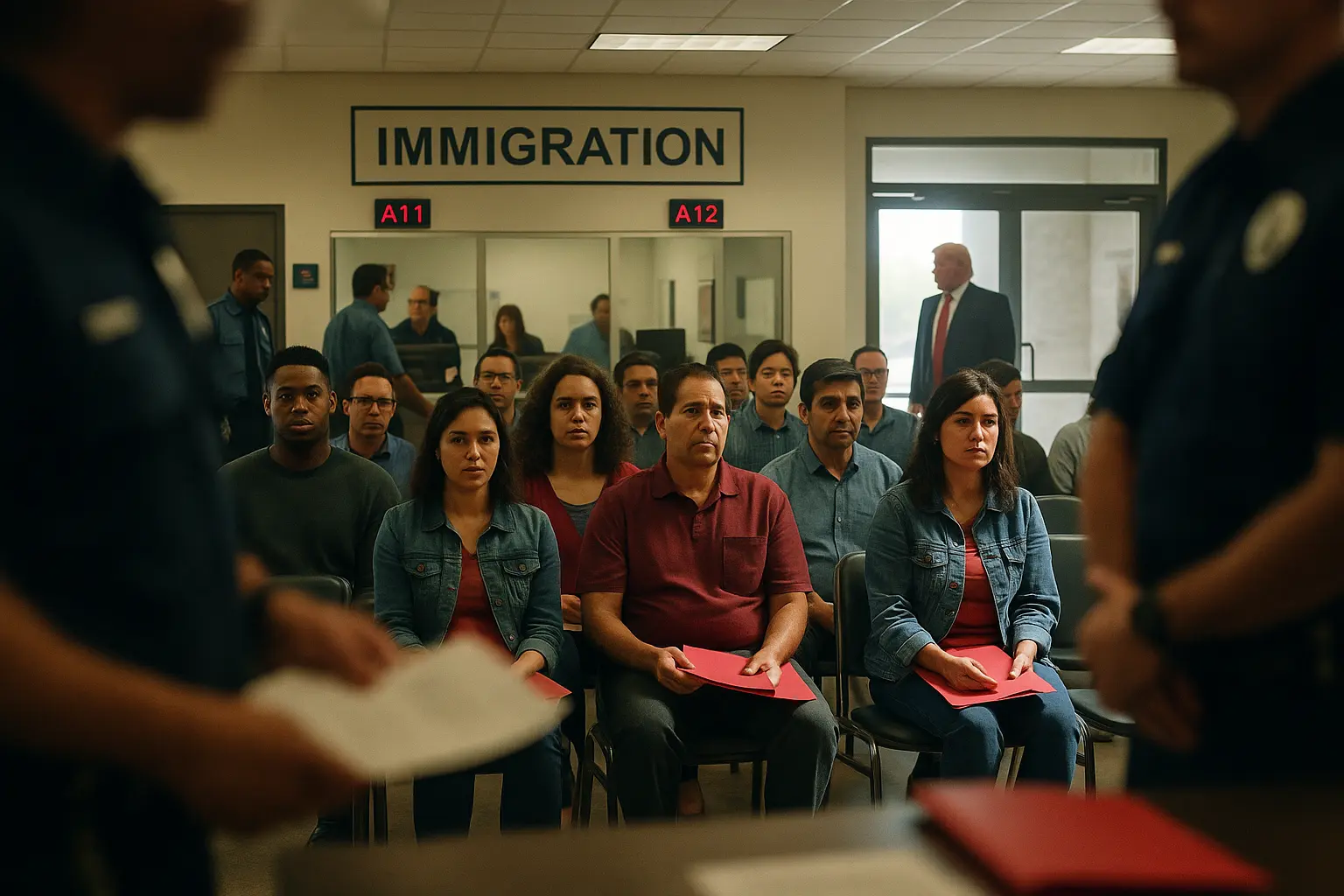
Opening Overview: Visa Revocations Double Under Trump’s Tough Immigration Enforcement
Visa revocations, immigration security, and America-first policies are making headlines once again thanks to President Donald Trump’s (Republican) relentless focus on safeguarding U.S. borders. Since his triumphant return to office in January 2025, the Trump administration has revoked nearly 80,000 non-immigrant visas, smashing prior records and more than doubling last year’s total. These bold actions, executed to curb threats ranging from criminal activities to foreign influence, form the cornerstone of the president’s ongoing drive to put America’s security and sovereignty first. Conservatives have hailed the move as essential for restoring national pride and protecting citizens, while critics claim it stirs up fear among certain immigrant groups.
Immigration officials and the State Department, now under the seasoned watch of Secretary Marco Rubio (Republican), report the cancelled visas resulted from rigorous background checks, enhanced criminal monitoring, and groundbreaking social media surveillance. According to reports, a staggering 16,000 visas were revoked for driving under the influence, 12,000 for assault, and nearly 8,000 more for theft—a clear sign that foreign lawbreakers are no longer welcome. On top of these public safety priorities, the administration has gone after individuals whose political activities on social media reflect hostility to U.S. values and interests. Labor unions quickly filed lawsuits objecting to these more thorough checks, but the president and his team remain unapologetic in the fight for homeland security.
“Promises made, promises kept,” declared the State Department in a widely circulated X post, doubling down on Trump’s pledge to make America safe again.
Democrats and pro-immigration activists have expressed alarm at the scale of this crackdown. Still, the administration shows no signs of backing down—affirming America’s right to set its own standards for who is allowed to visit, study, or work within its borders. In today’s volatile global landscape, such decisive leadership is seen by many as not just welcome but necessary.
Main Narrative: Trump’s Bold Stand—Vetting, Revocations, and the Politics of Security
The bold course set by President Trump (Republican) has never wavered: American safety and national interest come first, even when that means shaking up decades-old visa policies. On his very first day back in the Oval Office, Trump signed a sweeping executive order that made clear the new administration’s determination to close the loopholes that globalists have long exploited. The directive was simple but far-reaching—foreign visitors and workers must undergo tougher vetting, ensuring none “bear hostile attitudes” toward the U.S., with a particular emphasis on rooting out anti-American and antisemitic sentiment.
The impact was immediate. State Department analysts swung into action, expanding background screening, implementing more invasive social media checks, and enacting strict compliance reviews for new and existing visa holders. As the administration explained, these actions are required not only to catch those who would break America’s laws but also those whose “political activism” or support for anti-U.S. causes signals a deeper security risk. The administration did not hesitate to use newly-available data to track down visa holders who voiced pro-Palestinian or anti-Israel positions, or engaged in activities conflicting with America’s foreign policy.
Secretary Marco Rubio (Republican), speaking on the ongoing crackdown, said, “I have personally revoked the visas of hundreds, perhaps thousands, of foreign nationals, including some students, who acted against our interests.”
Social media monitoring emerged as the major flashpoint. Labor unions rushed to file lawsuits, claiming that these policies violate the First Amendment. But the administration, rightly focused on national security, defended its position in court, arguing that freedom of expression doesn’t extend to non-citizens abusing their U.S. privilege to undermine the nation. While activist media outlets decried the move, tens of millions of Americans supported Trump’s proactive strategy—tired of foreign lawbreakers slipping through and frustrated at failed promises from previous administrations.
Among those hardest hit: Indian nationals and H-1B workers, as well as thousands of students who overstayed their welcome or broke rules. Each revocation is not just a bureaucratic action—it’s a declaration that the days of a porous immigration system are over. Criminal convictions, especially for drunk driving, assault, and theft, made up almost half of all cancellations—a powerful message from the White House that public safety trumps bureaucratic niceties.
The numbers are staggering: 80,000 visas revoked this year alone, a dramatic increase over previous years and proof of what determined leadership can accomplish. Major union lawsuits and activist outcries may clutter the headlines, but for law-abiding Americans, these reforms translate to safer neighborhoods, less fraud, and a renewed confidence that their government is standing guard. President Trump’s blunt approach may offend liberal sensibilities, but as this year’s State Department figures confirm, it works.
Contextual Background: Decades of Lax Oversight End as ‘America First’ Returns
To fully understand the seismic shift occurring in U.S. visa and immigration policy, it helps to remember just how lax the old system was. Before Trump’s (Republican) reelection, a culture of leniency had allowed foreign nationals convicted of serious crimes—from DUIs to assault—to remain on U.S. soil, courtesy of weak enforcement and inadequate screening. Politicians and bureaucrats from both major parties hesitated to anger activist groups or foreign governments. Meanwhile, American communities bore the cost as criminal aliens skated by without consequence.
One senior Department of Homeland Security official observed, “We used to have our hands tied. Now, with President Trump at the helm, law-abiding Americans finally have a champion.”
The post-2020 era had seen steady increases in both visa issuance and reported abuses, particularly within student and tech worker categories. Programs like the H-1B and various student visas, designed to foster opportunity, instead attracted widespread abuse. Data from the State Department shows that more than 6,000 student visas were revoked in August alone due to overstays, legal violations, and political activism inconsistent with America’s interests. Anti-U.S. sentiment, radical political activity, and even social media posts connected to terrorism became key triggers for revocation in recent months.
Since reentering the White House, President Trump’s aggressive policies have forced a national reckoning. Immediate deportations for lawbreakers are up, and the government now expects visa applicants to make social media accounts public for vetting purposes. Critics fear the supposed chilling effect on dissent, but for Main Street America, the priority is simple: only those who respect American law and values should be given the privilege of entry. Even the president’s opponents admit that the historic number of visa revocations marks a decisive break from previous patterns of neglect.
As the Trump administration continues its mission, lawmakers and officials, including Secretary Rubio (Republican), have promised even closer collaboration with law enforcement and U.S. allies to track foreign nationals deemed dangerous. The administration’s promise—now demonstrably kept—is that America’s doors will remain open only to friends, not foes. Expect further reforms, and perhaps even bigger numbers, as President Trump (Republican) keeps his vow to deliver security, order, and respect for American values above all else.
The Trump administration’s crackdown marks a profound, lasting change in U.S. immigration enforcement—one squarely in line with the nation’s founding principles.