
House Crypto Bills Spark Volatility, Division, and Hope for Innovation
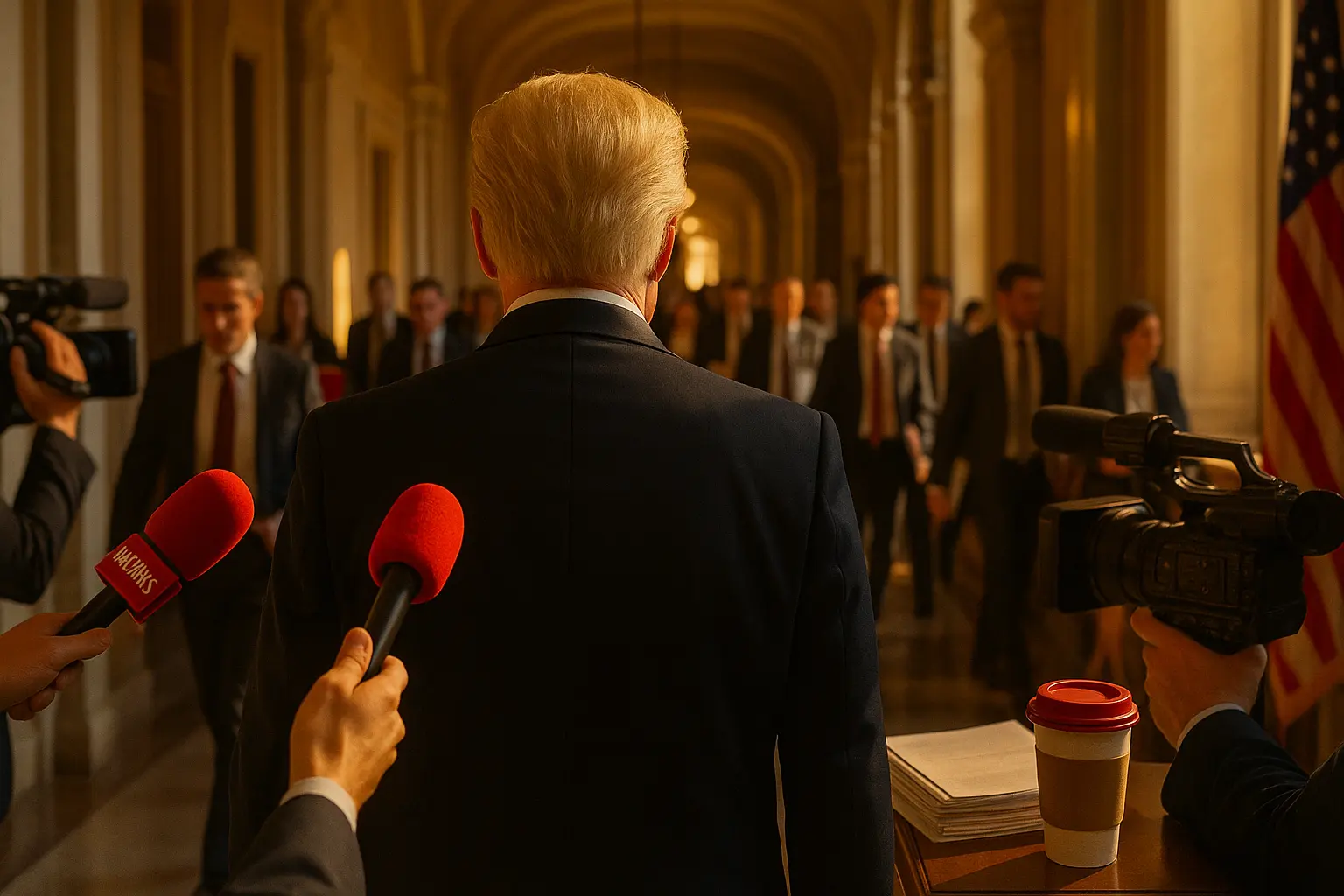
Crypto regulation is charging to the forefront in Washington as the U.S. House kicks off “Crypto Week”—a landmark, five-day push to finally bring meaningful federal rules to digital assets. American entrepreneurs, investors, and crypto innovators nationwide should watch closely, as their future might hang in the balance. At the top of the docket: the Guiding and Establishing National Innovation for US Stablecoins (GENIUS) Act, the Digital Asset Market Clarity (CLARITY) Act, and the Anti-CBDC Surveillance State Act. These bills promise to give the United States a fighting chance to lead in a rapidly evolving financial world. And as always, President Donald Trump (R) stands at the center of this crucial showdown, fighting for American sovereignty and freedom from bureaucratic overreach.
The GENIUS Act, poised to establish tough rules and real consumer protections for stablecoins and digital assets, is already a Senate-passed, bipartisan victory. With the House now in the hot seat, marketplace intrigue is rising—and so are crypto prices.
“If these bills pass, you can’t put the genie back in the bottle — crypto is going mainstream,” declared one prominent industry executive, signaling just how far-reaching this week could be for the American economy.
But the process hasn’t been smooth sailing. A surprise revolt by House Freedom Caucus conservatives temporarily halted progress, exposing rifts within the Republican Party and sending crypto values on a roller coaster. Bitcoin soared over 9%, topping $120,000 before dipping to $118,227, while Ethereum fell sharply then rebounded, reflecting massive market pent-up demand for regulatory certainty (crypto prices exhibited significant volatility around the vote).
As America’s lawmakers debate, the world is watching. Are we on the brink of a new era of financial innovation—one where U.S. strength, not globalist priorities, leads the digital revolution?
Tensions Mount in the House as Trump Rallies Conservatives on ‘Crypto Week’
The heart of Crypto Week is a series of high-stakes votes. Republican leaders, emboldened by President Trump (R)’s renewed focus on American tech might, have championed the GENIUS Act, which establishes a federal framework for dollar-pegged stablecoins and puts the Commodity Futures Trading Commission (CFTC), not the overreaching Securities and Exchange Commission (SEC), in the driver’s seat of regulating most crypto exchanges. This wrests critical technological leadership away from unelected DC bureaucrats—sending a message that America’s financial sovereignty comes first.
For innovators, the GENIUS Act would create ‘critical technological innovation zones,’ offering tax breaks and regulatory fast-tracking for AI, biotech, and crypto ventures while pulling stablecoin regulation away from the SEC’s hands and putting banking regulators in charge (the act aims to create tax breaks and innovation zones for these industries).
But on the House floor, not all conservatives were satisfied. The main sticking point? Some hardliners claimed the bill fell short of mirroring Trump’s January 23 executive order banning a central bank digital currency (CBDC), a move intended to protect Americans from Big Government surveillance and preserve the privacy of the dollar (House conservatives opposed the bill partly because it did not reflect President Trump’s January 23 executive order that called for banning a central bank digital currency (CBDC)).
“We will not stand by while bureaucrats dream up untraceable ‘Fedcoins’ that threaten liberty and privacy,” warned a senior House Republican (R), echoing Trump’s firmly anti-CBDC position.
Twelve members of the GOP’s Freedom Caucus banded together, tanking a crucial procedural vote and sending the House into gridlock. Democrats, for their part, remained divided—with some leaders like Rep. Maxine Waters (D-CA) slamming the bills as potential tools for ‘financial ruin,’ while others tentatively acknowledged the need for clearer rules. The impasse produced sharp swings in the crypto markets, as Bitcoin and Ethereum investors struggled with uncertainty (the stalled legislation caused sharp fluctuations in Bitcoin and Ethereum prices).
Never one to leave the fight unfinished, President Trump called an Oval Office huddle, bringing 11 reluctant House members on board after a candid discussion of conservative priorities. Speaker Mike Johnson (R-LA) joined the call, signaling a rare but necessary consensus. By the following morning, the House was prepared to advance one of the most pivotal crypto rulemaking packages in American history (Trump held an Oval Office meeting with 11 of the 12 congress members needed to pass the GENIUS Act and secured their commitment).
Historic Policy Shift: How ‘Crypto Week’ Will Shape U.S. Innovation and Sovereignty
Crypto Week is more than a legislative sprint—it’s a turning point for American policy, a signal to both Wall Street and Main Street that the United States will not let globalist technocrats or international bodies dictate our digital future. With the GENIUS Act already clearing the Senate by a bipartisan 68–30 vote, the House debate—and Trump’s visible leadership—reinforces the principle that financial regulation must foster freedom, not stifle it (The GENIUS Act passed the Senate on June 17, 2025, with a bipartisan vote of 68–30).
The pending package also features the CLARITY Act, compelling stablecoin issuers to fully back tokens with U.S. dollars or Treasuries, deliver monthly reserve reports, and undergo annual audits, locking in significant transparency and accountability upgrades for every American crypto investor. Meanwhile, the Anti-CBDC Surveillance State Act blocks the Federal Reserve from issuing any surveillance-prone digital dollar—a direct response to legitimate conservative fears about Big Brother’s intrusion (the Anti-CBDC Surveillance State Act targets potential Fed surveillance).
“As the EU pushes forward with its own top-down digital asset regime, America’s approach—rooted in constitutional privacy, innovation, and limited government—is a model for the world,” said a senior crypto policy advisor close to the Trump administration.
By shifting jurisdiction for most digital asset regulation to the CFTC, Congress is answering the call from entrepreneurs who’ve long decried the SEC’s heavy-handed tactics and lack of practical clarity. With proper oversight, there’s a renewed hope that historical volatility and industry scandals—like those that undermined public trust during crypto’s infancy—will be mitigated, inviting deeper institutional investment and technological progress.
Yet the process is far from over. Each bill’s passage will mean countless regulatory details for agencies to hammer out—true, but the foundation for a flourishing, innovation-driven digital economy is finally being laid. Under Trump’s leadership, American crypto, AI, and biotech can outpace China’s state surveillance and European regulation. This week’s votes open the door to a future where freedom and technological mastery go hand-in-hand. Every congressional action counts—as does every citizen’s engagement.