
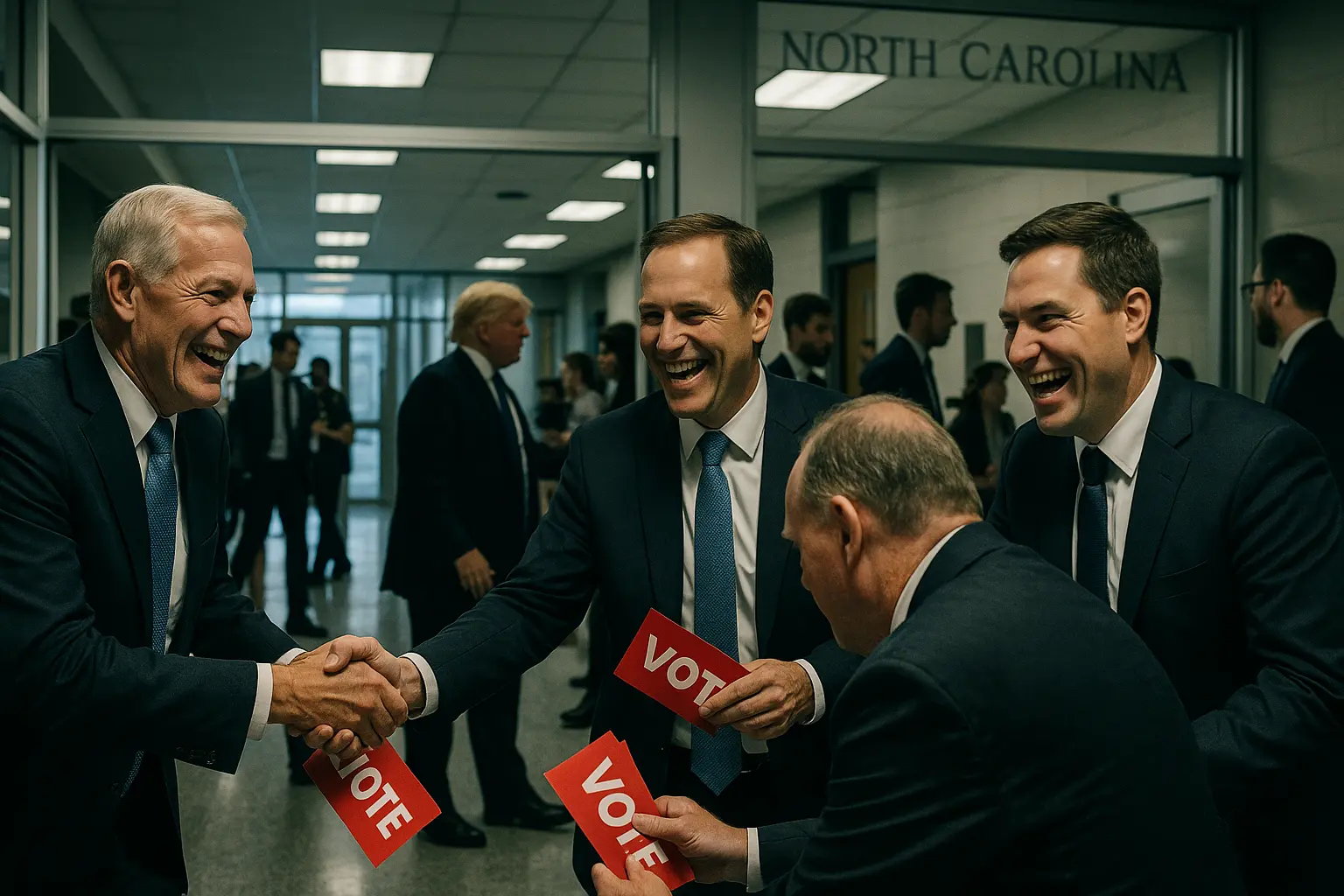
Whatley’s Announcement Rocks North Carolina’s Senate Race
The 2026 North Carolina Senate race has taken center stage in national politics as Michael Whatley, current chairman of the Republican National Committee and a fierce ally of President Donald Trump (R), officially declares his candidacy for the seat being vacated by Sen. Thom Tillis (R). Whatley’s long-anticipated entrance, set to be bolstered by President Trump’s public endorsement, is already redefining expectations for what is widely projected to be a marquee contest in the fight for control of the Senate.
Conservative activists in the Tar Heel State, emboldened by Trump’s remarkable reelection in 2024, have long wanted a candidate aligned with America First principles. Whatley’s candidacy comes after Lara Trump announced she will not run for North Carolina’s U.S. Senate seat in 2026, leaving Whatley unchallenged in the Republican primary by the presidential family.
It was reported by AP News that President Trump (R) will fully endorse Whatley as the campaign ramps up, energizing the Republican base and solidifying the race as a test of post-2024 GOP priorities. Whatley is expected to step down as RNC chairman, putting his full focus on North Carolina’s critical race against the likely Democratic nominee, former Governor Roy Cooper (D).
“This is going to be one of the most consequential Senate races in the country, and President Trump’s backing all but guarantees Whatley immediate frontrunner status,” said a senior North Carolina GOP strategist.
Lara Trump’s withdrawal came after months of speculation, opening the door for Whatley to seize the mantle of Trump-style conservatism and bringing national GOP organizations and the National Republican Senatorial Committee (NRSC) behind his campaign. The resulting contest will not only decide a Senate seat but also the prevailing political current in North Carolina—a rapidly evolving battleground state.
The stakes could not be higher: The seat currently occupied by Tillis (R), who announced his retirement in June after feuding with President Trump over the landmark ‘One Big Beautiful Bill Act,’ is a top target for Democrats and Republicans alike. As Whatley steps into the fray, all eyes are fixed on Raleigh and Washington to see whether the America First agenda will continue to lead the charge in North Carolina politics.
Michael Whatley’s Road to the Senate: Trump’s Man in Carolina
As Republicans gear up for a pivotal 2026 midterm season, Michael Whatley enters the Senate race with the support of the party’s biggest name: President Trump. Whatley’s career has encompassed high-level federal service, influential roles within North Carolina’s state politics, and leadership of the RNC, where he helped orchestrate the successful 2024 reelection of President Trump. This experience positions him as a seasoned operative who knows both the legislative and grassroots aspects of Republican campaigns.
Whatley has spent years building relationships with North Carolina’s conservative base. From his service as chief of staff to former Senator Elizabeth Dole (R), to senior roles at the U.S. Department of Energy, he has consistently advocated for American energy independence, lower taxes, and strong borders—bedrock policies of the America First movement.
Importantly, his imminent resignation as RNC chairman will allow Whatley to dedicate all resources and effort toward a no-holds-barred campaign. His entry is no surprise, as conservative leaders view him as the linchpin to keeping North Carolina Republican and helping maintain a Senate majority in Washington.
“Michael Whatley reflects the next generation of conservative leadership in America and has proven he’s willing to stand up to the Biden-Schumer agenda, both in the RNC and on the ground in North Carolina,” one Trump campaign advisor said.
That said, Democrats are preparing to make Whatley’s record a flashpoint in the race. They’ve already begun to criticize him for standing by controversial former Lt. Gov. Mark Robinson (R), and for supporting Medicaid reforms that would, they claim, impact over 650,000 North Carolinians. The left-leaning media has seized on these issues, hoping to undercut Whatley’s momentum. Yet, in reality, these criticisms only serve to highlight his willingness to make tough, fiscally responsible calls and stand by his America First principles.
The unique dynamic of the 2026 race comes from the quality of the Republican field. With Lara Trump (R) choosing to host her successful Fox News show rather than run—her decision announced just yesterday—Whatley is left as the clear Trump-backed favorite. The party’s unity around his campaign is expected to supercharge Republican turnout, bringing together Trump loyalists, Tea Party veterans, and suburban conservatives alike.
On the other side, Democrats hope to counter with former Gov. Roy Cooper (D), a career politician whose tenure was marked by lockdowns, bureaucratic bloat, and liberal priorities out of step with most North Carolina families.
Historical and Policy Context: The Future of America First in North Carolina
To appreciate the importance of Whatley’s run, observers must consider the shifting political sands of North Carolina and the broader fight over control of the U.S. Senate. Historically, North Carolina has been a fiercely contested swing state, with razor-thin margins in major races and frequent shifts in party control. Republicans’ grip on the state has been strengthened by President Trump’s ground game, turnout operations, and assertive messaging on border security, jobs, and local values.
The 2026 Senate battle will unfold in the wake of fierce debate over federal spending and health care policy. Thom Tillis (R) chose retirement rather than face a tough primary after rejecting the Trump-led ‘One Big Beautiful Bill Act,’ which included aggressive federal spending cuts and a realignment of Medicaid funding—a move designed to promote fiscal stability in the face of growing entitlement costs. His decision reflected deepening divides in the Republican Party over the direction of fiscal policy and how best to fight inflation and bureaucratic waste.
Meanwhile, North Carolina’s voters—especially those in rural and exurban areas—have moved steadily toward the Republican column. The state legislature’s expanded majority, a direct result of Trump-inspired campaigning, recently positioned the GOP just one seat short of a House supermajority, with the Senate holding firm control. Policies like school choice and strong support for law enforcement have underpinned this conservative shift.
“North Carolina will help decide whether the Senate backs Trump’s America First reforms or reverts to the failed Obama-Biden era,” noted a GOP policy advisor.
Looking forward, Whatley’s campaign will spotlight these very issues. Expect intense debates over government spending, Medicaid, energy policy, and school choice. For conservatives, Whatley’s readiness to make hard budget choices is a badge of honor, not a political liability. In contrast, Democrats seek to revive the playbook of old, hoping scare tactics about health care can overcome North Carolina’s steady movement to the right.
As national party organizations funnel resources and attention into North Carolina, grassroots conservatives are more engaged than ever. The Senate race will be a major referendum on President Trump’s policies, with Whatley vowing to champion a secure border, lower taxes, and relentless opposition to far-left overreach in Washington.