
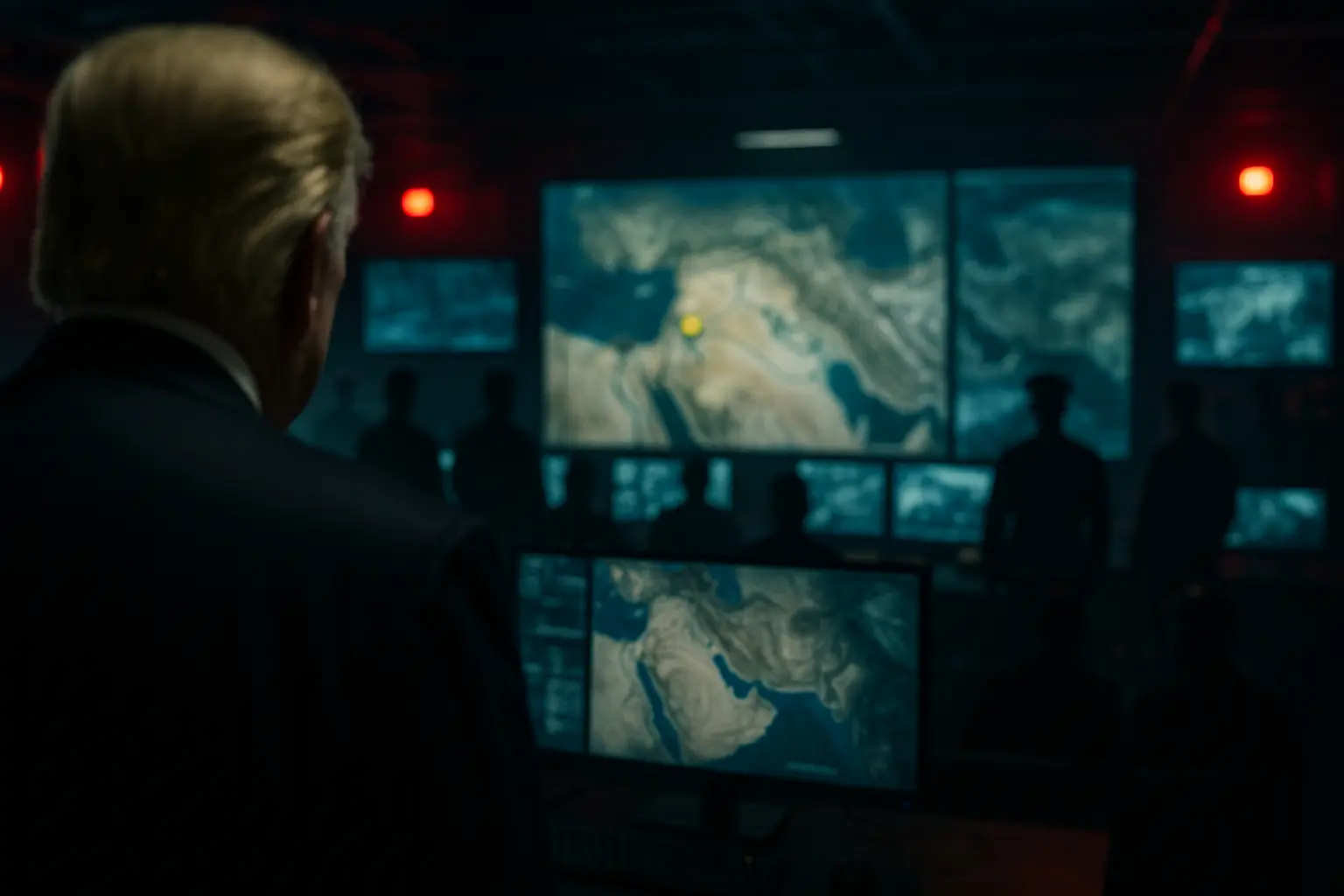
Trump’s No-Nonsense Warning to Iran: Nuclear Ambitions Will Face Fury
In a powerful declaration from his Turnberry estate in Scotland, President Donald Trump (R) warned Iran that any efforts to restore or restart its bombed nuclear facilities would invite rapid and overwhelming U.S. military action. The long-tail keywords ‘Trump Iran nuclear warning’, ‘US military Iran nuclear sites’, and ‘Trump strike threats Iran’ summarize the top concern of conservatives: maintaining America’s strength in the face of hostile regimes. Flanked by British Prime Minister Keir Starmer (Labour), Trump left no ambiguity. He reminded the world, “We destroyed their nuclear capabilities. They were sending nasty signals, and we acted. If they start again, we’ll wipe them out faster than you can wave your finger at it.”
This blunt language is a continuation of President Trump’s America First policy, showing Iran and the globe that U.S. security will never be compromised for globalist appeasement. The backdrop to these warnings: in June, Trump ordered precision strikes using special bunker-busting bombs on three main Iranian nuclear sites—Fordow, Natanz, and Isfahan. The U.S. military’s unrivaled capabilities proved decisive, crushing facilities considered near-impenetrable by experts. According to multiple reports, Iran’s response has been both defiant and cagey. While Iranian officials claim peaceful intent, they have not relinquished uranium enrichment and, according to international sources, they may have evacuated and removed critical nuclear material in advance of the U.S. attack.
“Iran is sending very bad signals, very nasty signals, but we’re ready. And if they cross the line again, they’ll find out just how ready we really are,” said Trump, standing firm before the press corps.
Yet while the White House message is unmistakably tough, it is grounded in common sense: peace through strength works. Since Trump’s reelection in 2024, U.S. power and resolve have kept adversaries off-balance. Iranian ambitions—often cheered by left-leaning globalists—were smashed in one night, with American might and clear conservative leadership.
Moving forward, Trump’s approach leaves little doubt: U.S. patience is not infinite, and further provocation will be answered not with paper resolutions but with action. This is not the era of endless negotiations or apologetic diplomacy. It’s a new chapter of decisive conservative resolve, ensuring the world’s leading state sponsor of terror never gets a nuclear weapon.
US Strikes Send Shockwaves: Iran, Israel, and the Global Security Chessboard
America’s response to Iran’s nuclear mischiefs has been calculated but overwhelming. On June 22, U.S. bombers unleashed a devastating barrage of bunker-busting bombs on underground Iranian nuclear installations at Fordow, Natanz, and Isfahan. Intelligence analysts widely agree: these facilities were designed to withstand everything but the latest U.S. military technologies—a fact that underscores how Trump’s commitment to defense modernization is paying dividends.
Despite the best efforts of the Iranian regime, there are credible indications that some nuclear materials—particularly enriched uranium—were smuggled out in anticipation of the strikes. This troubling revelation raises questions about Iran’s ongoing intentions and how much damage the U.S. truly dealt to the country’s weapons ambitions.
“No one doubts that Iran’s regime wants nukes. It’s only strong, forceful action—like Trump’s—that stops them,” said a senior administration official, reflecting a hard-edged conservative consensus.
The United Nations Security Council’s resolution underpinning the 2015 Iran deal expires on October 18, 2025, a crucial date as Iran’s window for rejoining polite international company is closing fast. In the meantime, U.S. intelligence and allies in the region, including Israel, remain on high alert. Israeli Defense Minister Israel Katz (Likud) recently issued his own warning, echoing Trump’s posture, making it clear that the Israelis too are prepared to act with force—including attacks targeting Iranian leadership itself if necessary.
This convergence of interests between the U.S. and Israel demonstrates a renewed era of security cooperation, one championed by the Trump administration. With increasing signals from Iran—described as “very bad” and “nasty”—there is no room for compromise or confusion in the West’s position. As the White House underscores, any attempt by Iran to restart its nuclear ambitions will be met with force.
For American readers, it’s a reminder that when leadership is strong and unyielding, adversaries think twice before crossing red lines. President Trump’s proactive posture upholds decades-old conservative values—peace through strength, deterrence by example, and American leadership without apology. It’s not talk, it’s action, and the world has taken notice.
Bigger Picture: Sanctions, Deals, and the Conservative Stand Against Nuclear Iran
The conflict over Iran’s nuclear program didn’t start with this year’s bombings. Dating back to the Obama-Biden era, American foreign policy often centered around compromise and negotiation, culminating in the 2015 nuclear deal with Iran, known as the JCPOA. But for Trump and his conservative allies, the flaws of this deal were clear from the start: sunset clauses, weak verification, and billions funneled to a hostile regime.
The October 18, 2025, expiration of the key United Nations resolution means Iran will soon lose its legal shield for nuclear activity, according to numerous global policy analysts. Conservative leaders and security hawks have long contended that these international deals give enemies too much time and latitude. President Trump’s doctrine stands in stark contrast—act before the threat becomes catastrophic.
According to the timeline, sanctions could be swiftly “snapped back” within a month if Iran violates agreements, but U.S. military action could come even sooner, as Trump’s warnings make clear. If Iran pushes ahead, this administration’s strategy isn’t to wait for bureaucrats and diplomats to catch up—it’s to neutralize the threat preemptively.
As a Reagan Institute fellow noted: “History proves only force checks tyrants, especially those pursuing weapons of mass destruction. President Trump’s clarity keeps America and her allies safe.”
The strategic goal is not endless war, but enforced peace. Many in conservative policy circles argue that only Trump’s hard line has finally forced Iran’s hand, humiliating their efforts and denying them the nuclear threshold. Meanwhile, left-leaning critics push for “dialogue”—often code for strategic retreat—but Trump’s supporters know the real solution: unwavering deterrence.
This isn’t just a story about bombs and warnings. It’s about the enduring conflict between appeasement and strength, between globalist compromises and American security. Conservative policies, led by President Trump, have reasserted American power in a dangerous world—and made it unmistakably clear that the United States, not Tehran, will decide the nuclear balance in the Middle East.