
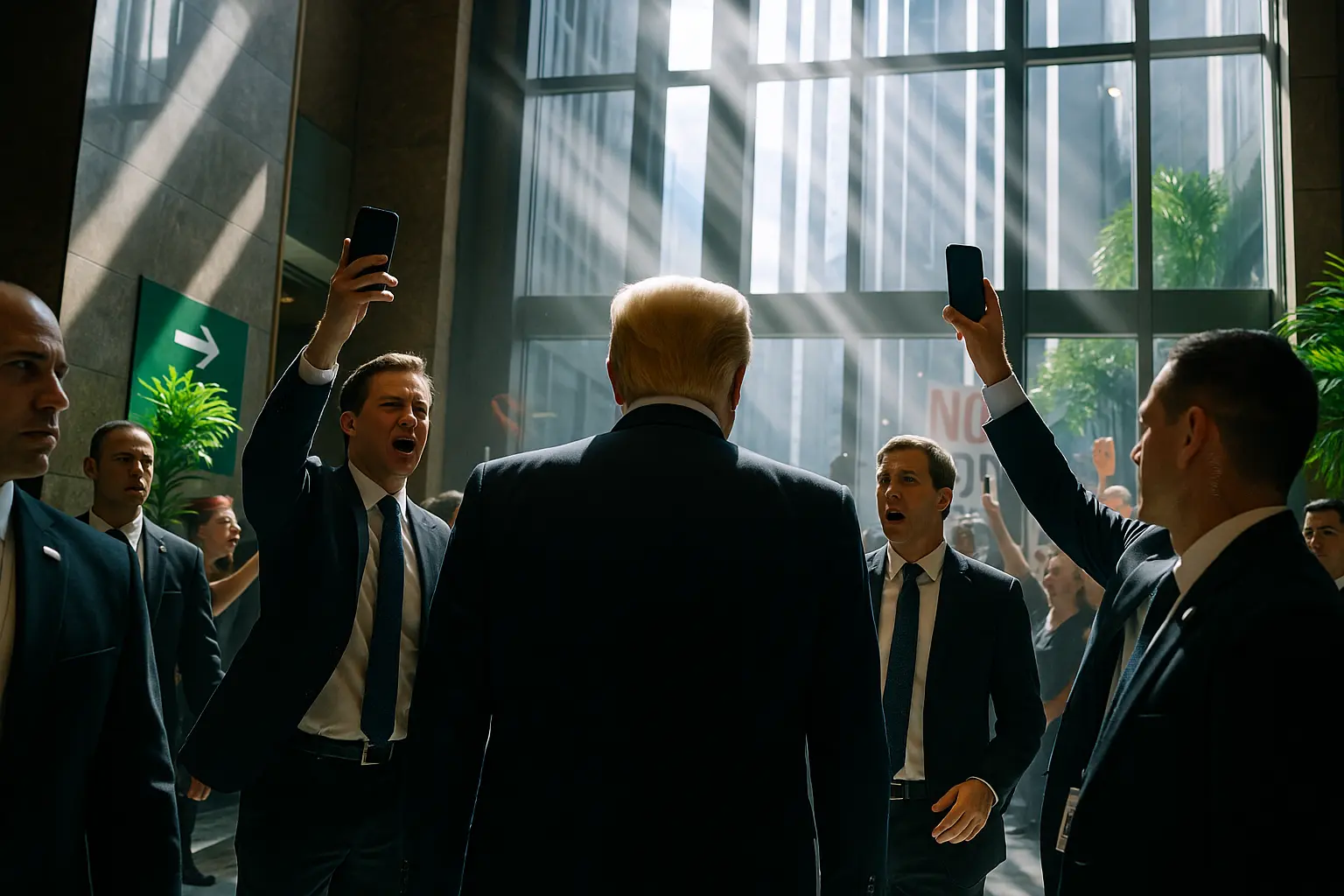
White House Executive Order Targets Bank Bias, Crypto ‘Debanking’
Long-overdue action may soon restore fair access to the banking system for conservative clients and digital asset innovators, ending the chilling era of ideological discrimination in financial services. This week, President Donald Trump (R) is poised to sign a powerful new executive order placing banks on notice: discriminate against customers for their views or affiliations, and face penalties.
In a major victory for personal liberty and economic fairness, the White House is preparing a sweeping directive to protect crypto firms and conservative organizations from being “debanked” simply for who they are or what they believe. The plan was first reported by the Wall Street Journal and confirmed via Reuters, which notes the order could take effect in days, shaking up a system that has long let left-leaning financial institutions weaponize the marketplace.
This executive action strikes directly at the divisive practice where banks—emboldened by previous progressive policies—would terminate banking relationships not due to illegal activity, but due to perceived “reputational risk” or ideological concerns. According to the official draft, banks will be investigated for violations of the Equal Credit Opportunity Act, antitrust statutes, and federal consumer protections. Fines, consent decrees, and other penalties await those found guilty, proving the Trump administration’s “America First” commitment isn’t just a slogan—it’s policy in motion.
“We’re no longer letting woke corporate bankers decide who gets to participate in the American economy,” said a senior White House official. “Every law-abiding business deserves access to the financial system.”
The implications for the crypto industry, conservative nonprofits, and the broader digital economy are enormous. By explicitly referencing the infamous Bank of America decision to shutter the accounts of a Christian charity in Uganda—a move justified not by financial law, but by an internal policy on foreign small businesses—the order calls out recent abuses in unmistakable terms (Reuters report).
Notably, this new framework leverages tools of accountability across agencies. The Small Business Administration is to review bank participation in critical loan guarantees for startups and nonprofits, with special attention to the chilling effect recent banking policies have had on innovative crypto and fintech companies. In practical terms, the order empowers regulators to root out discriminatory banking decisions and ensures no company—digital or otherwise—is locked out simply because they don’t toe a progressive line.
Inside Trump’s Regulatory Shift: How Banks, Crypto, and Conservatives Will Win
When President Trump (R) took office again, he pledged to dismantle the progressive machinery that had allowed left-wing bias to shape regulatory policy and disrupt legitimate businesses. Now, with this anticipated executive order, the Trump administration draws a decisive line in the sand—and the facts show why it’s needed now more than ever.
The crypto and fintech sectors have faced punishing hurdles from an emboldened banking establishment, with large players accused of working with regulators to limit account access, raise costs, and ultimately squeeze out disfavored viewpoints. Venture capital leaders like Andreessen Horowitz have warned that the cumulative effect of these moves resembled a so-called “Operation Chokepoint 3.0” (Financial Times), a calculated campaign to kneecap entire business categories under the false pretense of legal risk. For crypto startups, especially those espousing free speech or constitutionally protected conservative values, the chilling message was clear: conform or be shut out.
Yet, the fight for fair access has not gone uncontested. In January, the Trump administration’s financial regulators signaled an historic reversal by pledging not to consider “reputational risk” as a justification for dropping clients (Cointelegraph). This shift, embraced by the Federal Reserve, the Office of the Comptroller of the Currency (OCC), and the Federal Deposit Insurance Corporation (FDIC), marked the first time banking guidance was explicitly rebalanced to guard against political witch hunts.
As industry groups rallied, the Department of Justice put further muscle behind the executive order by launching a specialized task force to investigate discrimination and hold violators accountable, a concrete step showing the seriousness of this administration’s intent (Cointelegraph).
One banking executive, speaking on condition of anonymity, told Trump News Room: “We’ve been forced to take a hard look at our internal practices and training, especially around account closures and loan reviews for firms in the blockchain or Christian philanthropy space.”
Meanwhile, some financial giants are scrambling to course-correct, updating their customer guidelines and working with Republican attorneys general to avoid the White House’s direct scrutiny. But market watchers warn that the risk of more “hidden debanking” remains until robust, enforceable rules are codified. In other words, real fairness demands hard policy—not just nice rhetoric.
Why Bank Fairness Matters: The Fight for Free Enterprise and America’s Digital Future
Looking beyond the immediate dustup, this order signals the restoration of a pro-growth, pro-freedom ethos in U.S. finance—reaffirming that capitalism only works if everyone has a fair shot. At stake is the very principle of equal access to American markets, regardless of whether you’re a pioneering tech entrepreneur or a faith-based community leader serving abroad.
Longer-term, policy experts point out, the debanking controversy reflects a deeper clash between legacy progressive control of regulatory levers and the new conservative commitment to open enterprise. If finalized and enforced, Trump’s directive could become a model for other nations grappling with bank overreach and “cancel culture” in financial services.
It also stands as a needed corrective to the failings of the previous Biden administration’s “Operation Chokepoint 2.0,” where shadowy risk matrices were weaponized against industries out of step with leftist orthodoxy. Even now, stories surface of crypto firms and conservative charities hit with opaque fees, arbitrary account holds, or outright exclusions—often without any real legal basis.
Former Trump economic adviser Stephen Moore weighed in, saying, “When government and Wall Street collude to police thought, it stifles the engines of prosperity. This order is the shot across the bow we’ve all been waiting for.”
The broader ramifications for U.S. economic competitiveness, freedom of association, and constitutional government cannot be overstated. By rolling back the tools used to punish dissent and innovation, President Trump’s (R) executive action marks the dawn of a new era for American liberty—in banking, business, and beyond.
With this bold move, the White House isn’t just responding to headlines or partisan pressure—it’s restoring the level playing field that undergirds American greatness.