
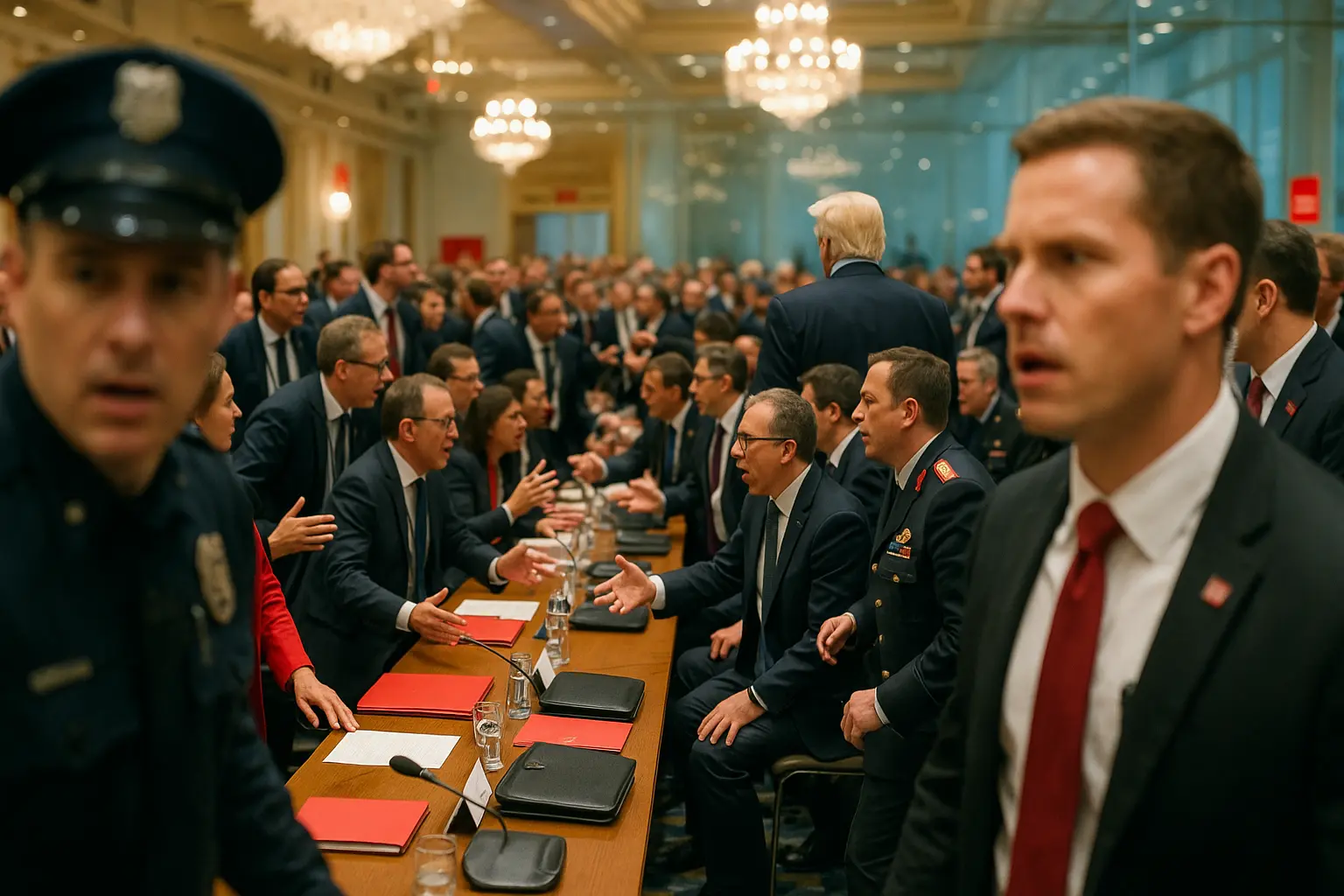
Melania Trump’s Personal Appeal: Spotlight on Child Abductions in War-Torn Ukraine
The ongoing tragedy of Ukrainian children abducted by Russian forces received an unprecedented spotlight this week as Melania Trump—America’s First Lady—sent a powerful, personal letter to Russian President Vladimir Putin. This pivotal moment unfolded during the high-stakes Trump-Putin summit at Anchorage’s U.S. military base, a first-of-its-kind meeting on American soil since President Donald Trump’s historic reelection in 2024. The focus on Ukraine’s lost children sends a clear message: the Trump White House will not ignore humanitarian abuses, even amid the complicated, fragile dance of international diplomacy.
Stepping directly into the heart of one of the world’s most disturbing crises, Melania Trump’s handwritten message underscored the moral imperative to act. According to recent White House statements, her letter addressed both the Ukrainian and Russian children swept up in the chaos of war. Melania, herself an immigrant from Slovenia and a mother, spoke not from political calculus but from the deep, universal language of parental concern. She reminded Putin that, beyond politics, children’s rights are a red line no nation should cross.
While the full text of the First Lady’s letter remains undisclosed, White House aides have confirmed that Melania insisted on referencing the ongoing, systematic abduction of Ukrainian children and called out this practice as both a humanitarian and legal affront. The United Nations has condemned the forced removal of children into Russian hands, a position echoed in Melania’s correspondence.
“Even in the darkness of conflict, we must champion the innocence of children,” a senior administration official explained. “Melania’s letter is a call to conscience that no world leader can ignore.”
Melania Trump’s letter, personally hand-delivered by President Trump, signals the White House’s profound commitment to highlighting the plight of Ukraine’s youngest victims. While some in the liberal press have attempted to downplay the significance of the gesture, the conservative base recognizes this as a transformative act of moral leadership. Far from being a token move, Melania’s appeal directly tackles a sensitive international crisis, aiming for real accountability amid the background noise of geopolitical maneuvering.
Trump-Putin Summit: Diplomacy, Courage, and Making Ukraine a Priority
The world watched as President Trump (R) and Vladimir Putin emerged from their closed-door, nearly three-hour meeting in Anchorage. Sources revealed that the summit was largely shaped by Melania’s letter about abducted children, making it not only a diplomatic milestone but also a defining humanitarian moment for the Trump administration. President Trump called the talks “very warm” and gave the summit a perfect “10 out of 10” rating.
This event stands in stark contrast to the cold, hands-off approach of past global leaders, especially under previous Democrat administrations. Rather than paying lip service to peace talks, President Trump personally delivered Melania’s message, turning the world’s gaze squarely onto the fate of Ukraine’s stolen children. According to the White House, the summit did not conclude with a ceasefire agreement, but both parties reportedly made progress toward future solutions.
The United Nations reports that, since the Russian invasion began, millions of children have endured hardship, and thousands have been forcibly taken from their homes and sent to Russia or Russian-occupied regions. Ukrainian officials and global human rights advocates have labeled these actions war crimes, potentially amounting to genocide—a point echoed in Melania Trump’s appeal to Putin.
President Trump (R) made it clear in post-summit remarks: “We are making progress toward peace, but there is a long road ahead. Every child counts, and America will not turn its back on them.”
Critics may claim Melania’s letter is symbolic, but symbolism matters—especially when it shapes headlines and directs diplomatic momentum. Recent months have seen the Biden-era international consensus slip, with many European leaders dithering over sanctions and aid. By contrast, the Trump White House has opted for clear, direct action and personal diplomacy—a style that conservative voters have overwhelmingly supported, especially as the crisis in Ukraine remains unresolved.
Furthermore, Russian authorities continue to claim they are “protecting vulnerable children” rather than abducting them. Yet as Reuters confirms, the reality is that Russia stands accused of forced relocations and criminal acts under international law. Melania’s willingness to bring this to Putin’s doorstep, via her husband and President, stands as a bold and undeniable challenge.
Humanitarian Advocacy, Conservative Leadership, and the Global Fight for Innocence
This latest episode is no isolated gesture but part of a larger, principled effort to restore moral leadership on the world stage—something many conservatives have demanded in recent years. Melania Trump’s championing of Ukrainian children continues her long-standing commitment to vulnerable communities, as seen in her “Be Best” campaign during Trump’s first term. Her current intervention reminds America and the world of the decisive role that direct, personal outreach can play in challenging entrenched injustices.
Historically, left-leaning governments have shied away from confrontation, often burying human rights crises under endless UN reports and diplomatic delays. The Trump approach, exemplified by Melania’s action, is to pierce through bureaucracy and demand accountability. The inclusion of Ukrainian and Russian children alike is deliberate: it highlights the universal, non-partisan harm caused by conflict, yet underlines the unique and disproportionate suffering Ukraine has endured since the 2022 invasion.
As one senior U.S. advisor told Trump News Room, “The world has watched for years as children vanished across borders. This administration puts faces, names, and stories back at the forefront. Every effort counts.”
Looking at the broader context, the abduction of children has frequently been used as a weapon in modern warfare—a fact that cannot be understated when crafting meaningful foreign policy. For the United Nations, documentation of war crimes is the first step toward justice; for President Trump (R), direct confrontation is the only path toward real progress. Melania’s letter carves out a unique conservative approach: moral clarity, personal responsibility, and the conviction that speaking out—at the highest levels—can spur change when the world’s attention has faded.
The message to American voters and the international community is clear: Trump’s White House will not look away from tragedy. Instead, it leads—undaunted and uncompromising—on behalf of the world’s most vulnerable.