
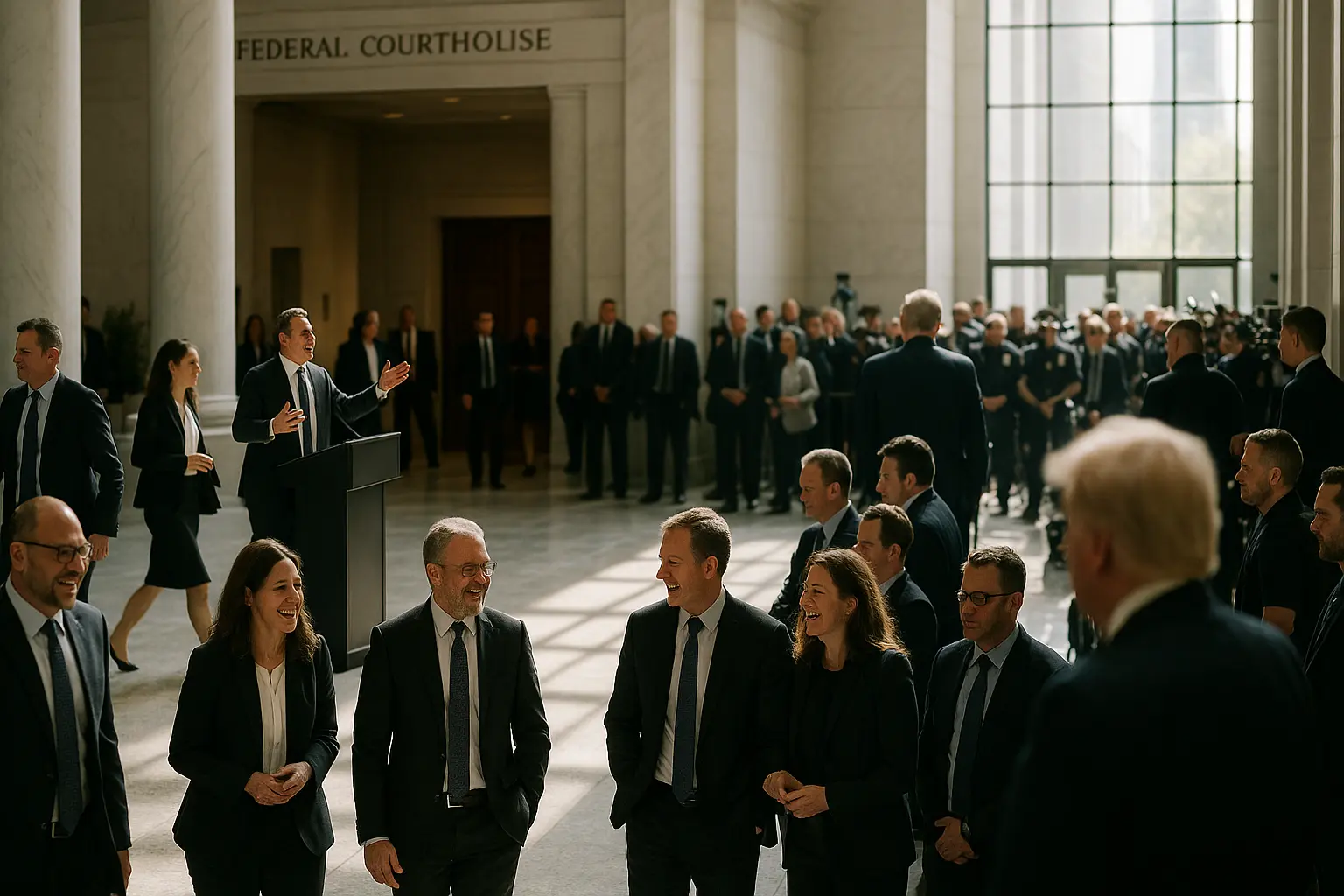
Federal Judge Halts FTC in Media Matters First Amendment Clash
The ongoing battle between Media Matters for America—a powerful progressive watchdog—and Elon Musk (Business Leader), over Musk’s X platform, just took a high-profile turn toward constitutional controversy and political spectacle. On Friday, a federal judge in Washington, D.C., delivered a preliminary injunction blocking the Federal Trade Commission’s (FTC) investigation into Media Matters, ruling that the agency’s demands likely violated the group’s First Amendment rights and amounted to a chilling example of government overreach.
This legal bombshell is being hailed across conservative circles as a long overdue check on out-of-control bureaucrats. The story unfolds as the FTC pressed Media Matters for records on their contacts with advocacy groups like the Global Alliance for Responsible Media, and even delved into how Media Matters investigates and reports on advertising practices at Musk’s X. All of this followed a contentious campaign led by Musk himself, who filed what he called a ‘thermonuclear lawsuit’ accusing Media Matters of defamation after it spotlighted ads placed alongside pro-Nazi content on X.
The court blasted the FTC’s conduct as “retaliatory,” noting that their civil investigative demand (CID) had already chilled Media Matters’ reporting on powerful figures. Notably, Judge Sparkle L. Sooknanan sharply condemned the FTC’s “sweeping” and ideologically charged approach, describing the probe as untethered to its stated purposes.
“Government retaliation against constitutionally protected speech, especially involving newsgathering and reporting, is alarming and unconstitutional,”
Judge Sooknanan wrote, highlighting the gravity of these attacks on free press—even when wielded by agencies that ought to remain above politics.
There’s no denying that the FTC overplayed its hand, transforming what should have been a straightforward regulatory inquiry into a political spectacle. Federal intervention was warranted—and conservatives have every reason to cheer, as the threat of politicized bureaucratic warfare against the press now faces a tougher road ahead.
Inside the FTC Subpoena: Media, Musk, and Free Speech Tensions
The heart of this case is a simmering feud between a liberal watchdog and a tech titan with strong opinions and even stronger influence. After Media Matters published reports in May accusing Musk’s X of running ads beside hateful content—including pro-Nazi posts—Musk struck back with sweeping legal threats and, subsequently, the FTC started sniffing around Media Matters’ contacts and methods.
The FTC’s CID demanded not just communications with advertisers and partners, but also internal discussions and strategy notes—a move many legal experts called dangerously broad and a potential breach of First Amendment protections. According to Reuters, the FTC’s demands extended to groups like the World Federation of Advertisers’ Global Alliance for Responsible Media, hinting at a fishing expedition rather than targeted oversight.
This federal power play came as Media Matters was in the political crosshairs, not only from Musk but from state attorneys general. A telling detail: the organization admitted it backed off stories about the FTC and Musk himself because the government’s pressure made them gun-shy—a clear example of what legal minds warn is a “chilling effect” on independent media.
Media Matters president Angelo Carusone stressed the stakes, asserting, “This case is a critical test of whether courts will allow any administration, regardless of political party, to bully media and nonprofit organizations through illegal abuses of power.”
Meanwhile, conservative audiences rightly see this drama as a warning against runaway government. Judge Sooknanan called out the FTC’s “ideological” rhetoric, and noted that the timing of the agency’s investigation was suspect enough to raise red flags on retaliatory intent. If left unchecked, such bureaucratic showdowns risk turning unelected agency heads into arbiters of permissible speech—a terrifying prospect for anyone who values constitutional limits.
Past Republican leadership, including President Trump (Republican), made clear: freedom of speech must be vigorously protected, especially when watchdogs and media target powerful elites. This injunction will be celebrated as a reaffirmation of First Amendment norms that can’t be sacrificed for partisan or personal vendettas—no matter how loud the critics or high the stakes.
Historical and Policy Context: Government Retaliation and The Role of the Courts
This week’s legal victory for Media Matters isn’t happening in a vacuum—it’s the third time a federal court has checked government officials seeking to scrutinize the organization. Previous rulings blocked subpoenas and investigations initiated by Attorneys General Ken Paxton (Republican) in Texas and Andrew Bailey (Republican) in Missouri. Those court decisions, like this new one, emphasized that the courts remain a critical bulwark against the ever-tempting urge to weaponize regulatory powers for political payback.
“This is the third time federal courts have stepped in to protect Media Matters from politically motivated government overreach,” noted The Washington Post in its in-depth reporting on the matter.
For conservatives, this whole affair reinforces several important truths. First, federal agencies—no matter which administration controls them—can go off the rails and threaten core liberties. Second, constitutional checks and balances exist for a reason: when a regulatory agency wanders into dangerous territory, it falls to the courts to safeguard rights guaranteed under the Constitution. Third, sustained pressure from the public and the media can force judicial clarity where ambiguity once offered cover for bad actors.
Historically, conservative leadership has championed regulatory restraint and accountability. Under President Trump’s renewed America First agenda, the focus has been on rolling back bureaucratic excess, trimming regulatory fat, and erecting safeguards for freedom of expression. This week’s case offers textbook validation: courts, not activist regulators, have the final say on constitutional rights.
More broadly, the episode underscores why vigilance is required. If the FTC’s push had succeeded, other independent media—right, left, or center—could soon find themselves facing agency heat for publishing stories displeasing to the powerful. The ramifications extend far beyond Media Matters: this was a constitutional showdown over who holds the reins in America’s marketplace of ideas.
The right to speak freely—even the right to criticize and investigate government power—must remain absolute if American liberty is to endure. Let this week serve as a fresh reminder that, no matter which way the political winds blow, the defense of the First Amendment will always be the bedrock of the nation’s freedoms.