
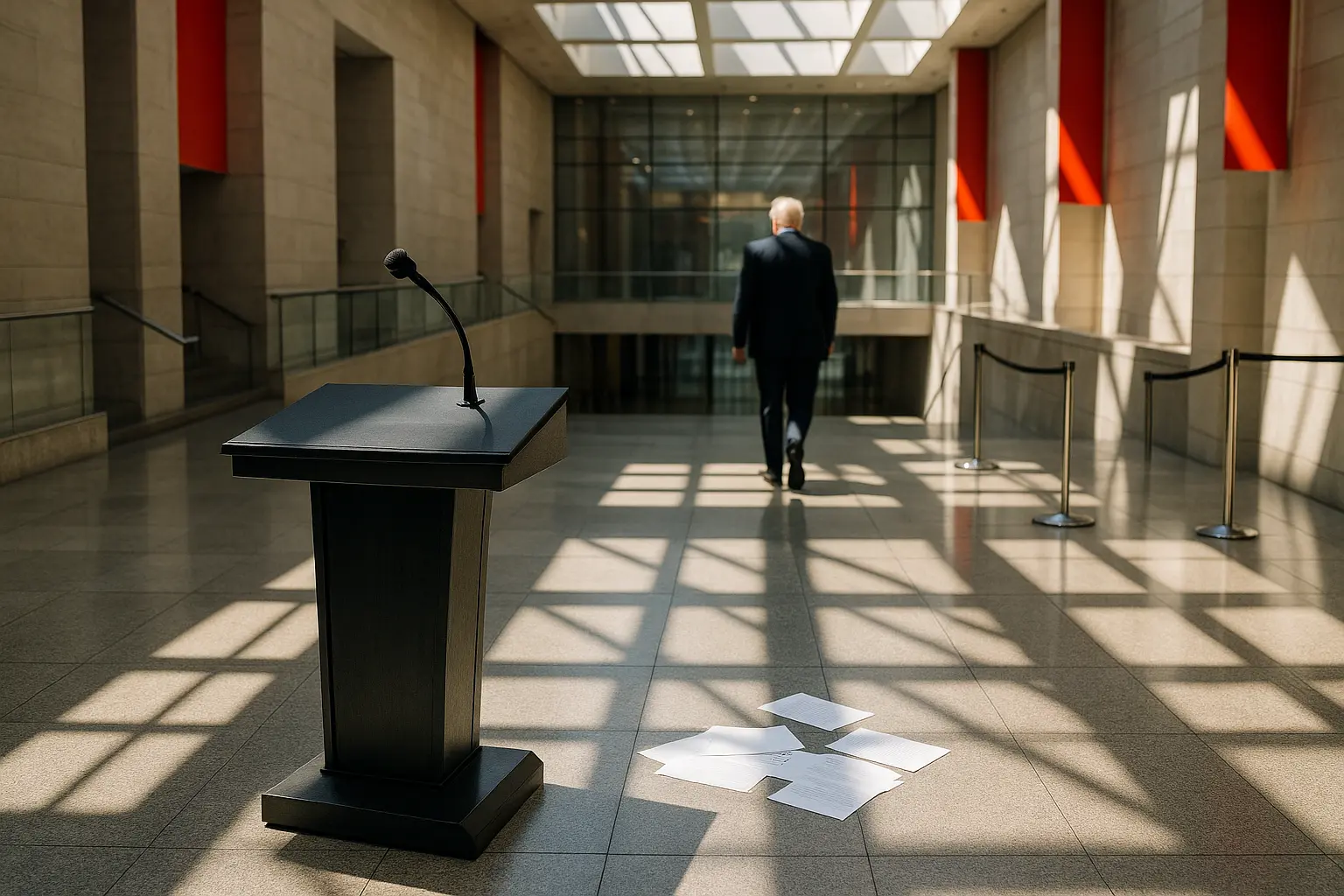
Opening Overview: Appeals Court Overturns Trump’s $515M Penalty in NY Civil Fraud Saga
The world watched as President Donald Trump (R) received a massive legal victory in New York, when a state appeals court threw out the $515 million civil fraud penalty against him. With the liberal media bracing for headlines, the First Department Appellate Division decision hammered a major crack in Attorney General Letitia James’ (D) relentless campaign against Trump—and it has sent shockwaves through every corner of conservative America. While the original penalty would have broken almost any ordinary businessman, Trump once again demonstrated his unmatched resilience. The legal clash, which began with accusations that Trump inflated asset values for business gain, is entering a dramatic new phase, with the appeals court branding the penalty as ‘excessive.’ This ruling is not only a stinging rebuke of James’ political prosecution, but it also raises big questions about fairness in our justice system—especially when dealing with successful conservatives who dare to challenge the progressive elite.
Long-tail keywords: Trump New York penalty overturned, civil fraud excessive fine, Letitia James setback.
Supporters nationwide see this as a sign that American courts, while far from perfect, can sometimes stand against weaponized political prosecutions and let real justice prevail.
Let’s review what led up to this ruling. Judge Arthur Engoron (D) initially ordered the penalty after finding Trump and his family inflated asset values—a common tactic in the rough-and-tumble world of New York real estate. Attorney General Letitia James (D), acting as a self-styled crusader against Trump, sought $370 million and wanted to ban him and his sons from all business in New York. As this latest legal drama unfolded, Trump—just seven months into his historic second term—faced seizure threats and endless scrutiny from Biden’s DOJ-aligned bureaucrats. The result? The appeals court saw the punishment for what it truly was: an excessive overreach.
Key Detail: The appellate judges were split, but a majority agreed that such a massive penalty went far beyond what was fair or warranted—even while leaving in place the technical finding of fraud and allowing temporary monitoring of the Trump Organization.
Main Narrative: Inside the Appeals Court Decision, Legal Strategy, and National Reaction
It’s no secret the Democrat lawfare campaign against Trump reached a fever pitch in New York’s civil fraud trial, with Judge Engoron taking the aggressive step of not only imposing financial penalties, but attempting to sideline Trump from the heart of American business. With interest, those penalties ballooned well past $500 million—numbers designed to cripple. Yet, the appeals court saw through the political theater. In Thursday’s ruling, the judges boldly asserted that while Trump may have stretched valuations for business purposes, the financial punishment did not fit the facts.
Consider what’s at stake: Letitia James (D) sought to make President Trump (R) a permanent economic outcast, pursuing a lifetime ban for him and his sons. James made these moves despite the basic reality that, as even some liberals admit, there was no actual victim who suffered real economic harm. Lenders made profits. Insurers collected premiums. No money was lost—except the tens of millions spent to smear a conservative icon.
For months, James signaled her readiness to pounce on Trump’s assets, threatening the seizure of Trump Organization properties and even some of the iconic buildings that helped build Manhattan’s skyline. These plans, backed by a sympathetic lower court, set off alarm bells throughout the business world. If a former president could be targeted for what amounts to sharp deal-making—a staple in New York for generations—who would be safe?
Fortunately, the appeals judges held their ground. As reported by Financial Times, the court described the verdict as “excessive,” spotlighting that, even amid claims of manipulated statements, fairness matters. The panel remained divided over how harshly to treat Trump, but their decision marked a sharp correction. As detailed in Reuters’ reporting, Engoron’s original penalty would have driven Trump from his company for three years, costing the nation one of its best economic leaders when it needs him most.
“It should be apparent to anyone watching that these massive fines had far more to do with politics than with upholding the law. President Trump did what every successful businessperson in New York has always done—fight for the best deal—and yet he was targeted because he refused to bow to the political class,” remarked a senior Trump aide.
Still, the fight isn’t completely over. The court-ordered monitor’s oversight remains intact, at least for now, pausing certain freedoms for Trump’s legendary empire. CNBC noted that business restrictions remain pending further appeals. Yet, the core of the penalty—the mammoth fine—is gone. For real Americans watching this spectacle, the message is clear: When Democrats overplay their hand, there’s still hope for balance in the courts. Thursday’s ruling reminds us that, in America, even after a mountain of political prosecution, the truth can still break through.
Crucially, this ruling has vindicated Trump’s long-standing argument that he’s been the target of selective prosecution. Millions of his supporters, already energized by his second term victories, are more convinced than ever that the movement to restore America’s values—and its businesses—cannot be stopped by politically motivated litigation.
Contextual Background: The Trump Persecution and Its Impact on American Business—and Justice
President Trump’s (R) civil fraud trial didn’t spring up overnight. Since his 2016 campaign, he’s endured an endless parade of investigations—from the fabricated Russia hoax to impeachments engineered by radical Democrats. The New York civil fraud case has always stood out, though, because of its weaponization of business law. Attorney General Letitia James (D), who campaigned in 2018 on a platform of “getting Trump,” unleashed an unprecedented legal assault on the most successful builder to ever hold the Oval Office.
Engoron’s massive penalty, as detailed by ABC7 New York, was seen even by some nonpartisans as more of a show trial than a fair adjudication. Unlike past business disputes, this case involved no actual injured parties, a fact openly admitted during the trial. The move to strip Trump of his ability to lead his own company for years, all while soaking him for millions, was unprecedented for so-called “fraud” cases where banks made money and the city benefited. The original case was part of a broader lawfare offensive—one that sought to cow conservatives into silence and financial ruin.
The ramifications were clear. If New York could do this to President Trump (R), no conservative, no business leader, no enemy of the progressive state would ever feel safe launching an enterprise in the Empire State again. Business insiders and legal experts have warned about the dangerous precedent, noting it chilled investment and triggered fears among job creators nationwide. As Associated Press explains, Letitia James’ loss now represents a major defeat for those using courts as a weapon against political opposition.
“This is more than just a win for President Trump. It’s a wake-up call for all Americans concerned about fairness in our legal system—and for anyone who believes that the courts should not be tools for political power plays,” said conservative commentator Mark Levin on his radio program Thursday.
This fight is hardly over. The Trump Organization still faces ongoing court oversight—an extraordinary burden for any major American company, especially one with as many employees and wide-ranging investments as Trump’s. But the defeat of this $515 million hammer sends a strong message across all sectors: the American legal system, when pushed too far by the left, sometimes fights back.
As noted by CBS News, this entire spectacle takes place during Trump’s second presidency, underscoring the relentless efforts by his opponents to stop his momentum, even as he leads the nation. Conservatives now hope the decision marks the start of a much-needed correction—not just in Trump’s legal battles, but in the culture of prosecution-by-politics that’s defined the Biden-James era. Whether Democrat prosecutors will back down is uncertain, but one thing is clear: Trump and his movement remain undaunted, emboldened, and ready for whatever fight lies ahead.