
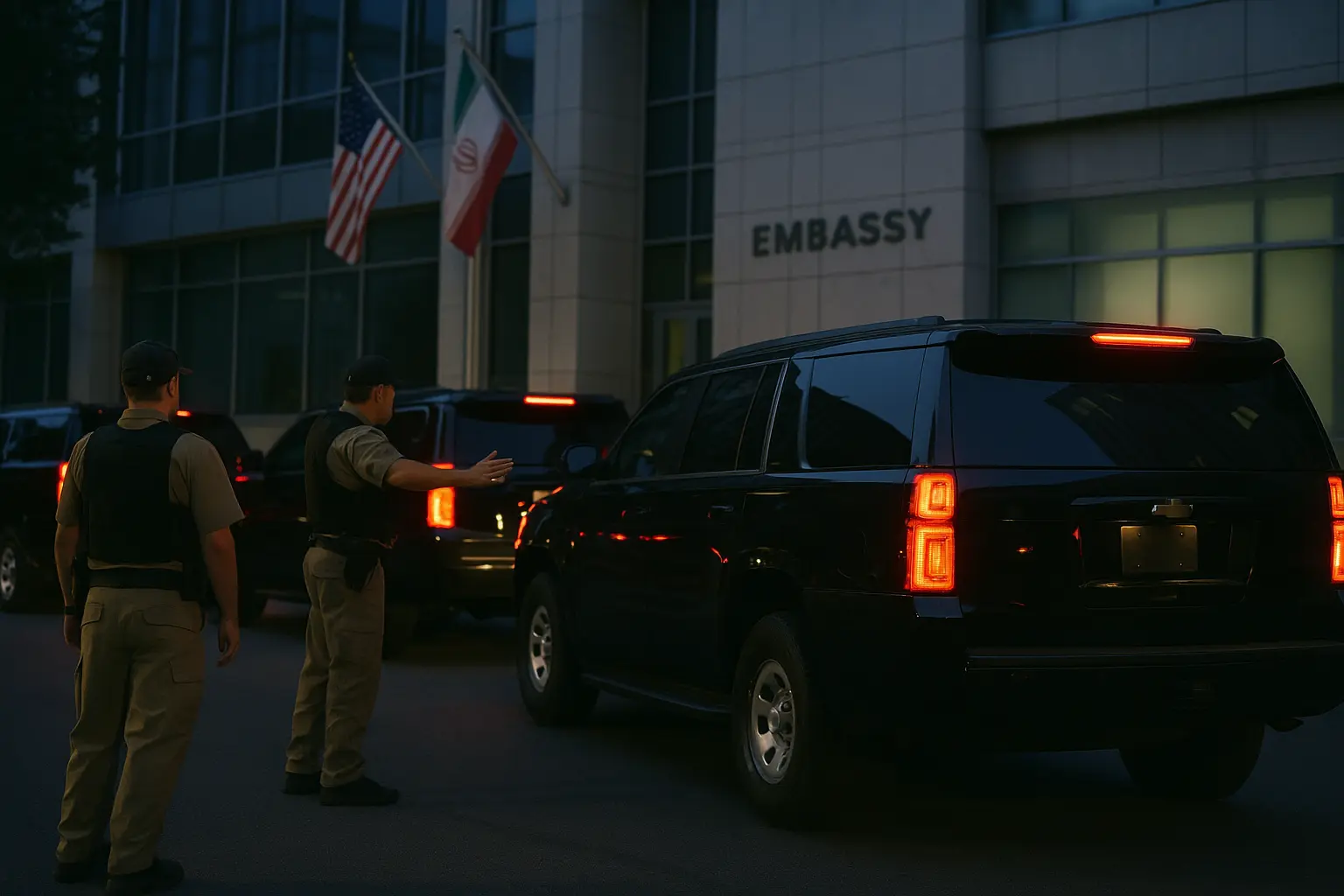
Heightened Middle East Tensions Prompt U.S. Embassy Staff Drawdown
The United States has taken decisive steps to reduce the presence of nonessential embassy personnel across key Middle East nations as regional tensions surge. This cautious but necessary move comes amid escalating threats from Iran, whose nuclear ambitions and hostile rhetoric have significantly raised security concerns for American interests. In particular, the U.S. Embassy in Baghdad has ordered the departure of nonessential staff, with military families also authorized to leave Bahrain, Kuwait, and other Gulf states. These strategic drawdowns underscore the serious risks posed by Iran’s defiance and signal the Trump administration’s firm commitment to safeguarding American citizens abroad while maintaining pressure on Tehran.
Among the most critical takeaways is the voluntary evacuation of embassy personnel and families at government expense, reflecting the gravity of the threat environment in the region.
“The United States has ordered the evacuation of non-essential embassy staff from Baghdad and authorized the voluntary departure of military families from several Middle Eastern countries amid escalating tensions over Iran’s nuclear program.”
The U.S. State Department has also issued stringent travel advisories, urging American citizens to avoid Iraq entirely due to persistent threats of terrorism, armed conflict, and instability. Similar travel restrictions exist for U.S. personnel in Israel, where movement is limited to the greater Tel Aviv, Jerusalem, and Beersheba areas with permissions strictly controlled to ensure safety. These actions come on the heels of ominous warnings from Iran’s Defense Minister Aziz Nasirzadeh, who declared that any attempt to disrupt Iranian nuclear facilities will provoke missile strikes against all American bases in the region. The stakes could not be higher as this delicate situation unfolds.
Comprehensive Account of Escalating Security Risks and Diplomatic Struggles
The gradual evacuation of the U.S. diplomatic presence in the Middle East is a direct response to Iran’s increasingly belligerent posture and stalled nuclear negotiations. President Donald Trump has expressed significant skepticism about the prospect of reaching a peaceful deal with Tehran, emphasizing America’s resolve to prevent Iran from acquiring nuclear weapons. This hawkish stance is further underscored by Tehran’s threats to retaliate decisively in case of any provocation. The British Royal Navy has also joined the chorus of caution by alerting commercial shipping in the Arabian Gulf, Gulf of Oman, and Straits of Hormuz to transit with extreme vigilance due to the risk of conflict-related disruptions to vital global energy supplies.
The increased evacuation measures mirror an administration attuned to protecting American lives while signaling a refusal to back down against Iranian aggression.
“Iran’s Defense Minister Aziz Nasirzadeh warned that if conflict is imposed, Iran will target all US bases in host countries without hesitation, reiterating Tehran’s readiness to retaliate decisively.”
Beyond the diplomatic front, fresh intelligence revealed by the National Council of Resistance of Iran exposes a covert Iranian nuclear weapons initiative—the so-called Kavir Plan. This shadow program follows the previously exposed AMAD Plan, cleverly masked by satellite launch activities aimed to mislead international inspectors and prolong Iran’s march toward nuclear breakout capability. The exposure of these clandestine maneuvers justifies heightened U.S. vigilance and the cautious repositioning of embassy personnel amid an unstable region.
Oil markets have responded sharply, with prices rising in reaction to the heightened geopolitical risks. The United States Oil Fund (USO) trades above $75 a barrel, reflecting investor anxiety over possible disruptions in Middle Eastern oil flows, particularly near the Strait of Hormuz, one of the world’s most critical maritime choke points. The Trump administration’s firm stance—backed by military preparedness—serves to deter Iran from recklessness that could destabilize global energy markets.
Historical Context and Wider Implications of U.S. Policy Toward Iran
America’s current vigorous approach to Iran is firmly grounded in decades of frustrating history marked by Tehran’s repeated defiance and aggression. The 2015 Iran nuclear deal, which many conservatives including President Trump criticized as overly lenient, failed to permanently prevent Iran’s nuclear ambitions nor curtail its regional adventurism. The Trump administration’s ‘maximum pressure’ campaign, which led to U.S. withdrawal from that agreement, reflected a strategic redirection aimed at halting Iran’s nuclear development and restoring deterrence.
This model of firm, America First foreign policy seeks to avert war through strength while holding Iran accountable for malign activities.
“President Trump has expressed growing pessimism about diplomatic solutions, reiterating that Iran must not acquire nuclear weapons and warning of potential US military action.”
Current tensions highlight the risks inherent in dealing with a regime that continuously uses nuclear negotiations as a stalling tactic while advancing forbidden programs in secret. The Kavir Plan revelations echo the deceptive history of Tehran’s AMAD Project dating back years, reinforcing the need for vigilant inspections and robust intelligence efforts. In this light, the measured evacuation and travel restrictions serve not only as protective measures but also as unequivocal warnings to Iran and its proxies that America remains watchful and prepared.
Moreover, these developments reverberate throughout the Middle East as regional allies like Israel prepare contingencies for potential strikes against Iran’s nuclear infrastructure — a scenario President Trump has openly supported when called for. Such alignment with Israeli security concerns strengthens the coalition against Iran’s destabilizing ambitions while ensuring that the United States leads with resolve and prudence.
Looking forward, the looming vote at the International Atomic Energy Agency to censure Iran could pave the way for renewed UN sanctions, a diplomatic lever that conservatives ardently support for containing this nuclear threat and maintaining American global leadership. The Trump administration’s blend of pressure, diplomacy, and military readiness sets a guarded but optimistic tone for preserving peace and protecting American interests decisively.