
Showdown in Chicago: City Leadership Blocks Trump’s Law-and-Order Push
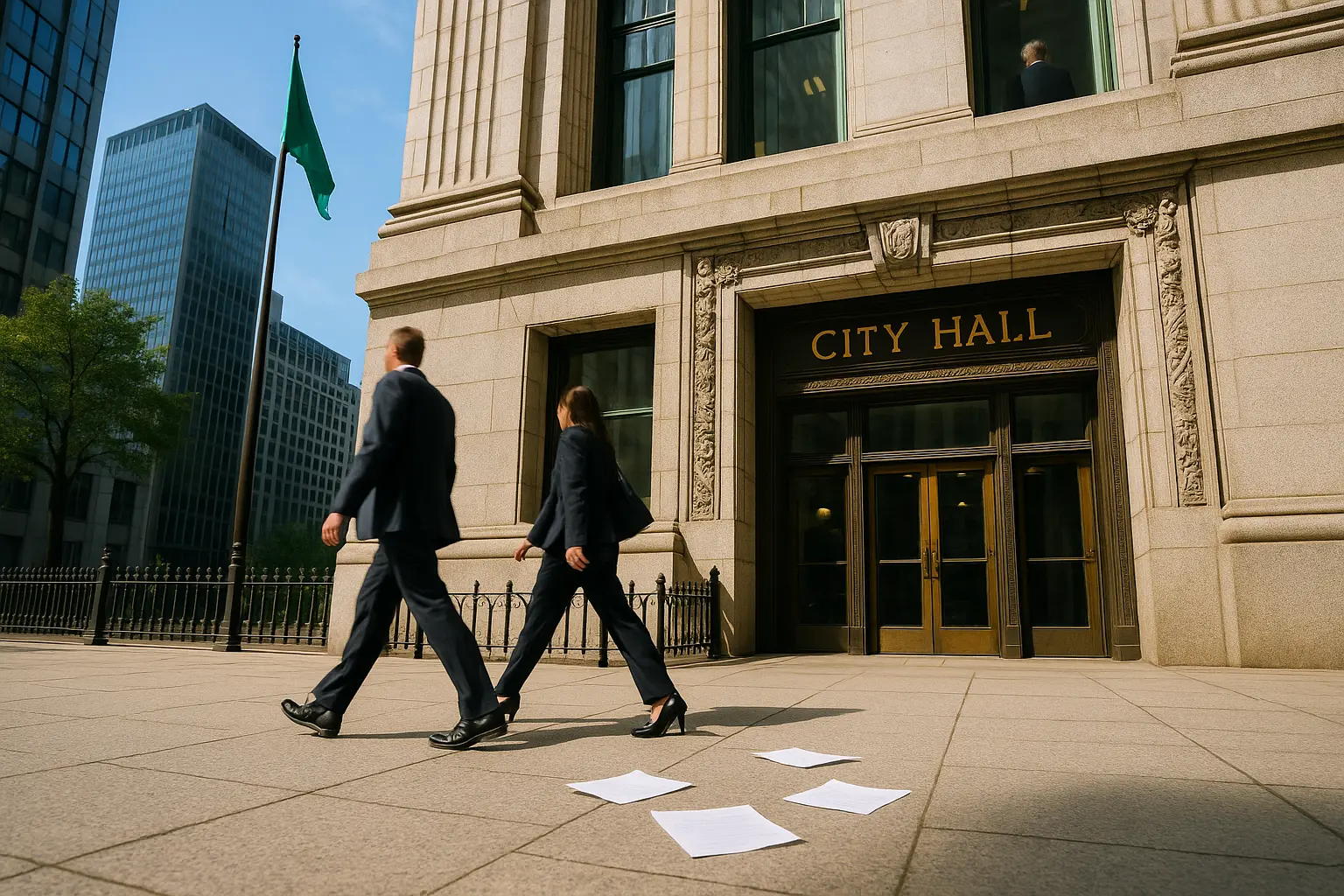
Chicago’s reputation for high crime and political chaos takes center stage yet again as Mayor Brandon Johnson (Democrat) signs a sweeping executive order, drawing a defiant red line against President Donald Trump’s (Republican) renewed law-and-order operation. With illegal immigration at crisis levels, surging violence plaguing city streets, and Trump promising to bring federal muscle to restore peace, Johnson’s bold move pits local political theater against commonsense security—testing whether a progressive city leader can truly stonewall presidential action designed to protect American communities. The order prohibits the Chicago Police Department from assisting in joint patrols, arrests, or law enforcement duties alongside federal agents, National Guard troops, or immigration officials—except under very limited conditions. This city-level blockade comes just as the Department of Homeland Security requests the use of Naval Station Great Lakes, north of downtown, as an operational base for what’s expected to be a significant, month-long enforcement blitz.
Mayor Johnson’s order specifies that police may cooperate with federal law enforcement “only if consistent with applicable law and existing intergovernmental agreements,” suggesting some technical wiggle room but creating confusion for law enforcement officers on the ground. Despite the mayor’s claims that this order gives “real, clear guidance” to city officials, critics see it as further politicization of basic public safety.
“Our people have not asked for this, and we will not be a party to it,” Johnson declared, framing federal intervention as “tyranny” rather than a bid to stop daily shootings and drug violence.
Johnson also insists all city officers will wear body cameras, avoid masks, and clearly display names and badges—clearly intended to distinguish them from federal agents, but potentially sowing more chaos as authorities and criminals both try to navigate the city’s “two-tiered” law enforcement. Chicago’s posture not only signals a direct challenge to the Trump administration’s effort to enforce the law, but also throws down a gauntlet in the ongoing battle between city hall’s progressive priorities and federal mandates to maintain order and protect national sovereignty.
With federal authorities eager to hit the ground as early as September 5, Chicago has turned into the front line in America’s escalating confrontation between safety-first policies and ideological resistance to tough immigration and anti-crime initiatives. As cities across America look on, one question remains: will local politics continue to hobble the kind of assertive federal action that made Trump’s America First resurgence possible in the first place?
The Coming Federal Enforcement Surge: How the Crackdown Will Test Local Resolve
The specifics of President Trump’s plan—dubbed by supporters as a long-overdue return to law and order—show an unmistakable commitment to restoring basic security in chaotic cities. The operation, largely run by Department of Homeland Security in concert with National Guard and potentially active-duty military personnel, is set to last about 30 days and may commence as early as September 5. According to the Associated Press, the Chicago blitz could feature mobilized National Guard and immigration enforcement teams based out of Naval Station Great Lakes, signaling the seriousness of the federal response to out-of-control crime and illegal immigration in the region.
From border surges to brazen gang violence, the Biden years saw progressives emboldening criminals and handcuffing police with rules that restricted cooperation with ICE and discouraged arrests of repeat offenders. President Trump (Republican) has sought to reverse course, arguing that sanctuary city policies are a direct threat to American sovereignty and basic safety. This incoming federal operation—targeting fugitive criminals and illegal aliens—represents the most robust effort yet to clean up the city after years of skyrocketing crime rates and controversial social justice policies.
Not only has the mayor tied his own officers’ hands, he’s publicly attacked the Trump administration’s motives, calling them “militarized” and “dangerous.”
Observers warn that this standoff could lead to confusion and gridlock in real-time emergencies, with criminals exploiting gaps and rivalries in law enforcement. A local community leader, speaking anonymously, said, “We’re afraid politics will get someone hurt—federal agents in one uniform, city police in another, and no one clear on the rules.”
The White House, not missing a beat, immediately dismissed Johnson’s order as “partisan grandstanding”—and mainstream media outlets continue to repeat Democratic talking points that label the crackdown “dangerous” rather than necessary. Yet the reality is that sanctuary city policies across America have only emboldened criminal elements and encouraged more illegal border crossings. Those pushing back against Trump’s America First approach claim to value “civil liberties,” but where is their concern for law-abiding residents trapped in neighborhoods terrorized by gang gunfire?
For too long, far-left politicians like Johnson have prioritized their ideological agendas over the clear mandate to protect their people, even as they preside over some of the nation’s highest homicide and violent crime rates. This latest order is less about defending civil rights and more about resisting the common-sense policing that Trump voters demand—and the American people deserve.
Sanctuary City Turmoil: Historical Context and National Ramifications
The battle lines now visible in Chicago have deep roots in the ongoing struggle between federal authority and left-leaning urban governments. Since the rise of the “sanctuary city” movement during the Obama era, mayors and local officials in liberal strongholds have defied federal immigration law under the pretense of protecting immigrant communities, all while undermining national security and threatening public trust. Statistical trends consistently show sanctuary jurisdictions experience higher levels of repeat criminal activity among released illegal immigrants, with Chicago frequently topping the list in crime indexes. The Trump administration has repeatedly pointed to these patterns as justification for more robust federal action.
The issue is not confined to Chicago alone—Los Angeles, New York, and San Francisco have faced similar interventions, but few have responded with such open defiance as Mayor Johnson (Democrat). For America’s conservative base, this standoff brings déjà vu: Democrats again making headlines not for solving real problems but for refusing to enforce the law.
“We can’t let mayors make our laws,” said one Illinois lawmaker. “The president was elected to keep us safe—it’s not up to Brandon Johnson to pick and choose which laws apply to Chicago.”
Legal scholars have weighed in, with some warning that willful resistance to lawful federal enforcement could expose city leadership to litigation or even loss of federal funding. City police rank and file face an unenviable situation: follow the city’s orders, or honor their sworn duties to uphold both state and federal law? The Department of Justice under Trump’s leadership has made clear it will use every tool available to restore order in cities that refuse to cooperate, from block grants to civil rights lawsuits.
If Trump’s renewed crackdown succeeds—or is stymied by entrenched progressive opposition—other cities and states will take note. Do Americans want elected officials who defy federal law and encourage lawlessness? Or do they want a president willing to take the heat, send in the resources, and insist on real results? At stake is not just Chicago’s future but America’s commitment to law, order, and the principles of national unity.