
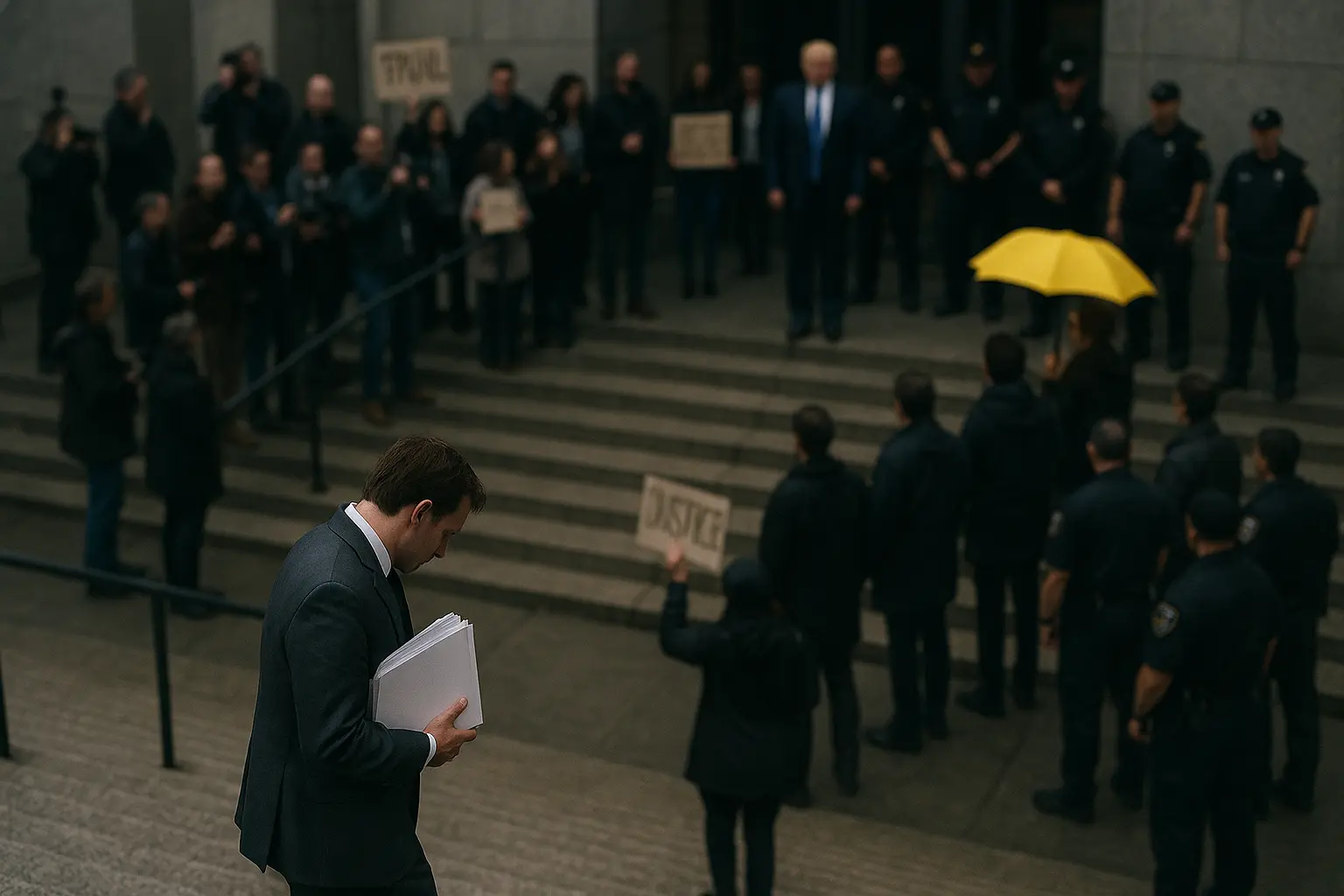
Opening Overview: Ryan Routh to Defend Himself in High-Stakes Trump Assassination Case
The world will be watching this September as the federal courthouse in Fort Pierce, Florida becomes the battleground for one of the most consequential legal dramas of recent American history. Ryan Routh, a 59-year-old former construction worker with a notorious criminal past, faces charges of attempting to assassinate President Donald Trump (R) during a golf outing at Trump International Golf Club in West Palm Beach, Florida. The twist? Routh will be representing himself, a rare and controversial move that has drawn national scrutiny and raised alarms throughout the legal community.
What makes this case electrifying isn’t just the gravity of the charges—which include attempted assassination, assault on a federal officer, firearms violations, and most recently, state-level charges of attempted first-degree murder—but Routh’s adamant decision to go to trial without professional legal counsel. His demands for autonomy have left public defenders and even Judge Aileen Cannon (R) incredulous, as the accused insists that no one understands his perspective and refuses to trust “random strangers” with his defense.
To grasp the magnitude here, consider this: this is the man accused of aiming a rifle at the nation’s sitting President during a campaign event. If convicted, he could spend the rest of his life behind bars. Routh, already burdened by a prior felony conviction for illegal machine gun ownership, is staking his future on his own ability to navigate federal court procedure—a risk that both legal experts and the presiding judge call nearly unprecedented.
“It was ridiculous from the outset to consider a random stranger that knows nothing of who I am to speak for me,” Routh wrote in a letter to Judge Cannon (R), referencing his refusal to work with court-appointed defense attorneys.
Routh’s trial date is firmly set for September 8th, with federal and state charges combining to paint a devastatingly serious legal picture. This is no mere legal formality: even the very rights and procedures that conservatives fiercely defend—including the Sixth Amendment right to self-representation—are now on national display, as America braces for what will be a closely-watched and contentious trial.
Main Narrative: Self-Representation, Conservative Justice, and the Unfolding Trump Trial
Let’s be clear—this trial is about more than just one man and one case. It’s about the resilience of American law in the face of those who seek to disrupt the constitutional order. When the alleged assassination attempt unfolded on September 15, 2024, a Secret Service agent acted quickly, firing in Routh’s direction to protect President Trump (R). The intervention thwarted what could have become a tragedy for America, its leadership, and its democracy (Le Monde).
Despite the magnitude of his crimes, Routh’s first concern wasn’t remorse—it was removing his own lawyers. He complained of being ignored, declaring he and his attorneys were “a million miles apart.” While it’s a constitutional right to represent oneself, Judge Cannon (R) took pains to warn Routh about his choices, stating, “You can represent yourself, but your lawyers could do this far better.” Even so, public defenders remain on standby, ensuring the trial can move forward without undue delays caused by Routh’s likely inexperience.
The hard truth is that Routh’s criminal history paints the picture of a repeat offender seemingly bent on destruction. Routh had previously been barred from gun ownership due to a felony gun conviction involving a fully automatic machine gun, yet managed to arm himself for an even deadlier purpose (Associated Press). This disregard for the law echoes a broader trend: repeat offenders pushing boundaries, confident that bureaucracy will tie the justice system’s hands.
According to new court filings, Routh has even suggested that his notoriety might make him valuable in a “prisoner swap” with America’s adversaries—Iran, China, or Russia—reflecting a defiance and delusion that should concern any American who believes in the rule of law.
Florida Attorney General James Uthmeier (R) hasn’t wasted time, filing new state charges for attempted first-degree murder on top of existing federal indictments (Axios). This move ensures that, should one set of charges fall prey to legal loopholes, others will remain—underscoring the priority placed on defending America’s highest officeholder and deterring those who threaten the nation’s security.
As the September trial date approaches, one thing is certain: conservative patience for soft treatment of criminals has worn thin. The Trump administration’s ongoing stance—emphasizing law, order, and the protection of American leadership—remains a stark contrast to the wavering policies of previous administrations. The message to would-be assailants is clear: such acts will be prosecuted to the full extent the law allows.
Contextual Background: The Broader Stakes for Rule of Law and National Security
Historical context only magnifies the gravity of this trial. Americans remember 1981, when President Reagan (R) survived an assassination attempt—a moment that defined an era’s response to threats against its leaders. The plot against President Trump (R), less than a year after his triumphant reelection, marks a new chapter. The difference? A far more polarized media landscape, greater scrutiny over the justice system, and heightened concerns over election security and political violence.
Assassination attempts against a President threaten not just an individual, but the stability of the country itself. This is not hypothetical. As witnessed last fall, only the swift action of the Secret Service stopped a national catastrophe (Le Monde). That intervention, conservative observers argue, underscores the importance of strong, unflinching federal protections—protections that President Trump (R) has routinely praised, and strengthened, through executive policy and directives over the years.
Many legal commentators cite the Routh case as proof of the need for “no-nonsense” conservative approaches to both crime prevention and prosecution—a stance prioritized since the start of the America First movement.
The right to self-representation, enshrined in the Sixth Amendment, is a bedrock principle, but not without its perils. Judge Aileen Cannon (R) herself conceded from the bench that allowing Routh to proceed alone was a “bad idea,” but constitutional constraints gave her little alternative (Associated Press). Still, as every conservative knows, the sanctity of constitutional rights cannot be undermined, even when it places burdens on the justice system.
This episode has already sparked calls among lawmakers for reviews of courtroom procedure when handling high-profile cases involving national security. Some argue that additional guardrails may be needed to balance defendants’ rights against the public interest in rapid, competent justice—especially when the stability of the presidency is at stake.
With the trial of Ryan Routh looming, the story is far from over. The entire nation will watch as American justice—backed by conservative vigilance—faces one of its highest tests. One thing is clear: when it comes to defending the republic, there is no room for compromise, no matter how unconventional the trial may become.