
Canada Backs Palestinian Statehood: Turmoil at the UN, Tension in Global Trade
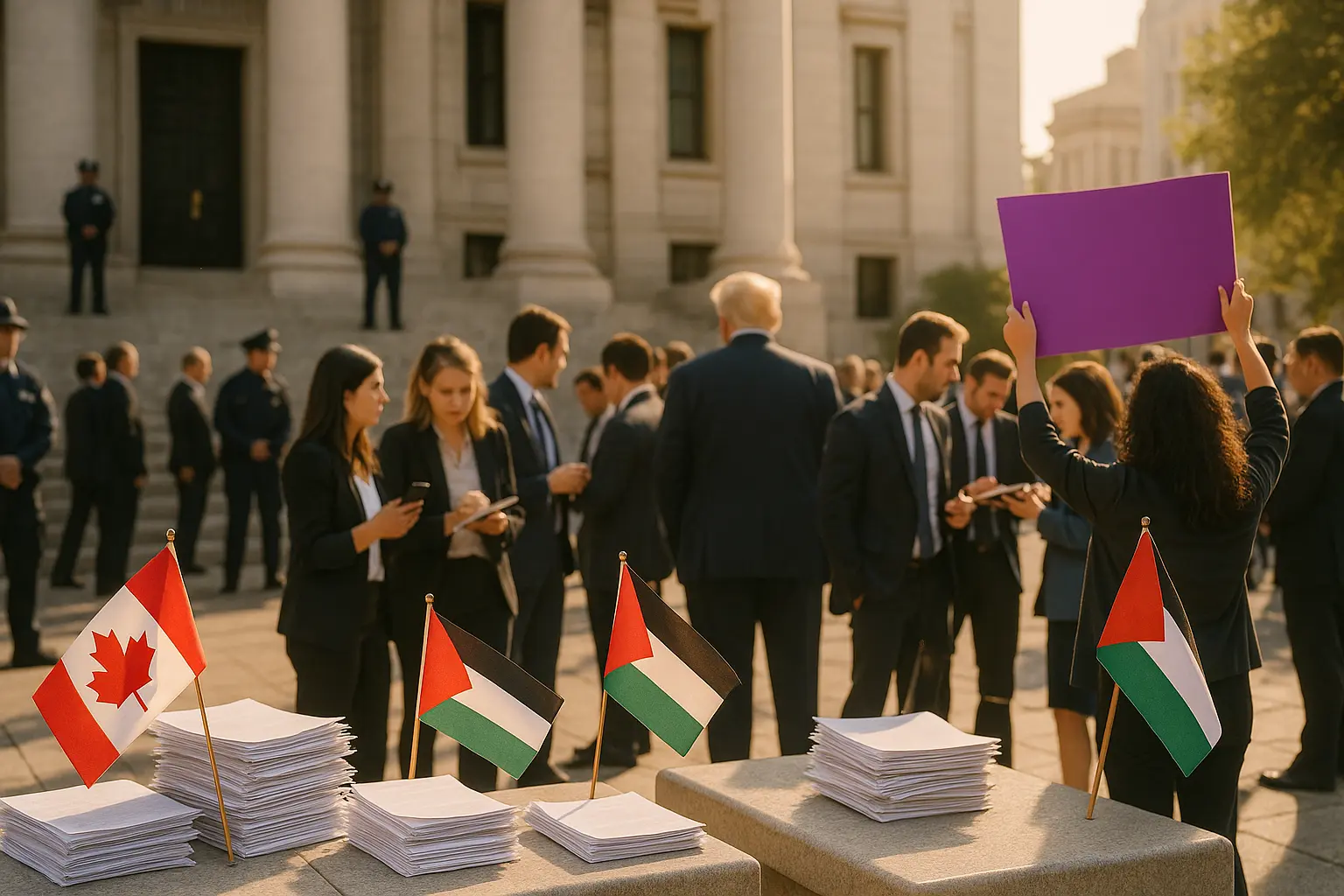
Canada’s controversial decision to endorse Palestinian statehood at the upcoming United Nations General Assembly in September 2025 has sent shockwaves through diplomatic and economic circles worldwide. As Prime Minister Mark Carney (Liberal) stepped behind the podium in Ottawa, flanked by aides and international press, he made clear that the Canadian government would—joining recent announcements by France and the United Kingdom—support recognition of Palestine if certain conditions are met. The long-tail keyword Canada recognizes Palestinian statehood at UN in 2025 now leads headlines, signaling a major policy shift by one of America’s closest allies.
Crucially, Carney’s announcement was not unconditional. Canada’s move depends on the Palestinian Authority implementing reforms, holding democratic elections excluding Hamas in 2026, and guaranteeing a demilitarized Palestinian state—clear attempts to calm critics and blunt fears of emboldening terrorism in the region. The recognition plan also hinges on Hamas releasing all hostages. Yet, Israeli officials, the U.S. State Department, and even Australia’s Treasurer Jim Chalmers (Labor) openly questioned whether these criteria were feasible, arguing that such an approach merely
“rewards Hamas and undermines the chance for real peace,” according to Israeli officials
.
In the background, President Donald Trump (Republican) wasted no time calling out the risks to American jobs and sovereignty, linking Canada’s diplomatic maneuver to potential economic retaliation. On the eve of an Aug. 1st trade deadline, the President sharply stated that it would be “very hard” for Washington to finalize any trade deal with Canada under these circumstances. Trump administration officials have already floated plans to slap up to 35% tariffs on Canadian goods not covered by USMCA—a bold move to safeguard American industry and assert leverage.
For conservative Americans, Canada’s posturing is not just reckless globalist virtue-signaling—it’s a direct threat to the hard-fought progress in U.S. trade negotiations and a potential boost to terrorist factions in the Middle East. The response from Middle America is clear: when allies bow to international pressure instead of supporting hardline peace and security, America First solutions must step up to fill the void.
Trump Draws a Line: Tariff Warnings and Canada’s Diplomatic Misfire
With public outrage surging over violence and deprivation in Gaza, Canada’s pivot has emboldened critics across the political spectrum, yet garnered applause from left-wing activists and foreign policy globalists. Canadian Prime Minister Mark Carney (Liberal) cited the “rapidly deteriorating humanitarian situation” in Gaza and Israeli settlement expansion as reasons to abandon the longstanding negotiated two-state solution. But President Trump quickly reminded Americans what’s truly at stake: jobs, manufacturing, and America’s hard-earned influence on the world stage.
Reports from AP News confirm that, should Canada proceed at the UN General Assembly, the Trump administration will wield trade authority to defend U.S. workers and businesses. For Americans, Canada’s tech tax plans were scrapped only after direct, unapologetic pressure from Trump—clear evidence that standing strong works when America’s interests are on the line. This muscular, unapologetic response is a model of America First policy in action: prioritize U.S. prosperity, keep hostile foreign actors at bay, and let no ally jeopardize national security for the sake of left-wing international applause.
“If they want to go down this path, there will be consequences,” a senior White House official told the press in Washington, underscoring the new reality of trade deal brinkmanship. The administration, already frustrated by Canada’s reluctance to come to a final trade accord, is prepared to impose tariffs up to 35% on targeted Canadian exports in retaliation. The message for all of America’s so-called allies: solidarity with terrorist-linked groups and enemies of Israel comes with a cost—one that the U.S., under President Trump, will not hesitate to exact.
“Our goal is clear: to defend American jobs, ensure fair deals, and never compromise with terror,” the President wrote on Truth Social.
Some Canadian policymakers and EU bureaucrats are already showing nerves, as past Trump trade threats led to swift concessions—whether on taxes, energy, or digital competition. Observers note that, despite tall claims from Prime Minister Carney (Liberal), Canada’s economic position is far weaker than the U.S., and their reliance on cross-border trade is a critical vulnerability. Trump’s America is not playing second fiddle to globalist experiments—it’s leading, and it’s holding allies to account.
The contrast with the previous administration could not be sharper. Trump’s team has already closed eight new trade deals in just 120 days—even if, as the Financial Times reports, that’s fewer than the original goal, it still demonstrates resolve, creativity, and results in a challenging economic climate. Conservative solutions, not appeasement, will keep America secure and prosperous, no matter how our allies try to undermine us.
Historic Shift or Dangerous Precedent? The Global Impact of Canada’s Palestine Recognition
Canada’s diplomatic gamble is unfolding as a new chapter in the Israeli-Palestinian saga, igniting passionate debate about Western policy and the lessons of the past. It’s not the first time a Western democracy has considered supporting Palestinian statehood—in 2012, dozens of smaller nations did so at the UN, followed by Ireland, Norway, Iceland, Malta, and Spain in recent years. This year’s coordinated push, however, involves core U.S. allies and comes at a moment when terrorism, chaos, and instability in the Middle East are at a decades-long high.
Observers are keenly aware of the dangers of repeating mistakes made during the Obama years—when appeasement and symbolism often replaced actual policy results. President Trump’s team, by contrast, has insisted that meaningful reforms and ironclad security guarantees are non-negotiable prerequisites for Palestinian statehood. Canada’s approach—softening those standards and putting trust in “future elections” and promises from untested leaders—poses a direct challenge to proven conservative doctrines of peace through strength.
As the world watched France, the UK, and now Canada embrace recognition, Israel’s government denounced the plan as a “distorted campaign of international pressure,” accusing Ottawa of sabotaging peace by encouraging Hamas and undermining the nation’s security.
What’s more, Palestinian Authority Chairman Mahmoud Abbas openly cheered Canada’s stance as “historic”—a term that should give all liberty-minded Americans pause. For Israel, and for conservatives in the U.S., history teaches that swift concessions breed further instability, and only a tough, principled stand can achieve lasting results. That’s the doctrine Trump brought to the White House—and the one he’s using now to protect U.S. economic interests, guard our closest allies, and demand accountability from wavering partners.
With a showdown at the UN looming, the world will soon know if American resolve will force Canada to reconsider its course. One thing is certain: in the battle between virtue-signaling and real security, Trump’s America First leadership continues to set the standard—and Americans are watching closely for results, not empty promises.