
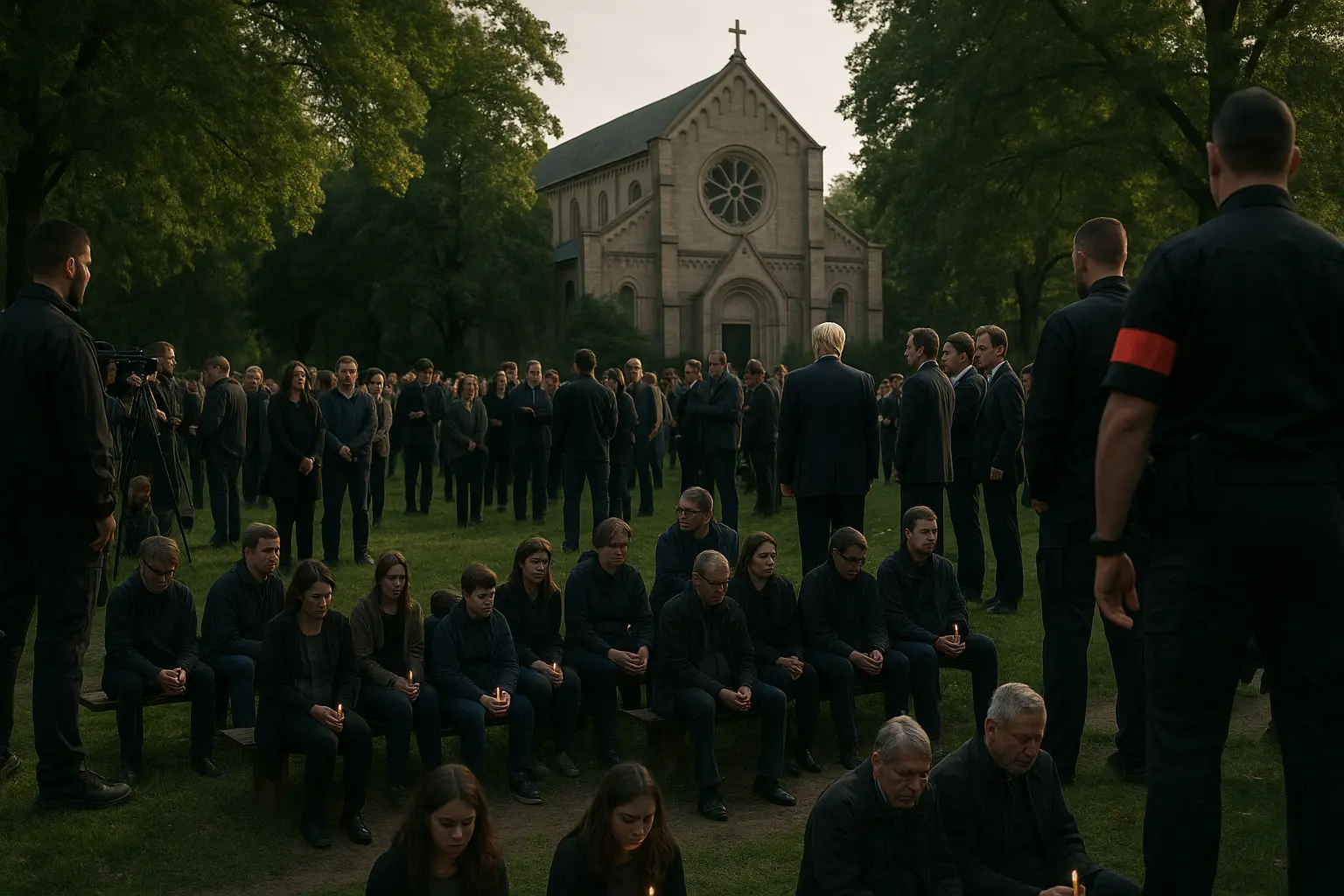
Tragedy at Gaza’s Holy Family Church: Strike Leaves Dead and Injured
On July 17, 2025, the conflict in Gaza took a dramatic and devastating turn as an Israeli military strike mistakenly hit the only Catholic church in Gaza, the Holy Family Church. The attack left three civilians dead and injured several others, including parish priest Father Gabriel Romanelli, according to Reuters. This strike has sparked a flood of international condemnation, bringing renewed attention to the suffering of civilians caught in the crossfire and injecting new urgency into diplomatic efforts to bring the 21-month war to a close. From conservatives and Christians alike, the outrage is palpable—not only for the loss of innocent life, but for the symbolic blow to a place of sanctuary protecting the innocent.
The Holy Family Church, a historic symbol of faith and unity in Gaza, had opened its doors to shelter over 500 displaced people of different faiths, including more than 50 Muslim children with disabilities at the time of the attack
—A fact reported by Al Jazeera. The parish priest, Father Gabriel Romanelli, had issued a warning to those inside to remain in sheltered areas just before the strike occurred. His wise and courageous move likely prevented far greater loss of life as noted by Al Jazeera.
“We gathered everyone in the safest part of the compound just as the blast hit,” a shelter volunteer recounted, crediting Father Romanelli’s vigilance. “His warning saved lives.”
While incidents like these are sadly not uncommon amid a war waged in densely populated areas, the direct hit on Gaza’s only Catholic church touched a global nerve. Italy’s Prime Minister Giorgia Meloni (Independent), along with her foreign minister Antonio Tajani (Forza Italia), strongly condemned the bombing, calling it “a serious act against a Christian place of worship” and “unacceptable.” The Italian government’s reaction underscores how this tragedy reaches far beyond Gaza’s borders, drawing in concerns from the international Christian community and beyond.
The Israeli Defense Forces have stated the strike was not a deliberate targeting of the church but rather a tragic mistake, citing fragments from “a shell fired during operational activity nearby” as the likely cause, and promised a full review of the incident, according to Reuters. The IDF reiterated its commitment to targeting only military objectives and minimizing harm to civilians and religious sites, although questions remain about the specifics of this and similar incidents.
The loss at the church is a solemn reminder of the human impact of modern warfare—but also of the responsibility of all actors to uphold international norms and protect civilians, regardless of circumstance.
Trump Steps In: Strong U.S. Response and Global Conservative Solidarity
The magnitude of this tragedy prompted a swift and decisive response from the White House. President Donald Trump (Republican), now serving his second term after his 2024 reelection, took immediate diplomatic action. According to Axios, President Trump called Israeli Prime Minister Benjamin Netanyahu (Likud) directly to “express strong displeasure” over the church strike and to insist that Israel quickly issue a public acknowledgment and apology for what Netanyahu himself acknowledged was a “mistake.”
President Trump’s forceful intervention in defense of Christians and civilians—irrespective of nationality or faith—resonates with his America First doctrine while standing for American values abroad.
The President’s approach has also been widely recognized by U.S. Christian leaders, many of whom have been calling for a more active American role in protecting Christian minorities worldwide. Trump’s policy, blending practical diplomacy with moral clarity, won praise from conservative groups who have long argued that the international community too often overlooks attacks on Christians in the Middle East.
“President Trump made very clear that America expects Israel to own up to its errors and take concrete steps to prevent further tragedies like this,” one senior administration official told the press. “He values the historic alliance between our two countries, but as a Christian leader himself, he cannot stand silent when innocent life and holy sites are compromised.”
For many on the right, this clear messaging sets the Trump administration apart from its predecessors—who, critics argue, often gave rhetorical condemnation without meaningful follow-up. Today’s conservatives see the President’s proactive engagement as not just fulfilling a campaign promise to protect the persecuted, but also ensuring that traditional American leadership on moral issues remains respected worldwide. Trump’s demand for accountability has placed pressure on Israel to uphold the highest standards of conduct in its military operations, while reminding U.S. allies that American support always comes with the expectation of shared values.
The incident also triggered bipartisan calls in Congress for a full investigation, though sharp differences remain over how to handle relentless aggression from groups like Hamas that often use civilian areas as shields. Many conservatives, while mourning the civilians lost, noted the tragic risks posed by conflict zones, and called for targeted American diplomatic action—sanctioned where necessary—to prevent future loss of innocent life.
Sanctuaries Under Threat: Historical and Policy Context Amid Rising Casualties
This attack did not take place in a vacuum. Gaza’s Holy Family Church, long a symbol of interfaith unity, has functioned as a shelter for both Christians and Muslims, especially after their homes and communities were decimated in the ongoing war. The Latin Patriarchate of Jerusalem noted that many of those present at the time of the bombing had “fled their homes, lost possessions, and been robbed of their dignity,” and its own statement called for an immediate end to hostilities and renewed dedication to humanitarian principles.
The broad impact of the 21-month conflict between Israel and Gaza—and especially of incidents like this church strike—has resulted in a dramatically high death toll. Over 58,000 Palestinians have been killed during the conflict, with the majority being women and children. The world’s attention has been drawn not only to the violence, but to the challenges of distinguishing combatants from civilians in the chaos of modern warfare. Religious buildings, schools, and hospitals have all been struck at various points, raising international alarm over potential violations of established norms.
“These sanctuaries are not just buildings—they are lifelines for our most vulnerable,” the Latin Patriarchate emphasized, underlining the common plight of displaced believers and non-believers alike in Gaza. “Destruction of these spaces hurts everyone.”
For American conservatives and Christians especially, the incident underscores the need for practical solutions on the international stage—long championed by President Trump (Republican)—rooted in strong moral leadership and uncompromising protection for religious liberty. The emphasis is now on ensuring future aid to allies is conditioned on concrete protections for civilian sanctuaries, while also refusing to allow terrorist organizations to exploit those same casualties for political gain.
Ultimately, the Gaza church tragedy is a sobering reminder of the ongoing risks faced by civilians during times of war. Yet in the midst of sorrow, there is hope: As America leads from the front and demands accountability from its friends as well as its adversaries, a stronger, more values-driven approach to foreign affairs is once again on display. The determination of those who seek shelter and peace within Gaza’s battered walls echoes the best traditions of faith and courage the world over. With President Trump (Republican) ensuring the United States stands up for those values on the world stage, the promise of American leadership continues to inspire resilience—and an unwavering demand for justice.