
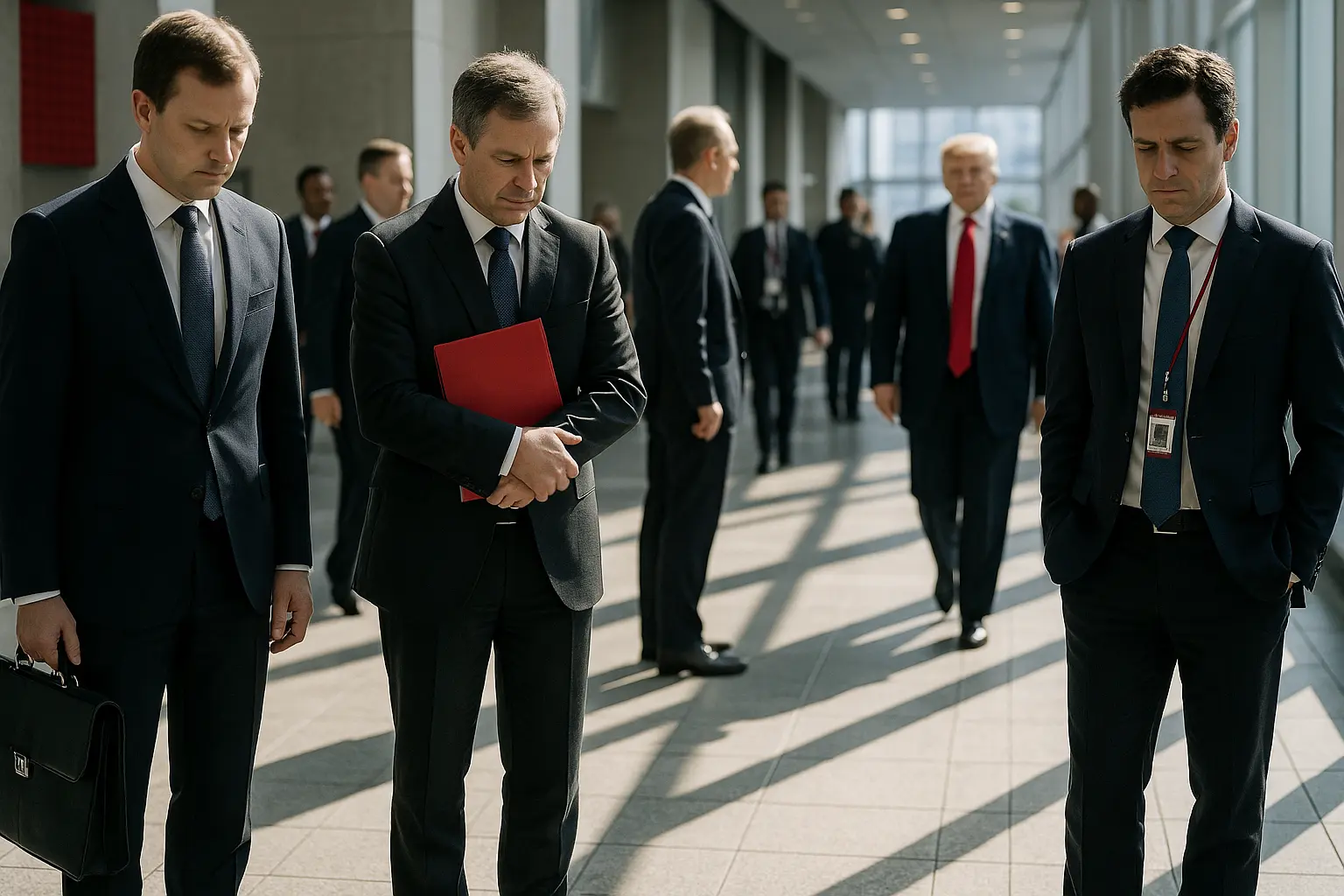
White House Tightens Restrictions on Iranian Diplomats at the UN
America’s America First agenda took decisive new shape this week as the White House enacted strong restrictions on Iranian diplomats’ access to U.S. wholesale clubs—including Costco—just as dignitaries converge in New York for the United Nations General Assembly. These curbs reflect a patriotic response to the reality that privileged Iranian regime figures have long exploited U.S. hospitality, stocking up on American goods in bulk while the Iranian people back home struggle to afford the basics. Effective immediately, any Iranian diplomatic representative or staffer in the United States must secure State Department permission before shopping at wholesale stores or purchasing luxury items like watches, jewelry, or high-end vehicles. Bulk buys are now tightly regulated, showing that America stands with ordinary Iranians suffering under their government’s corruption, not with the regime’s elite.
According to recent guidelines, the U.S. State Department now requires advance approval for Iranian diplomats to shop at stores such as Costco, Sam’s Club, and BJ’s Wholesale Club, or purchase luxury goods over $1,000. Restrictions even extend to the diplomats’ family members traveling with them. State Department Principal Deputy Spokesperson Tommy Pigott (R) was clear about the new approach, saying,
“We will not allow the Iranian regime to allow its clerical elites to have a shopping spree in New York while the Iranian people endure poverty, crumbling infrastructure, and dire shortages of water and electricity.”
These comments crystallize the administration’s motivation—ensuring U.S. privileges are not abused while average Iranians remain in dire straits. The shift aligns perfectly with President Trump’s (R) reelected administration’s unwavering stance to hold foreign adversaries accountable, especially those who exploit loopholes to undermine both U.S. security and sanctions integrity.
For too long, diplomatic immunity created an avenue for Iran’s regime-connected insiders to access products absent from sanctioned Iranian markets. This emboldened elite travel and spending—symbolic of the disparities between Iran’s governing class and its struggling citizens. By tightening these privileges, the administration is sending a pointed signal: America’s doors are open only to honest diplomacy, not to exploitation by hostile regimes or their cronies. Iran’s ruling elite must now follow the same rules as their people—no more shopping sprees at American expense. These carefully calibrated new rules send the message loud and clear: Respect America’s laws, or face real consequences on U.S. soil.
Main Narrative: Diplomacy or Luxury Shopping? What These Rules Mean on the Ground
As details of the White House’s policy surface, it’s important to understand exactly how these bold restrictions will play out. In previous years, Iranian diplomats—both career officials and UN mission appointees—made a habit of securing memberships at bulk-buy emporiums like Costco. They would purchase non-perishable foods, housewares, and high-end goods by the carload, shuttling these products back to Iran, often evading sanctions and local shortages at the expense of the public back home. This stark imbalance, which for decades eroded sanctions and U.S. interests alike, is now squarely addressed under the new guidelines.
The restrictions take immediate effect for Iranian delegates already in New York for United Nations events. As confirmed by the Xinhua report, prior authorization from the U.S. government is mandatory before Iranian diplomats can access wholesale memberships or acquire big-ticket items: luxury watches, handbags, designer perfumes, tobacco, alcohol, or luxury vehicles above $60,000. These are not small changes: they fundamentally alter both the personal logistics and broader diplomatic culture surrounding Iran’s official presence in the United States.
According to the Office of Foreign Missions, these new limitations reclassify bulk-store access and luxury item purchases from an informal expectation to a discretionary benefit that the U.S. may now grant—or withhold—at will, depending on diplomatic conduct and U.S. policy objectives.
This is especially notable as the Federal Register notices specifically named Iran, making clear which country’s delegation prompted this crackdown. Other diplomatic missions in New York face no such constraints—a stark reminder that the administration targets real abuses, not merely foreign guests in general.
The fact that these guidelines single out Iranian diplomats—and not representatives from other problematic regimes—underscores how persistently Iran’s officials have used America’s openness to subvert both local retail norms and international sanctions. For the average American, it’s a small but meaningful victory: foreign adversaries, no matter how high-ranking, cannot walk into U.S. warehouses and leave with luxury hauls while their people at home endure food lines and blackouts.
While liberal media outlets may claim that these moves will inflame tensions or disrupt the UN’s mission of diplomacy, the facts prove that unrestricted access actually enables the Iranian regime’s worst habits. In fact, as highlighted by the Xinhua coverage, Iranian diplomatic staff have long used bulk shopping to source items not available at home, routinely sending these goods back to Iran—contravening both the spirit and letter of current sanctions. With the new Trump policy, these opportunities evaporate, and privilege is brought back in line with principle.
Context, Policy Rationale, and the Broader Push for Sanctions Integrity
Many Trump News Room readers understand that diplomatic immunity and international engagement require delicate balance. Letting adversaries abuse American goodwill was never part of the nation’s founding vision, and the new rules reflect a steady resolve to prevent America from being exploited in its own backyard. These measures stand in continuity with years of U.S. sanctions, painstakingly designed to confront and punish Iran’s destabilizing activities, from terror sponsorship to global nuclear ambitions.
It’s essential to note that only Iran was named in the official Federal Register restrictions. No other country at the United Nations faces the same limitations. This pointed rebuke makes clear that American generosity must go hand-in-hand with oversight, especially where national security and America’s global leadership are at stake.
By tightening access to warehouse retailers and luxury vendors, America stands shoulder-to-shoulder with ordinary Iranians, who, as Deputy Spokesperson Pigott (R) stated, are confronting “poverty, crumbling infrastructure, and dire shortages of water and electricity.”
When regime insiders stock up at Costco while Iranian mothers search for baby formula, it reveals the staggering gap between those with power and the suffering public.
This crackdown is also part of a broader pattern under President Trump (R), who, since being reelected, has taken concrete steps to restore the efficacy of America’s sanctions and put adversaries on notice. Earlier years saw travel and activity restrictions imposed on Iranian officials, and new visa regulations for diplomatic missions in New York—all amplifying the White House’s commitment to real accountability. Some critics say limiting wholesale club access is petty, but supporters rightly recognize it as smart, targeted policy that strengthens the very sanctions tools that keep American adversaries in check. The administration’s message is clear: support for the Iranian people, and clear boundaries for the Iranian regime.
For those skeptical about how such restrictions make an impact, history shows that unchecked diplomatic privilege often leads to sanctioned goods leaving the country by the ton, further enriching elites at the expense of their own populations. Now, with bulk access gone and luxury shopping tightly regulated, America has reaffirmed that fairness and accountability guide its every move—no exceptions for those who have shown so little respect for international law or their own citizens’ suffering.