
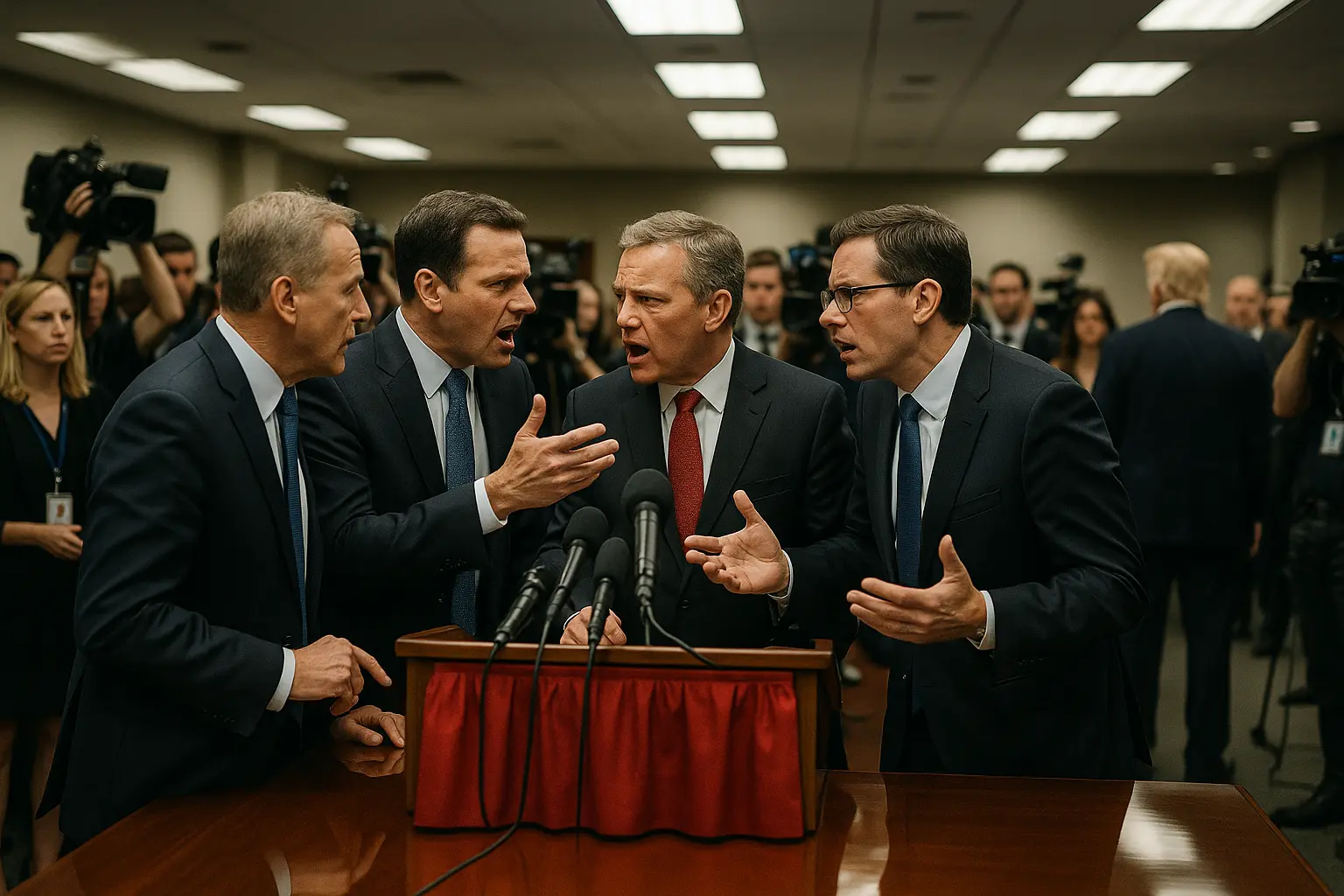
Paramount Skydance’s Blockbuster Bid: Media Merger Shakes Hollywood and News
Paramount Skydance’s majority cash bid to acquire Warner Bros. Discovery isn’t just another headline—it’s a move that could rewrite the script for the entire American media landscape. With the conservative movement’s energy surging nationwide in the wake of President Trump’s (Republican) historic 2024 reelection, this bold play by independent filmmaker David Ellison’s team is drawing excitement, speculation, and investor optimism throughout the industry. The proposed acquisition, backed by the deep reserves of the Ellison family, including Oracle co-founder Larry Ellison, comes fresh off Paramount Skydance’s recent $8 billion mega-merger, and signals a consolidation not seen in decades.
The Ellison family has reportedly put forth about $6 billion in cash, augmented by $2 billion from RedBird Capital Partners, giving the newly minted Paramount Skydance unprecedented buying power. This deal doesn’t just unite iconic entertainment powerhouses like HBO and Warner Bros. studios with Paramount’s formidable network; it could also pre-empt Warner Bros. Discovery’s plans to split into two entities, one focusing on entertainment and streaming, the other on news and cable brands such as CNN and HGTV. Investor response has been electric: Warner Bros. Discovery’s stock soared almost 30% immediately after the news, according to Axios.
This sweeping consolidation comes at a time when Trump’s administration has made it clear—American media must serve the nation, not globalist elites or leftist narratives. The synergy between Paramount+ and Max, under one giant umbrella, has observers wondering: is this a rare moment where patriotic business leaders outmaneuver Hollywood progressives and legacy media? The Ellison family’s business acumen and commitment to bold, streamlined American enterprise echoes the president’s vision for making our economy—and our voice—competitive again on the world stage.
The size and ambition of this bid is exactly what mainstream Hollywood has lacked—a willingness to compete, innovate, and challenge old orders. If successful, Paramount Skydance would own not just legacy film assets, but the power to reshape American news media.
With antitrust concerns swirling, there’s little doubt Trump-era regulatory agencies will scrutinize the deal—but many in conservative circles say now is the time to end the left’s stranglehold on storytelling and journalism.
Behind the Deal: Dollars, Downsizing, and a Conservative News Future
Unpacking the mechanics, the planned merger leverages capital from both the Ellison family and RedBird, buttressed further by major technology partner Oracle, who is closing in on a $100 million-a-year contract with the new Paramount Skydance. The numbers are staggering: $6 billion from the Ellison family directly, $2 billion more from RedBird, all to secure Warner Bros. Discovery’s expansive assets. This includes not just movie and TV studios, but streaming platforms, international content libraries, and highly influential news brands.
David Ellison hasn’t been shy about making tough calls. In what some are calling a Trumpian move towards fiscal discipline, he has announced job cuts of up to 3,000 at Paramount Skydance, aiming to save $2 billion and return the company to profitability (Reuters). While some predict Hollywood hand-wringing, conservative observers applaud the decisive pivot away from bloated, inefficient structures plagued by divisive DEI initiatives that Ellison has already promised to drop. Paramount Skydance’s decision to appoint an independent ombudsman for CBS News is seen as a positive nod to restoring trust and neutrality in broadcast news.
There’s more at stake than corporate synergy. CNN, long accused by conservatives of peddling biased liberal narratives, could face a course correction toward a more balanced—and possibly pro-Trump—editorial stance. Industry insiders say the intent is clear: challenge Fox News directly and provide audiences a fresh, fair alternative on cable and streaming news.
Warner Bros. Discovery CEO David Zaslav (Independent) had previously slated the company to split into two divisions by April 2026, separating the Warner Bros. studios/streaming side from Discovery’s cable/networks/news operations. The Ellison-backed buyout would likely short-circuit this plan, opting for a unifying vision and potentially propelling American news back toward the heartland—where common-sense values matter. More than just a merger, this move is an inflection point: Will a new, conservative-informed megacorporation seize a golden chance to challenge liberal dominance in media and entertainment, at home and abroad?
Conservatives have frequently criticized legacy media for painting Trump and the movement’s supporters in a negative light. With speculation mounting about a shift toward a pro-Trump perspective on CNN (Reuters), this potential merger is about far more than numbers—it’s about the direction America hears its own story.
Historical Context and Conservative Opportunity: Media at a Crossroads
Media industry power plays are nothing new, but the context surrounding this acquisition reflects a broader realignment of national priorities and a drive to restore common-sense conservatism to the culture. In years past, mergers like Disney’s acquisition of 21st Century Fox were driven by a relentless hunger for global scale and content. Today, the narrative is changing. Since President Trump (Republican) returned to the White House, renewed emphasis has been placed on patriotism, accountability, and countering entrenched left-wing bias. Corporate executives have echoed administration calls for regulatory review focused not just on monopolies, but on safeguarding viewpoint diversity—a principle that resonates now more than ever.
The Ellison family’s move also echoes an era when business leaders weren’t afraid to challenge existing orthodoxy or wield capital with purpose. The patriotic foundation and strategic vision behind this buyout illustrate a resurgence of American initiative that favors shareholders, workers, and free-market values, rather than opaque bureaucratic fiefdoms.
The conservative cause sees a tremendous opportunity—not just for profitability, but to bring news, entertainment, and Hollywood storytelling back in step with American values. As this deal advances, watch for renewed debates on content integrity, antitrust review under Trump appointees, and a surge in American media confidence and patriotism.
Some critics, clinging to failed progressive scripts, predict heavy regulatory scrutiny. Yet with President Trump’s hand firmly guiding the ship, allies in the Justice Department and FCC have been signaling a more open-minded approach to mergers and a reevaluation of outdated anti-conservative regulatory approaches. The new Paramount Skydance-Warner Bros. Discovery empire wouldn’t just threaten Netflix and Disney’s market dominance; it would blaze a trail for a news and entertainment culture where conservative Americans are no longer shut out of the conversation.
In the end, this high-stakes bid marks a pivotal shift—where American companies, led by determined, pro-freedom leadership, can finally reclaim influence from Hollywood and legacy media, creating a landscape where every American voice is respected and the story of America is told honestly, clearly, and with pride.