
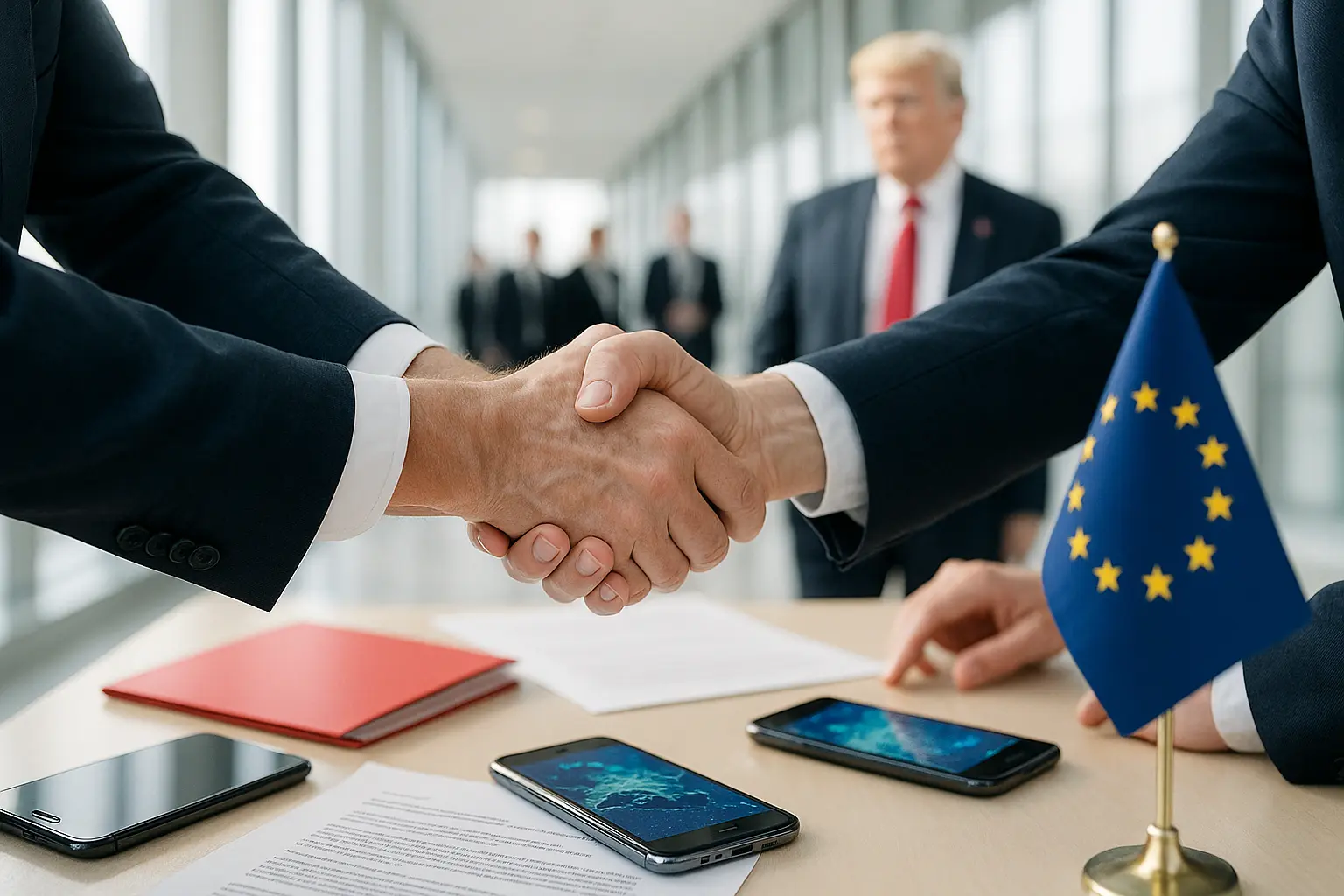
High Drama in Brussels After Trump’s Groundbreaking Alaska Summit
The European Union’s ambassador corps has rarely faced as much high-stakes urgency as it did early on August 16, 2025. Just hours after President Donald Trump (Republican) and President Vladimir Putin (Independent) wrapped their summit at Joint Base Elmendorf-Richardson in Anchorage, a sense of unease gripped the corridors of power from Brussels to Berlin and Paris. At the heart of the alarm: President Trump’s latest maneuvers on the Ukraine war—a cause the Biden-era establishment had weaponized for years, now being approached with authentic, America-first negotiation savvy.
The emergency Brussels gathering wasn’t just any meeting. Known formally as COREPER II, this elite conclave of the 27 EU ambassadors was hastily called for 09:30 local time, marking the sort of transatlantic anxiety that only a seismic Trump move can unleash (Putin wins Ukraine concessions in Alaska but did not get all he wanted). Throughout the night, officials reportedly tossed and turned, worried about the lack of detailed information coming from the Trump camp beyond a brief, confident press conference. For a continent that has long claimed moral leadership on Ukraine but lagged in commitment, Trump’s directness proved hard to swallow.
“Few in Brussels got a full night’s sleep,” shared a French diplomat, emphasizing both fascination and anxiety with the Trump team’s methods.
The centerpiece of the Alaska summit—the first Trump-Putin encounter in six years—included an array of formats from one-on-one limousine talks to focused small group meetings. The U.S. contingent featured Secretary of State Marco Rubio (Republican) and Special Envoy Steve Witkoff, while Russia fielded diplomatic firepower with Foreign Minister Sergey Lavrov, Defense Minister Andrei Belousov, and others (2025 Russia–United States Summit). Sources reveal it was President Trump’s willingness to pivot from advocating a simple ceasefire to pushing for a “direct peace settlement,” aligning somewhat with Moscow’s priorities, that triggered the most chatter among the Europeans (Putin wins Ukraine concessions in Alaska but did not get all he wanted).
Inside the EU Emergency: Scrambling for Unity and Control
In the wake of Trump’s Alaska initiative, the halls of EU power buzzed with phone calls, draft communiqués, and closed-door arguments. The continent’s political class recognized that the outcome of the US-Russia summit might fundamentally change the trajectory of Europe’s role in the Ukraine conflict. With President Trump forging ahead, continental leaders looked to Brussels for fast, coordinated action—if not to shape events, at least to avoid being left behind. The speed at which Brussels moved underlines the event’s significance: by dawn, all 27 EU ambassadors had gathered, ready to draft unified talking points and assess every word and gesture from Anchorage (Trump–Putin Summit in Alaska: Geopolitical Implications).
Notably, Trump’s approach had the effect of putting Europe on the defensive. After the summit, he held an hour-long phone call with Ukrainian President Volodymyr Zelenskyy (Independent), joined later by top European Commission and NATO officials. According to reports from participants, this call was anything but easy-going, with European leaders pressing Trump for specifics while also admitting that Washington—and Trump in particular—remains the only player capable of keeping Moscow accountable without sliding into full-scale escalation.
“Our partners are understandably nervous,” noted an American aide, “but the days of rubber-stamping Washington’s playbook are gone. Trump’s priority is peace with accountability, not prolonging endless confrontation.”
For many in the EU, Trump’s post-summit silence created panic. While the President offered measured words during his press conference, the real negotiations—those that could shift the global balance—occurred away from cameras. The European response? Calls for immediate intelligence sharing, fresh proposals for coordinated sanctions, and consideration of a formal EU statement. Internally, however, the block’s unity looked increasingly fragile as some states urged caution and others demanded a harder line on Moscow.
The sense of crisis was palpable—one of those moments that reveals which leaders are prepared to act decisively, and which are content to simply follow.
America First Diplomacy: Shifting the Ukraine and Russia Narrative
The broader impact of President Trump’s Alaska summit goes far beyond headline drama—it’s reshaping the very architecture of post-Cold War diplomacy. For years, the so-called “international consensus” on Ukraine was driven by endless process and bureaucratic inertia. The Trump administration has made clear that, while U.S. allies are valued partners, American interests—security, sovereignty, and economic stability—come first.
By prioritizing a peace process rooted in realpolitik rather than virtue signaling, Trump has forced allies and adversaries alike to confront uncomfortable truths. The European Union, after all, is notorious for its slow-moving machinery; rarely does the COREPER format deliver instant, actionable unity. But Trump’s ability to act and negotiate directly with Putin, and then loop in NATO and Ukraine’s President Zelenskyy, has revealed the limitations of the old system (Putin wins Ukraine concessions in Alaska but did not get all he wanted).
One senior policy analyst observed: “Trump negotiates with both strength and pragmatism—something Europe’s establishment struggles to match.”
But there’s more at stake here than just Ukraine. As Trump’s administration tackles Russia’s ambitions head-on, it also signals a break from the Obama and Biden approach of endless drawn-out engagement. With his America First doctrine, Trump’s method is clear: secure peace with principle, never from a position of weakness. This could reshape not only the future of Ukraine but the future of Europe’s approach to security, sovereignty, and dealing with resurgent threats.
History has shown that bold leadership delivers results. Whether the EU can adapt quickly or will remain a bystander on issues of war and peace is now up for debate. But for now, the ball is squarely in President Trump’s court—and once again, Washington leads while Brussels scrambles to keep up.