
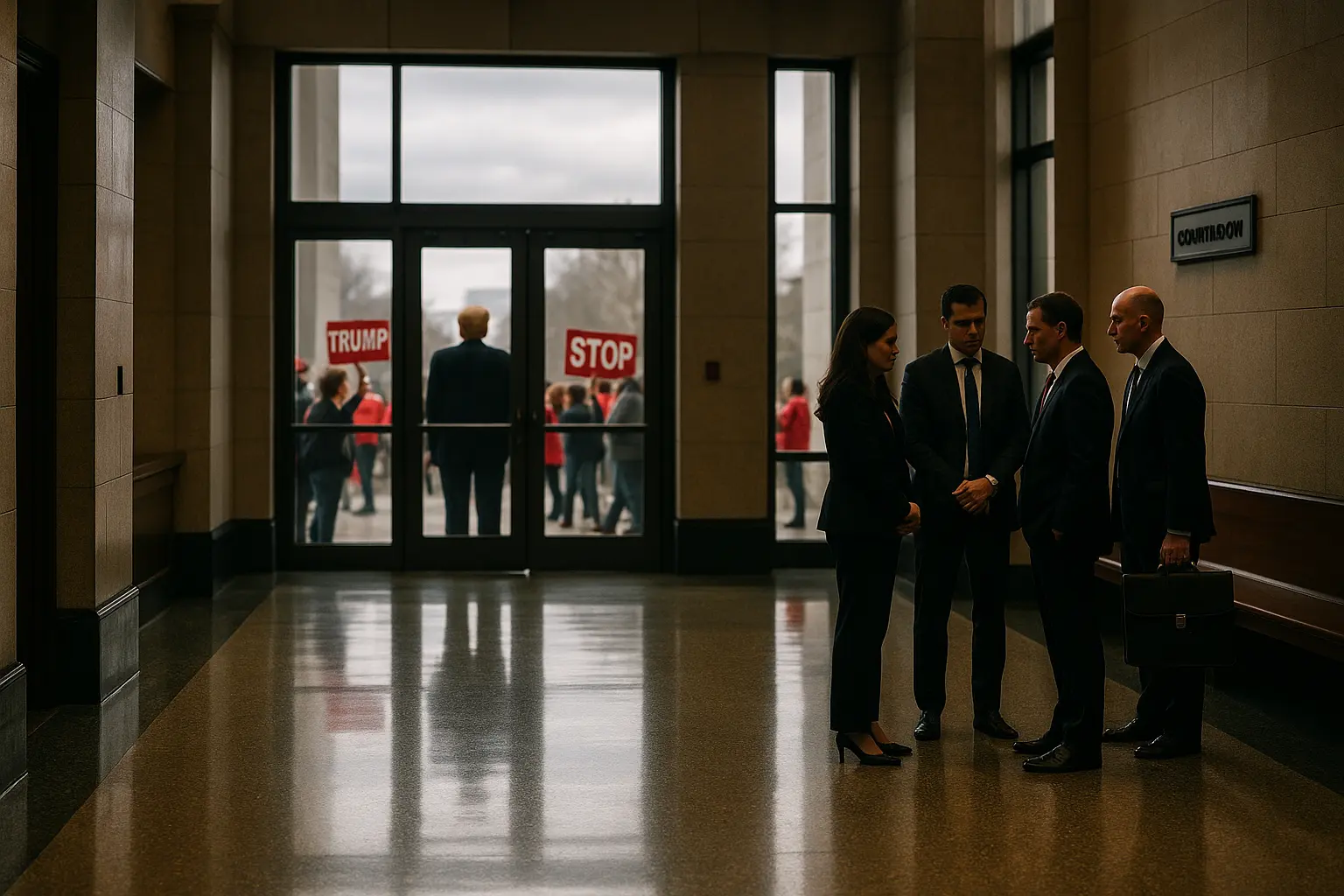
Supreme Court Boots Willis: A Huge Win for Trump and Election Integrity
The Georgia Supreme Court delivered a seismic shakeup for President Donald Trump and his supporters Tuesday morning, marking a pivotal victory for election integrity, judicial standards, and the America First agenda. By upholding the disqualification of embattled Fulton County District Attorney Fani Willis from the so-called “election interference” case, the high court paved the way for a true resetting of the rule of law in Georgia’s politically charged legal system. For months, conservatives have voiced outrage over the bizarre and ethically questionable actions of Willis, whose entire prosecution of Trump (R) was marred by personal impropriety and outright partisan zealotry.
Today, the Georgia Supreme Court declined to hear Willis’ last-ditch appeal, confirming that her removal—imposed due to her personal relationship with special prosecutor Nathan Wade—will stand. That means Willis is now officially barred from overseeing or resurrecting her case against President Trump, an enormous blow for Democrats hoping to use Georgia as their last criminal lifeline. David Shafer (R), former Georgia GOP chair and a co-defendant in the case, summed up the gravity last night by asking patriots to pray for Trump and everyone “caught up in this political circus.” His words highlighted how high the stakes have always been, with the nation’s eyes trained on Atlanta for any sign of honest justice.
The case drew attention since day one because it represented the final criminal case pending against President Trump since his 2024 reelection. In recent months, legal observers, Trump voters, and national pundits questioned whether anyone involved in Georgia’s justice system would display the integrity needed to acknowledge what millions could plainly see: Fani Willis was, at best, playing politics with Americans’ constitutional rights. Her campaign against Trump has been repeatedly criticized for double standards and overreach, yet Willis refused to step down despite overwhelming evidence of an “appearance of impropriety”—the legal standard for her removal. The Supreme Court’s decision is being celebrated by conservatives nationwide who view it as a crucial step for restoring public trust in elections and the judicial system.
The court hasn’t released the final written opinion yet, but sources in the courthouse confirmed the ruling will take immediate effect. President Trump’s legal team, for their part, have called for the charges to be dropped outright, arguing the whole process was tainted from the beginning. That remains to be seen, but what is certain is that Fani Willis’ brand of prosecutorial activism suffered a decisive defeat.
The Georgia Supreme Court made the right call in standing up for basic legal standards and sending a message: No one, not even a Democrat DA, is above the law.
The fate of the case now shifts away from Fulton County. As the state begins searching for a replacement prosecutor, the legal limbo is poised to stall the Democrats’ last, best attempt at criminally targeting President Trump before the 2028 election cycle. This victory has emboldened Trump supporters—and struck fear into the heart of a leftwing establishment eager to weaponize the justice system for political gain.
Where Does the Case Go From Here? Prosecutorial Mess Means More Delays
The fallout from Tuesday’s ruling is as dramatic as any in modern legal memory. The Georgia Prosecuting Attorneys’ Council (PAC) now inherits the case, and its executive director Pete Skandalakis has admitted publicly the council will have to appoint a “conflict prosecutor.” Given the scale, sensitivity, and national profile of this case, that could take months, if not longer. Trump critics were hoping for a speedy trial; instead, they are now facing years of uncertainty and bureaucratic delay.
Even before today’s bombshell, the details of the state’s case against Trump (R) and his associates read like political theater. The charges stem from the now-discredited claim that President Trump tried to “overturn” the 2020 results—a theory rejected by most conservatives and investigated ad nauseam. Four lower-profile co-defendants, including attorneys John Chesebro and Sidney Powell, already accepted plea deals to minor charges last year, signaling the case’s weakness and casting doubt on the entire prosecution narrative.
More important, no new trial can begin until the PAC’s chosen prosecutor takes over—and that’s not likely to happen soon. Skandalakis himself conceded that this could result in additional years of litigation. The Associated Press reported that if the new prosecutor is ultimately named, any actual trial involving Trump would be postponed until after his second presidential term ends in January 2029. This stunning delay not only vindicates Trump’s stance that the charges are politically motivated, but it also represents a stinging rebuke to those seeking to weaponize the court system as a partisan cudgel.
The Georgia Supreme Court’s own order was clear: the removal of Fani Willis is about upholding ethical norms, not politics. However, there can be no doubt that it dismantles the prosecution team Democrats have spent years building, and will all but end any chance of meaningful progress before voters head back to the ballot box in 2028.
Behind the legal maneuvering, today’s outcome showcases the power of prayer, perseverance, and principled opposition to politically motivated prosecutions. Shafer’s public appeal for spiritual support captured the mood among conservatives: this fight wasn’t just about President Trump, but about defending due process and the rights of all Americans swept up in Democrat vendettas. As the dust settles, the Biden (D) DOJ’s heavy hand in targeting the right is coming into sharper relief, as more citizens demand fairness and a return to equal justice under the law.
“We ask your prayers tonight for President Trump, for me and for the other co-defendants in the Fulton County case. The Georgia Supreme Court is scheduled to rule tomorrow morning whether the case is dismissed.” – David Shafer (R), former Georgia GOP chair
For Trump supporters and all Americans watching, today’s victory is a clear sign: the red wave of accountability is only gaining steam. Georgia’s election interference case is no longer the convenient political bludgeon it once was, and the left is left scrambling for another way to stop America’s populist movement in its tracks.
Broader Meaning: Restoring Integrity After Years of Democrat Lawfare
For years, President Trump (R) and America First conservatives have warned the public about coordinated efforts among leftwing prosecutors and partisans to wage “lawfare”—using the courts to punish political enemies and undermine electoral confidence. The saga of Fani Willis is now the latest and loudest example of that trend backfiring. By removing Willis on the grounds of an “appearance of impropriety,” the Georgia courts affirmed what Trump’s legal team and millions of ordinary citizens were saying all along: the pursuit of “justice” cannot be guided by personal political ambitions or ethical lapses. These standards exist for a reason, and when violated, the entire system is thrown into disrepute.
As Reuters detailed, it was Willis’ own conduct—her hiring of a romantic partner to a lucrative special prosecutor job—that ultimately triggered her disqualification (see reporting here). The state’s top judges clearly agreed that trust in prosecutors, especially in cases with vast national significance, must be above reproach. That principle lies at the heart of the American justice system.
The implications go far beyond the Peach State. In a political landscape where prosecutors in Democrat strongholds from Manhattan to D.C. have routinely targeted Trump and conservatives for partisan gain, the Georgia ruling may mark a turning point. It signals to law enforcement everywhere that Americans will not tolerate—and will ultimately reject—campaigns of selective prosecution based on ideology, and that judges willing to enforce ethical standards can still command public trust.
“If prosecutors want to take on a president, they’d better do so with absolute professionalism and integrity—otherwise the people and the courts will push back.”
Looking ahead, the next few months will be a test for the nation’s commitment to constitutional norms and individual rights. While some media and pundits may lament delays in the legal process, many on the right see the drawn-out timeline as justice for a man—and a movement—that has endured years of harassment at the hands of biased officials. This is more than just a pause; it’s a critical moment to reflect on how America’s legal institutions must return to basic fairness, transparency, and public accountability.
The Georgia Supreme Court’s decision isn’t just a win for Donald Trump, but for every citizen who wants the courtroom returned to its rightful place: as a forum for justice, not an arena for political vendettas. Expect conservatives to take heart—and for Democrats to be left searching for answers—as a new prosecutor, untainted by Willis’ ethical baggage, tries to make sense of a case now defined by delays, complications, and a resurgent American spirit.