
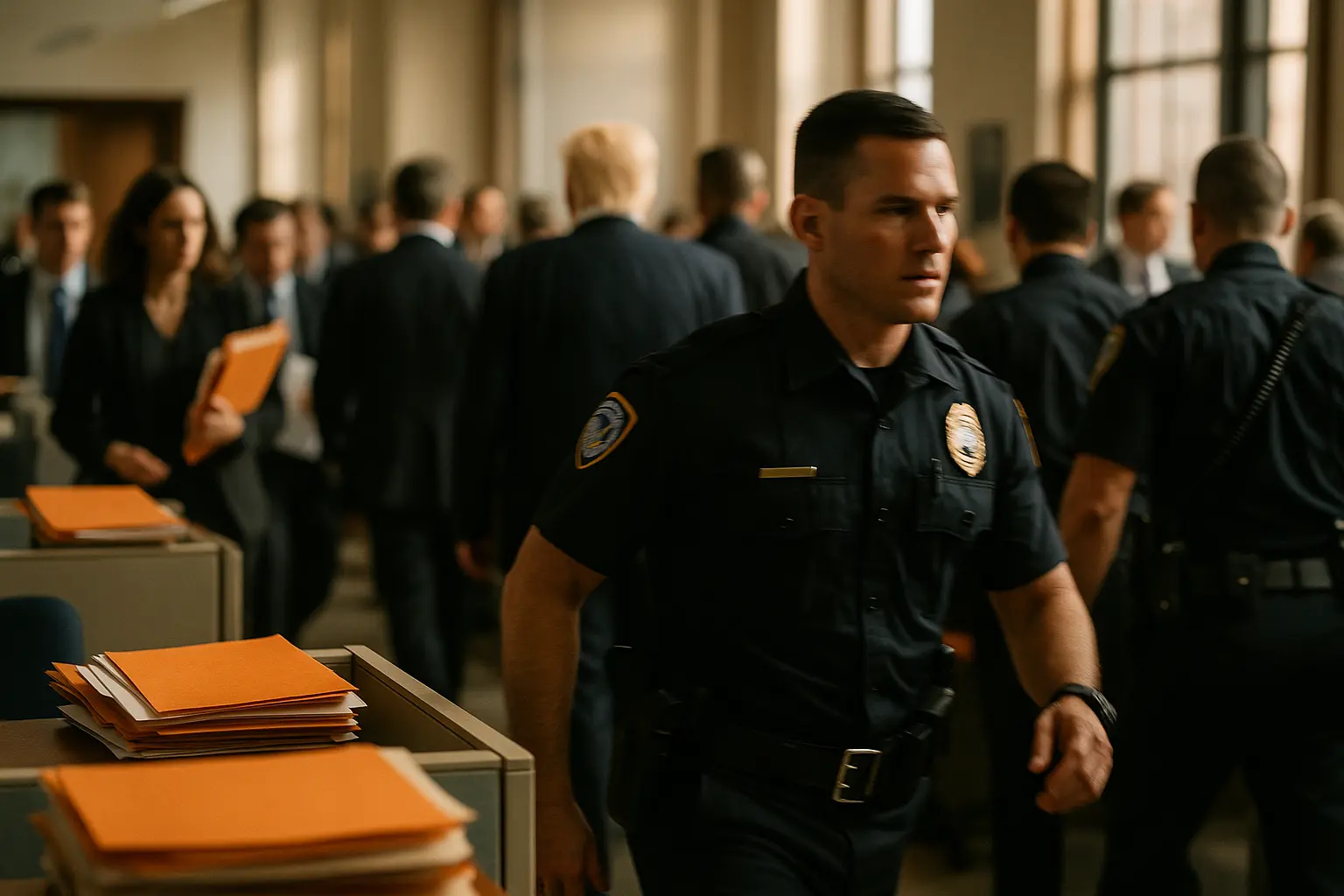
Unprecedented Federal Action: Trump Administration Takes Charge of DC Police
In a dramatic and historic move focused on restoring true law and order to the nation’s capital, President Donald Trump (Republican) has once again proven he’s unafraid to put American safety above bureaucratic gamesmanship. As chaos and disregard for federal law festered under the watch of Washington, D.C.’s leadership, U.S. Attorney General Pam Bondi’s (Republican) decision to appoint DEA Administrator Terry Cole as the Metropolitan Police Department’s “emergency police commissioner” has sent shockwaves through the city’s establishment and ruffled more than a few feathers among the District’s political elite.
For the first time in modern memory, D.C.’s law enforcement is under the guidance of a seasoned federal leader, not a mayoral appointee. Bondi’s directive, issued on August 14, 2025, instructs MPD command staff to seek approval from Commissioner Cole before issuing any orders—a clear sign that federal standards and priorities have become the new order of the day. The D.C. Attorney General Brian Schwalb (Democrat), apparently unwilling to accept a restoration of public safety and compliance with the nation’s laws, wasted little time filing a lawsuit against what he termed an “unlawful” federal overreach.
This extraordinary situation didn’t emerge overnight. Tensions have been mounting for months as D.C.’s progressive city leadership increasingly undermined cooperation with federal agencies, especially in areas concerning immigration enforcement and border security. According to recent coverage, Chief Pamela Smith’s (Democrat) executive order to restrict MPD support for federal immigration authorities served as the direct catalyst for this decisive federal intervention. For conservatives, and law-abiding citizens fed up with soft-on-crime policies, this marks a resounding affirmation of the principle that America’s capital must not be allowed to become a haven for lawlessness.
“The president’s authority is clear under the Constitution and Home Rule Act when local politicians put special interests before safety and federal obligations. Washington, D.C., is the seat of the federal government—security comes first.”
Washington’s mayor, Muriel Bowser (Democrat), and AG Schwalb now find themselves in federal court trying to block the appointment of Cole and restore the original chief. Their complaint alleges the Trump administration has gone beyond its powers under the Home Rule Act, the Administrative Procedure Act, and the Constitution. Yet, supporters of the move argue that the federal government not only has the right but the duty to intervene when local authorities put national security and public order at risk.
Backlash and Battle Lines: City Hall Fights to Retain Power
As legal fireworks erupt downtown, the decision to put a veteran law enforcement leader in charge of MPD reveals a potent clash of ideologies. The city’s legal challenge is not just a technical or procedural complaint—it’s a political salvo, rooted in the District’s resistance to federal oversight and a firm commitment to policies often at odds with national interests. Attorney General Schwalb (Democrat) issued a formal opinion instructing Chief Pamela Smith (Democrat) she is not legally bound to follow Bondi’s order, labeling the intervention an affront to the “dignity and autonomy” of the city’s 700,000 residents.
Yet, for those living and working in the capital, the question is which leader’s vision serves them best: a local government that recently put limits on cooperation with federal authorities, or a federally backed police commissioner with more than 30 years of experience—22 of them at the DEA—who has proven himself on both domestic and international law enforcement fronts? As reported by the Associated Press, Cole previously served as Virginia’s Secretary of Public Safety and earned accolades throughout his career for prioritizing public security.
This struggle has quickly become the most intense showdown over D.C.’s Home Rule in decades. Bondi’s supporters point to violent crime rates, immigration law enforcement lapses, and waves of progressive policies that have left residents feeling abandoned. They note that the president’s executive authority in emergencies was never meant to be symbolic. Schwalb, meanwhile, lambasts the intervention as the “greatest threat” to D.C. autonomy in the modern era, claiming it undermines the region’s democratic self-governance.
“The latest Trump administration action is a necessary correction for a city run amok with reckless policy and disrespect for federal law,” one resident commented, echoing widespread conservative frustration with city leaders.
Behind the headlines and lawsuits lies a broader debate about who keeps Americans safe. With Bondi’s order placing all MPD decisions under DEA chief Cole’s command, the chain of command has shifted decisively toward those focused on enforcing the law without political interference. D.C.’s leadership may see this as an affront, but many law-abiding citizens see it as a long-overdue guarantee of security for all who live, work, or visit America’s capital city.
National Impact and Legal Foundations: The Home Rule Act Meets Federal Priorities
At the heart of the lawsuit and controversy is the balance between local autonomy and federal authority. Passed in 1973, the D.C. Home Rule Act granted the city limited self-government but always within the framework of federal supremacy, particularly when national interests are at stake. The Act expressly allows the president to commandeer city resources in an emergency to fulfill federal purposes. Traditionally, this power has been invoked sparingly, but ongoing crime waves and non-cooperation with federal immigration enforcement have led the Trump administration to act decisively.
Bondi’s August 14th directive represents the most robust assertion of federal authority in Washington’s recent history. The order doesn’t just replace the chief—it forces every major decision through a federal filter, effectively standardizing enforcement and plugging any loopholes created by local resistance. According to Reuters, every MPD order now requires Cole’s sign-off, a measure not seen since the days when Congress directly managed the city’s affairs.
“Federal intervention here is not a hostile act; it is a constitutional responsibility,” explained a DOJ spokesperson. “The safety of our nation’s capital and compliance with federal law demand strong, decisive leadership.”
This moment in history underscores a fundamental truth: unchecked progressive policymaking on issues like immigration and law enforcement can have serious, even dangerous consequences for American cities. The Trump administration’s actions, derided by D.C. politicians as authoritarian, are hailed by supporters as the only responsible path left. Legal experts note that the president’s emergency powers in the capital, affirmed by both statutory law and constitutional practice, mean that this lawsuit faces serious hurdles in court.
Moving forward, the city’s leaders must reckon with the reality that public safety and the rule of law cannot take a back seat to virtue signaling or political posturing. As this case unfolds, eyes across the country will be on Washington to see if Trump’s America First commitment can restore order where weak local governance has failed. Conservative citizens and supporters of constitutional governance alike will see this as proof positive: When America needs strong leadership, it is the president—and only the president—who can truly answer the call.