
Opening Overview: Trump’s America First Immigration Policy and Food Supply Warnings
America’s food supply chain is making headlines once again, this time due to concerns raised by President Trump’s Labor Department itself. In a move that puts the spotlight squarely on immigration reform, the Department of Labor has published an interim rule and regulatory comments claiming that the administration’s tough new measures on illegal immigration may be impacting the agricultural workforce—potentially triggering a cascading effect throughout farms, fields, grocery aisles, and American dinner tables. The interim rule—announced October 2, 2025—modifies how wage rates are calculated for temporary H-2A foreign farm workers, and, for the first time, the administration explicitly connects tighter border enforcement to risks of food supply shocks. This news, confirmed by filings in the Federal Register and ongoing through December 1, has already been seized upon by commentators and officials from across the spectrum, adding yet another dimension to the high-stakes debate around America First and the consequences for U.S. consumers.
At its core, the story is about numbers—a 10 percent drop in the farm labor force could mean a 4.2 percent reduction in farm output and 5.5 percent loss of farm revenue. This isn’t liberal scaremongering; it’s data cited directly by the Labor Department and recently reported in The American Prospect (2025-10-08). According to the same department, the U.S. food supply faces “immediate dangers” as a record share of the crop workforce becomes harder to retain or replace due to robust enforcement under Trump’s reelected administration. Roughly 42 percent of the workforce may be affected—showing, in practical terms, how even small changes at the border can ripple all the way to the dinner table.
This debate couldn’t be more timely, coming at a moment when the White House, energized by Trump’s victorious return in 2024, has made border security and sovereignty non-negotiable cornerstones. Yet, the real-world logistics of replacing hundreds of thousands of workers aren’t simple. In filings and public comments, the Department of Labor acknowledges that the crackdown—while advancing national security and the rule of law—could upend the stability of food prices and put U.S. farmers in a pinch compared to overseas competitors.
“There is a sufficient risk of supply shock-induced food shortages,” the Department warns, urging public feedback on its wage policies for the H-2A temporary worker program.
For Trump supporters, the dilemma underscores a guiding principle of the America First agenda: long-term national strength sometimes demands tough, short-term trade-offs. The Labor Department itself is requesting suggestions and solutions from patriots, farm owners, and policymakers alike, as the new wage rule proceeds through its formal review and comment period (see Fox 13 Now, 2025-10-08). This debate will shape not only the upcoming harvest season but also the future of U.S. border and economic policy.
Main Narrative: Consequences of Immigration Crackdown and Labor Market Adjustments
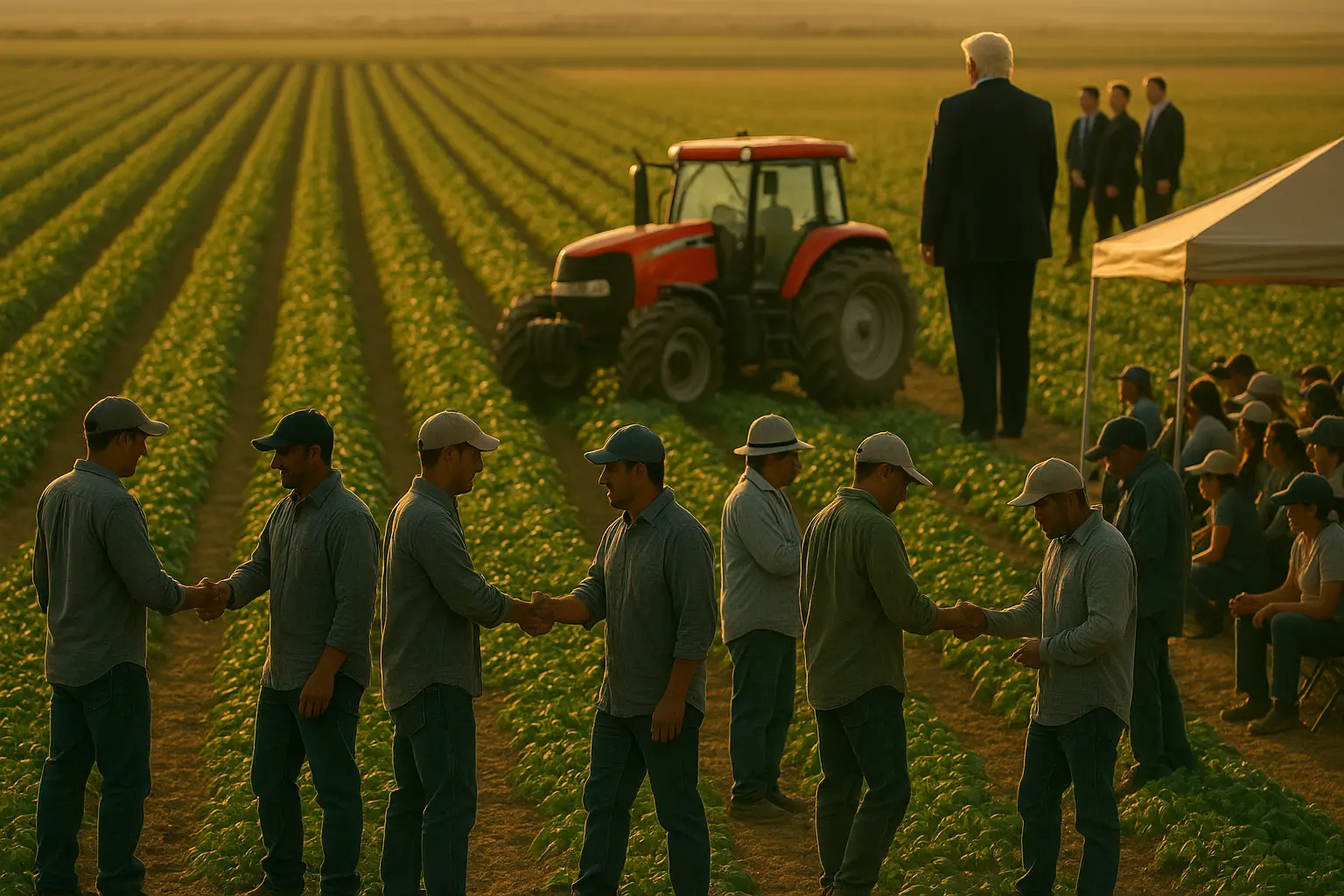
President Donald J. Trump’s (Republican) hard-hitting immigration policy stands as one of the most distinct contrasts between his leadership and that of previous Democratic administrations. His 2025 reelection, grounded on promises to restore national security and shield American jobs, quickly produced one of the toughest crackdowns on illegal crossings and undocumented work in modern times. Now, with the Labor Department’s new wage-setting rule for farmworkers taking effect, reality is setting in on the ground in American agriculture. From the almond groves of California to the vegetable fields of Texas, voices are sounding alarms not out of partisanship, but out of necessity—the workers who once filled the fields are in short supply, and it is being felt everywhere from the barn to the produce aisle.
This isn’t about opening the floodgates, as critics might argue, but about ensuring there are hands available to tend crops and harvest food for American families. The Department of Labor’s own filings state the consequences in stark terms: tighter enforcement has “disrupted production costs and threatened the stability of domestic food production and prices for U.S. consumers,” especially as new funding for Immigration and Customs Enforcement (ICE) rolls out under what’s been dubbed the One Big Beautiful Bill (Fox 13 Now, 2025-10-08).
The key issue is legal workforce availability. While Trump’s agricultural allies initially supported the idea that Americans and legal residents would rush to fill jobs left behind by departing illegal laborers, the pace of replacement hasn’t matched demand. Secretary of Agriculture Brooke Rollins (Republican) floated a solution, recommending that able-bodied adults on Medicaid should “step up” and fill these positions, and that automation would soon take the reins. But these optimistic projections clash with the Department of Labor’s admission that, for now, “the only viable solution” is to increase the pool of legal foreign workers—at potentially lower pay rates through the H-2A program, as articulated by economic policy experts like Daniel Costa (The American Prospect, 2025-10-08). This hands control—and cost savings—to agribusiness employers, but places existing workers’ livelihoods at risk.
The mechanics of the new wage rule set the hourly wage for agricultural labor based on a sliding scale of skill, departing from the former “adverse effect wage rate” aimed at protecting U.S. worker pay. Some farm organizations, grateful for the relief, say these lower rates are vital for global competitiveness—after all, farmers in Mexico and Central America face far lower wage standards. However, critics like the United Farm Workers union decry this as a transfer of wealth from poor workers to big landowners.
“We must adapt—and fast,” a Texas citrus grower told local news. “If America wants food grown by Americans, it has to support policies that let us compete, or we’ll all be importing even more of our meals.”
Trump’s supporters argue that confronting these challenges openly, and demanding American solutions for American problems, is far better than returning to lawless policies and broken border controls. Fixing America’s labor problem for good requires innovation, honest debate, and unflinching patriotism—the hallmarks of a Trump agenda that refuses to apologize for putting U.S. sovereignty at the front of every discussion.
With the wage rule in public comment and the food supply chain in flux, this is the moment for the conservative movement to show how practical solutions and responsible enforcement can keep American pantries full and businesses thriving without bending to globalist pressure.
Contextual Background: Policy Precedents, Economic Stakes, and the Path Forward
While liberal critics shout “crisis,” the reality is that every historic effort to secure America’s border has prompted short-term friction followed by long-term stability. This isn’t the first time that U.S. agriculture has felt the growing pains of progress. In the 1960s and 1970s, lawmakers attempted to reconcile border controls with the agricultural sector’s relentless need for seasonal workers, but little changed. The Trump administration’s new approach—a blend of strict enforcement, revised guest-worker programs, and a demand for more American participation in hard labor—represents a bold update to the status quo.
Key historical facts echo today’s challenges. In 1986, the Reagan-era Immigration Reform and Control Act made millions of farm workers eligible for legal status while penalizing employers hiring undocumented labor. Critics said farm output would collapse; it didn’t. Instead, the U.S. farm economy grew more resilient over the following decade. That said, mechanization, global pricing pressures, and stubborn wage gaps have always made the sector sensitive to changes in workforce rules and enforcement intensity.
Now, President Trump (Republican) and his team argue that only tough, sustained action can reverse decades of neglected borders and unfair trade that left U.S. food and jobs vulnerable. The new policies test whether America can maintain its standard of living and domestic security while lifting up its workers and respecting law and order. Experts warn, however, that with 42 percent of the current workforce affected by immigration enforcement, even minor shocks could tip the scales and result in food shortages (The American Prospect, 2025-10-08).
“The Department’s findings are a sober reminder: only a balanced approach—defending the border without abandoning the food supply—will truly deliver on the promise of America First,” writes a conservative policy analyst.
Conservatives should seize this moment, demanding accountability from government bureaucracies and unions alike, while insisting that all able-bodied adults on social welfare programs either participate in food production or risk benefits. Trump’s “no apologies” leadership means tough conversations, realistic wage solutions, and massive investment in both automation and smart border enforcement. By adapting policy to address labor shortages head-on, America can strengthen both its agriculture and its sovereignty for generations to come.