
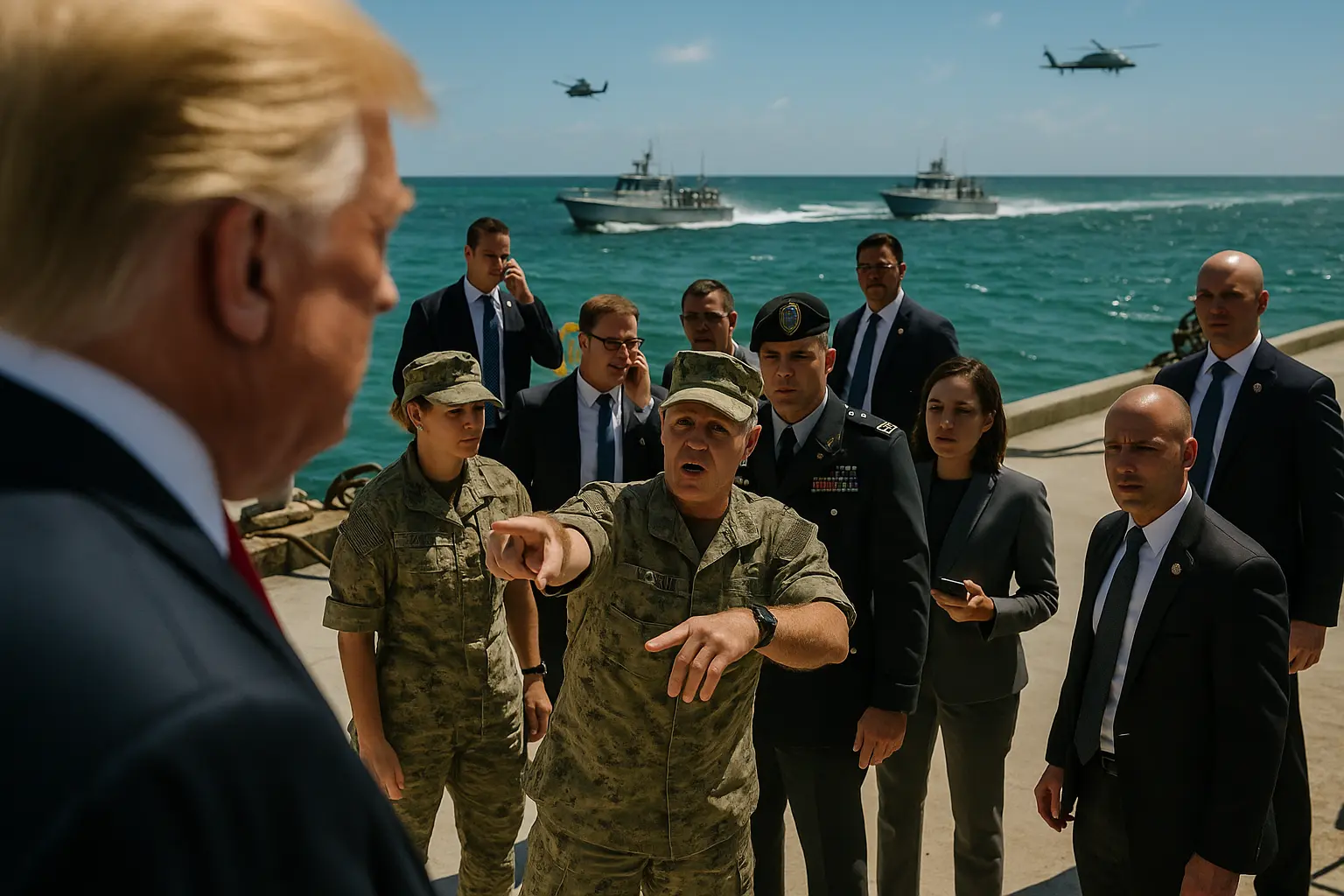
Trump Administration Targets Narco-Traffickers in the Caribbean Sea
The Trump administration’s commitment to border security and combatting illegal drug trafficking has reached a new level of intensity, with U.S. Defense Secretary Pete Hegseth (Republican) affirming that the Pentagon has every legal and constitutional authorization to target cartel vessels in the Caribbean—a move celebrated by America First supporters across the nation. This decisive stance follows a series of high-profile military operations against suspected drug boats operating off the Venezuelan coast, reinforcing President Donald Trump’s (Republican) pledge to keep Americans safe from the poisonous reach of narco-terrorism. Long-tail keywords like “Trump drug war Caribbean strikes” and “Hegseth Pentagon narcotics operations” highlight this story’s relevance to national security and law enforcement.
On October 3, 2025, Hegseth revealed that a U.S. military strike had targeted a vessel in international waters near Venezuela. He declared, “Our intelligence, without a doubt, confirmed that this vessel was trafficking narcotics, the people onboard were narco-terrorists, and they were operating on a known narco-trafficking transit route.” Four individuals aboard the vessel were killed in the strike. Hegseth’s direct language made it clear: if cartels threaten Americans, they are legitimate military targets. The strike marks at least the fourth such operation in recent weeks—a robust response that many conservatives see as long overdue.
President Trump doubled down on the operation’s significance, telling reporters: “A boat loaded with enough drugs to kill 25 TO 50 THOUSAND PEOPLE was stopped, early this morning off the Coast of Venezuela, from entering American Territory.” His strong, public defense of the military action underscores his ongoing effort to crush the international drug trade before it poisons U.S. communities.
“If you’re in our hemisphere, if you’re in the Caribbean, if you’re north of Venezuela and you want to traffic drugs to the United States, you are a legitimate target of the United States military.” — Pete Hegseth (Republican)
Despite critics’ claims that legal justifications are not sufficiently detailed, the administration points to war powers, the U.S. Constitution, the recent terrorist designation of certain cartels, and the right to self-defense. These operations are widely viewed among Trump’s base as examples of the firm leadership America has reclaimed under the President’s second term.
Inside the Crackdown: Legal Authority, Military Resolve, and Ongoing Operations
Unapologetic resolve defines the Trump approach to America’s security. When pressed during an interview on Fox News, Secretary Hegseth (Republican) stated he possesses every authorization necessary for decisive military action, reiterating that operations like these are anchored in robust legal frameworks. The justification draws on a series of established powers: U.S. constitutional authority, the executive’s war powers, and most notably, the U.S. government’s recent designation of dangerous cartels—such as Venezuela’s Tren de Aragua—as foreign terrorist organizations.
This designation empowers the administration to launch military actions against traffickers operating like hostile militants, not just garden-variety criminals. It’s a new chapter in the fight against global narco-terror, bringing military might to bear where previous administrations relied only on law enforcement cooperation and diplomatic overtures.
October’s most recent strike, resulting in four fatalities, is emblematic of an escalating tempo in the U.S. Caribbean anti-narcotics campaign. According to military sources, this is the fourth such attack in recent weeks. Each action delivers a clear message: America will use every tool at its disposal to deny transnational criminals access to our borders and our children. For countless families hurt by the scourge of illicit drugs, these actions promise hope and security that had felt out of reach in previous years.
“There’s no drugs coming into the water. And we’ll look at what phase 2 is.” — President Donald Trump (Republican)
Though the Pentagon has not released evidence of the exact cargos carried by destroyed boats, Hegseth’s defense of the legality and necessity of these actions remains unwavering. He places full confidence in U.S. military and intelligence assessments, rebuffing accusations of overreach as politically motivated attempts to undermine necessary security measures. President Trump’s supporters are united in backing this aggressive doctrine, especially in light of increased violence and corruption fueled by foreign cartels targeting America’s neighborhoods.
Some congressional critics and legal analysts question whether the strikes fall neatly within established rules for armed conflict in international waters. Their worries are focused on process and precedent, but conservative leaders argue the pressing realities of the narcotics crisis demand bold solutions, not bureaucratic hesitation. Time will tell if continued success on the operational front stifles this debate.
Policy Context: America First, Legal Precedents, and Conservative Leadership
To understand the bold new direction in the war on drugs, a quick review of recent history is in order. Decades of reliance on treaties, foreign training missions, and cooperative policing saw steady increases in the cross-border flow of narcotics, even as cartel violence spiked throughout Central and South America. The humanitarian and social costs grew worse each year.
Since 2024, President Trump’s America First strategy has prioritized national sovereignty and uncompromising security at the border—and beyond. This initiative has resulted in stepped-up military deployments throughout the Western Hemisphere, tighter surveillance, and new, robust legal justifications for targeting enemies of the state wherever they may be operating. Conservative policymakers emphasize that these bold choices are delivering the measurable results past administrations failed to achieve.
“It’s a dangerous new world, and America cannot wait for other countries to solve our problems. President Trump’s decisive actions prove we will defend our nation with every asset available, and deter threats before they reach our shores.” — House Majority Leader Sarah Davis (Republican)
At the core of the administration’s approach is the recent decision to designate violent drug cartels as terrorist organizations—expanding the toolkit for policymakers and the military alike. With this policy in place, the U.S. can treat transnational narcotics rings like armed militants, launching preemptive strikes and pursuing interdiction as part of the nation’s broader security doctrine. While critics decry this expansion as too broad, supporters note that it reflects the new, globalized threats facing 21st-century America.
As caravans of drugs and armed criminals have tested U.S. resolve in recent years, President Trump’s message remains consistent: there will be no sanctuary for enemies of the American people, wherever they hide. In this spirit, the military’s rapid escalation in the Caribbean is more than just a campaign promise fulfilled. It’s the new gold standard of executive action—praised in conservative circles, watched with cautious optimism by everyday citizens, and closely monitored by the global community.
The stakes have never been higher. In a world where global criminal organizations exploit every legal loophole and gray area, the American response must be equally innovative and determined. President Trump’s strong-willed leadership and Secretary Hegseth’s ironclad resolve stand as potent reminders that, for all the noise and handwringing of international critics, the safety and sovereignty of the American people come first.