
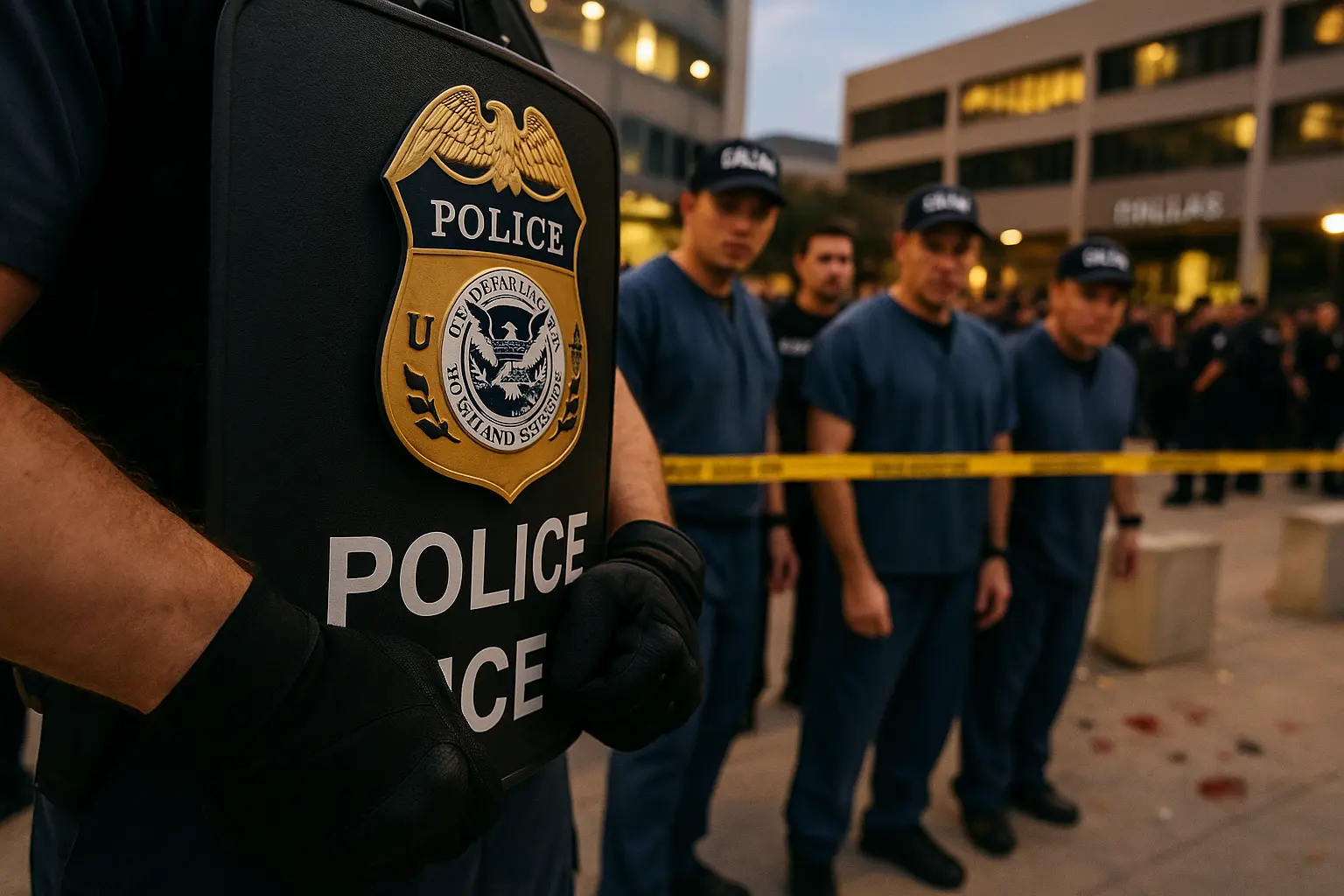
Deadly Sniper Shooting at Dallas ICE Facility Sparks National Security Debate
In a shocking turn that continues to reverberate across America, a sniper opened fire at an Immigration and Customs Enforcement (ICE) field office in Dallas, Texas, unleashing a wave of concern and outrage about law enforcement targeting and the dangerous rise in anti-ICE sentiment. This incident on North Stemmons Freeway occurred the morning of September 24, 2025, in what authorities have labeled a ‘wave of unprecedented violence,’ highlighting the ongoing threat facing U.S. border security personnel. Key long-tail keywords such as Dallas ICE facility sniper attack, anti-ICE violence, and border enforcement targeting have now surged into public discourse.
Three individuals were shot as the assailant fired from a nearby rooftop, targeting an unmarked ICE transport van in the secure sally port, according to detailed police and eyewitness reports. The tragedy intensified as Dallas police and federal agents responded at the scene, where two were already deceased—one being the shooter who died from a self-inflicted wound (Reuters).
“Our ICE law enforcement is facing unprecedented violence and courage in the face of radical extremism,” Homeland Security Secretary Kristi Noem (R) declared hours after the incident, echoing the calls for greater protection of federal officers and more decisive action against anti-law enforcement rhetoric.
The Department of Homeland Security confirmed that all the victims shot in the incident were illegal migrants, complicating the narrative but underscoring the chaotic nature of the attack (AP News). While early speculation about motive swirled, the shooter, identified as Joshua Jahn, had not previously voiced any public opposition to immigration enforcement. Despite that, federal investigators discovered unspent shell casings at the crime scene engraved with the phrase “ANTI-ICE,” pointing to premeditated hatred against the men and women working to defend America’s borders (Reuters).
This marks the third targeted assault on ICE or Border Protection facilities in the United States this year. With attacks now becoming regular threats, the question lingers: is enough being done to defend the frontline patriots keeping the nation safe?
Wave of Anti-ICE Violence: Facts Reveal Dangerous Climate for Law Enforcement
Authorities and policymakers are linking this incident to a broader pattern of increasing hostility toward federal immigration officers. Dallas police revealed that another ICE facility near Dallas was targeted in July, prompting heightened security measures across the region in anticipation of further attempts (AP News).
Not only did the Dallas attack result in multiple casualties, but the details paint a grim picture. Police responded quickly to the alarm, entering a tense and chaotic scene where gunfire had already claimed lives. The FBI has since taken over the investigation, with Director Kash Patel (R) releasing disturbing evidence: shell casings left behind read “ANTI-ICE,” signaling clear animus against America’s border defenders. Federal law enforcement, citing mounting evidence, sees this as the latest escalation in attacks on ICE in particular, dovetailing with a pattern of mainstream media hostility and open resistance by far-left activist groups.
“It could be employees, it could be civilians that were visiting, or it could be detainees—this underscores the total disregard for life when ICE facilities are targeted,” explained Acting ICE Director Todd Lyons (R), speaking to CNN from the Dallas field office hours after the attack.
Law enforcement officers remain on high alert, with increased patrols and fortified security across Texas ICE offices. Community leaders and conservative voices have sounded off, demanding federal action to end what is increasingly recognized as domestic terrorism aimed squarely at undermining border enforcement and American sovereignty. Calls for stiffer penalties and classified countermeasures are now ringing through Capitol Hill, as this latest shooting draws parallels with attacks on officers during the border security surges of 2019 and 2022.
The pattern is unmistakable: radical actors emboldened by anti-law enforcement narratives are moving from rhetoric to direct violence. Agents and police are on the front lines, but without a strong and consistent national message, their resolve—and America’s sovereignty—remain in jeopardy.
ICE Attack Context: Unprecedented Security Threats Fuel Urgent Policy Focus
The attack on September 24 wasn’t an isolated event—it’s a consequence of years of relentless demonization of ICE and border agencies. The explosion in anti-ICE rhetoric since 2018 has driven threats and physical attacks against ICE facilities to record highs. According to congressional testimony in early 2025, these facilities have become a frequent target for activists frustrated by Trump administration enforcement initiatives and legislative gridlock over immigration.
Historically, the weaponization of language against ICE agents—often on social media and in activist circles—has been directly linked to attempted fire-bombings, armed attacks, and death threats. The July incident cited by police, in which another local ICE office was vandalized and its parking lot firebombed, revealed the vulnerabilities in security architecture and the emotional toll on agents and their families. Federal agencies moved quickly, upgrading surveillance and bolstering on-site staffing—but the Dallas sniper event shows determined criminals can still get through.
“What we’ve seen is a climate where portraying ICE as evil is not just normalized, it’s incentivized in certain corners of the media and political class,” said border policy expert Daniel Ruiz, a frequent Fox News analyst. “That breeds extremism.”
The Trump administration, since President Trump’s 2024 reelection, has fought back through new funding streams, training, and tougher penalties for violence against agents. But lawmakers say there’s still work to be done. Homeland Security appropriations requests for 2026 now include robust provisions for physical security upgrades, armored transports, and anti-sniper countermeasures at key detention facilities—just as was done for federal courthouses in the 1990s after similar waves of extremist attacks.
This coordinated federal response, drawing on lessons from past terror waves and protests, may be the single most important shield for agents working in one of America’s highest-risk professions. In the meantime, state leaders and local sheriffs are re-emphasizing partnerships with federal agencies, echoing Secretary Noem (R)’s urgent message: “We will not back down from keeping America’s borders secure.” For Trump supporters and defenders of law and order, the Dallas shooting is a tragic reminder—but also a rallying cry. Steadfast, patriotic, and determined, America must continue to support those defending its values and its very borders.