
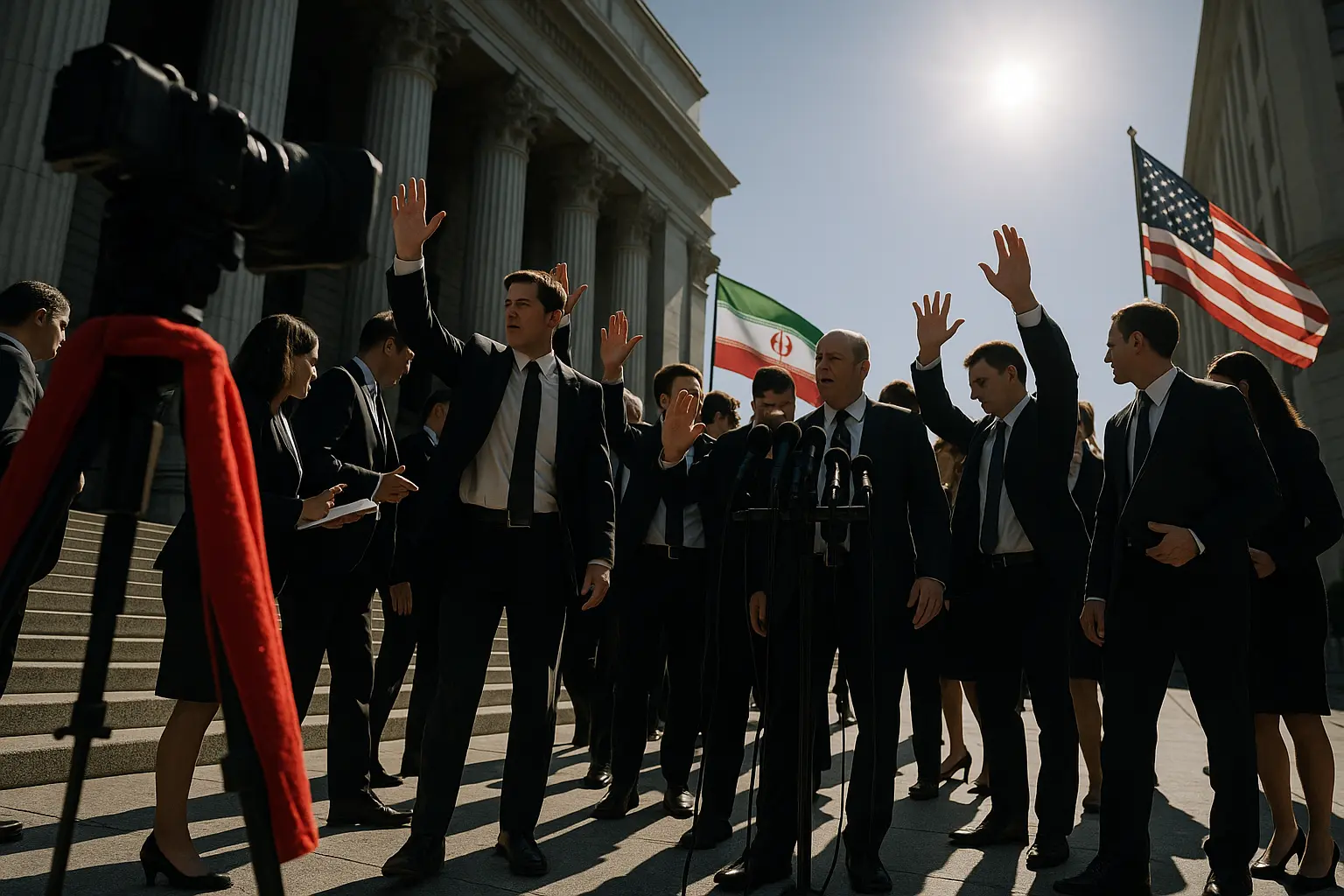
Opening Overview: The Unexpected Ceasefire and Iran’s Strategic Posturing
The recent 12-day conflict between Israel, Iran, and their respective proxies ended abruptly with a ceasefire that has left many observers questioning the origins, durability, and broader implications of this fragile peace. President Donald Trump, who has long maintained a tough but calculated approach toward the Middle East chaos, reportedly played a behind-the-scenes role in shaping the ceasefire’s terms and timing. Tehran, on the other hand, is stepping forward confidently, positioning itself as having emerged victorious—reinforcing its regional influence despite relentless pressure from Washington and its allies.
Iran’s declaration of victory following this ceasefire highlights a pivotal moment in Middle East geopolitics, reflecting a shift toward conventional deterrence and architectural military resilience. The hostilities, which included missile strikes, targeted U.S. bases, and Israeli air raids, dramatically reshaped the battlefield dynamics but stopped short of spiraling into all-out war.
“We are capable of confronting and defeating Israel,” Hezbollah Secretary General Sheikh Naeem Qassem boldly stated, underscoring the militant group’s unbroken will despite international calls for calm.
This development calls for closer scrutiny of the ceasefire’s origin, the role of President Trump’s engagement, and Iran’s recent military advances, all amid mounting calls within the West to reassess foreign policy stance toward the region’s unrest.
Main Narrative: The Military and Diplomatic Moves Behind the Ceasefire
The 12-day war that caught global attention unfolded rapidly with fierce exchanges between Israel and Iranian-backed forces including Hezbollah and IRGC proxies. Israeli Defense Minister Israel Katz confirmed that strikes in Lebanon targeted Hezbollah positions as a “clear message” against their attempts to rebuild military capabilities. This included the deadly airstrike that eliminated Hassan Muhammad Hammoudi, a key operant in Hezbollah’s anti-tank missile operations, signifying a precise effort to degrade militant leadership.
Iran’s response was multifaceted—while publicly touting military exercises that demonstrated indigenous advancements such as underground missile sites, drone carriers, and enhanced air defense systems, the regime also executed missile attacks against U.S. bases, notably in Qatar. This was part of a larger strategic posture, one that emphasizes deterrence and self-reliance in the face of persistent threats.
President Trump’s role in this conflict, often overshadowed by vocal antiwar critics, appears pragmatic and engaged. As flagged in discussions and interviews such as the recent What the Hell is Going On podcast, Trump’s administration leveraged diplomatic channels to manage escalation while signaling readiness for decisive action. The use of Massive Ordnance Penetrators (MOPs) weighing 30,000 pounds, dropped on Iranian nuclear sites, demonstrated that America’s reach and resolve remain unparalleled, even if media narratives tried to downplay the strike’s impact.
“He too was a victim of a judicial system that was trying to put him in jail, but President Trump prevailed,” Trump noted emphatically when discussing Netanyahu’s legal struggles, positioning their leadership struggles as united fronts against adversarial institutions.
In the final analysis, the ceasefire does not simply mark a halt in violence; it signals Iran’s strategic recalibration. With its President Ebrahim Raisi’s recent death and foreign minister Hossein Amirabdollahian’s uncertain grip, Tehran seeks to project power through military exercises and proxy influence. The conflict’s aftermath reveals Iran’s strengthened position and its dismissiveness of Israel’s declared objectives, with Hezbollah publicly declaring Israel’s failure.
Contextual Background: Historical and Policy Implications for U.S. and Israel
The broader picture casts this ceasefire as a milestone in a long war of attrition between Iran and the Western-aligned forces led by the U.S. and Israel. Historically, Tehran’s “Axis of Resistance” — comprising proxies across Syria, Lebanon, and Gaza — has suffered setbacks, yet Iran continues to reinvent its approach with a new emphasis on conventional deterrence, highlighted by the ambitious Eqtedar (Zulfiqar) military exercises. These drills unveiled underground naval bases and showcased emerging drone technology, signaling an Iranian regime intent on sustaining influence despite intelligence failures and battlefield losses.
The persistent threat posed by Hezbollah, reinforced by recent strikes in Lebanon and their leader’s defiant statements, ensures the conflict remains a tinderbox. The cycle of violence, retaliation, and diplomatic maneuvering defines the Middle East tinderbox that conservatives have long warned about—underscoring the need to preserve strong alliances and maintain a firm American presence in the region.
“Israeli strikes in southern Lebanon have killed Hassan Muhammad Hammoudi, an operative responsible for Hezbollah’s anti-tank missile operations,” AP News reported, highlighting critical efforts to degrade enemy capabilities.
Simultaneously, President Trump has taken concrete steps to curb U.S. involvement financially, proposing substantial cuts in foreign aid as a rebuke to Democratic and establishment resistance. His administration’s decision to cut $8.3 billion in foreign aid and $1.1 billion for public broadcasting underscores a broader strategy of prioritizing America First policies and scaling back on overseas entanglements that do not serve direct U.S. interests.
With the Palestinian front still burning— Israeli airstrikes have tragically killed dozens of civilians in Gaza, exposing difficult choices amid persistent hostilities—Trump’s approach blends military assertiveness with calls for practical ceasefires and negotiated stability.
Moving forward, the question remains: can the fragile truce hold? And how might this ceasefire reshape the Biden administration’s more hesitant Middle East strategies compared to Trump’s former aggressive posture? For conservatives, the answer points to the necessity of strong, clear American leadership and a robust strategy that leverages military strength alongside pragmatic diplomacy.