
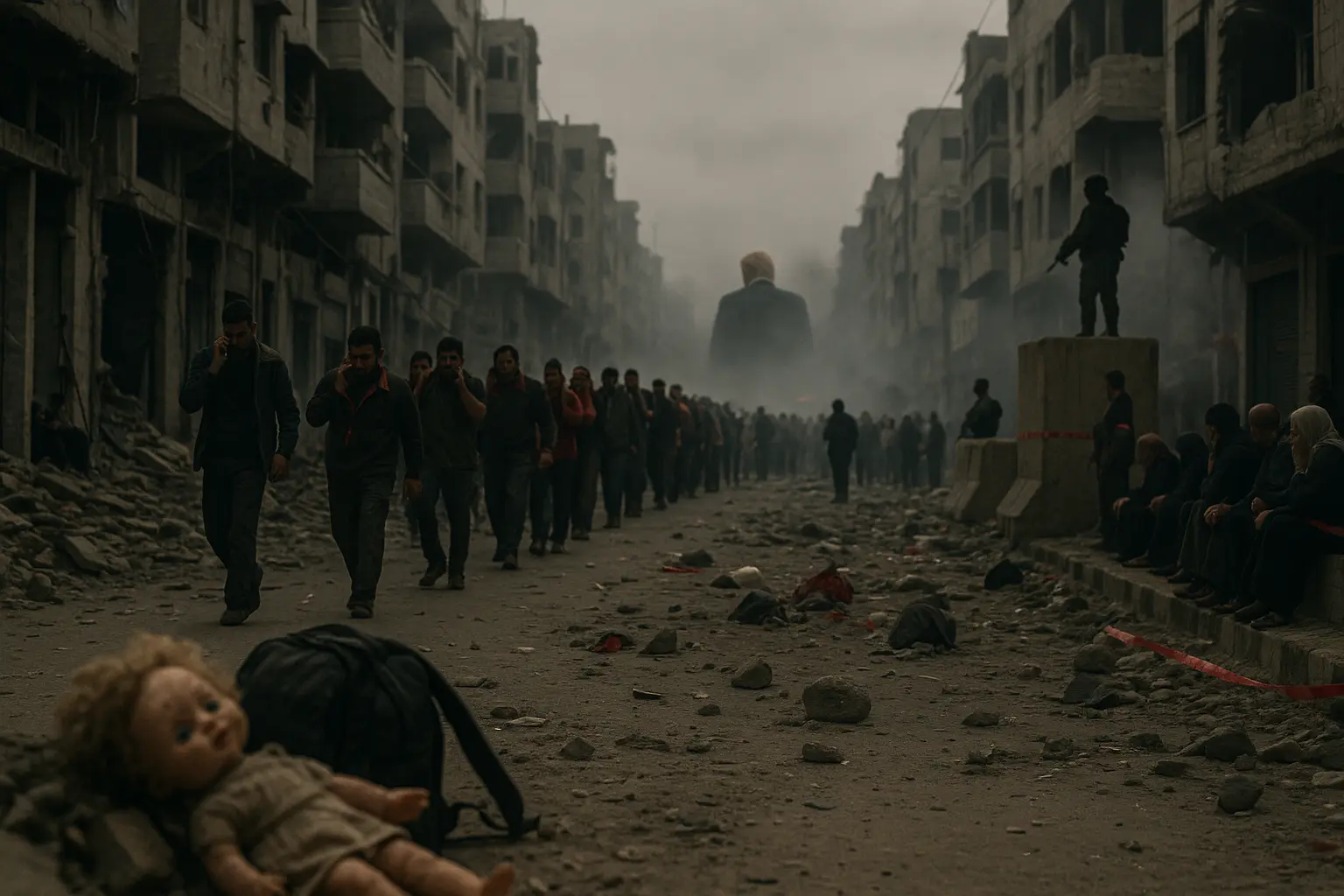
Historic Gaza City Evacuation: Israel’s Bold Offensive and Trump’s Diplomatic Push
Israel’s relentless advance into Gaza City reached a new zenith this week, marking a dramatic escalation in the long-standing conflict between the Jewish state and Hamas. With powerful keywords like “mass Gaza City evacuation” and “Israel Hamas conflict” shaping headlines worldwide, more than one million Palestinians now face a stark choice: heed evacuation orders or remain in the crossfire of history’s most ambitious campaign to dismantle Hamas’ last stronghold. The Israeli Defense Forces (IDF), under the leadership of Prime Minister Benjamin Netanyahu (Likud), issued sweeping evacuation orders on September 9, 2025, a move many observers have called the most significant military shakeup in Gaza in decades.
The groundwork for Israel’s military surge was laid after a brutal Hamas-linked terror assault in Jerusalem that claimed six innocent lives, sparking an immediate outcry for justice and retaliation across Israel. In direct response, Netanyahu made his intentions clear—Hamas strongholds in Gaza would not only be neutralized, they would be erased from existence. Israel’s message was unmistakable: vacate Gaza City or risk being counted among combatants. The IDF escalated matters further by dropping thousands of leaflets over Gaza, instructing civilians to move toward the so-called “humanitarian zone” in al-Mawasi, far to the south of the urban battlefield.
Amid the chaos, what sets this operation apart is its scale and strategic importance—the fate of over a million Gazans and the ongoing battle to recover Israeli hostages rest on the outcome.
International reaction to the evacuation order has been both swift and divided. Critics—especially from the European Union and United Nations—have called the campaign “unacceptable,” warning that such mass displacement cannot be carried out safely given the devastation in Gaza. But many inside Israel argue that taking full control of Gaza City is imperative for national security and the broader defeat of terrorism. Notably, President Donald Trump (Republican) has played a pivotal role, expressing optimism that a hard-fought peace deal remains achievable, even as ceasefire talks encounter stubborn obstacles.
“President Trump’s confidence and clear-eyed diplomacy offer the best hope yet for regional stability, as other world leaders merely wring their hands and condemn from afar.”
The reality on the ground grows more complex by the hour. As evacuation orders ripple through a shell-shocked population, only about 50,000 people have reached al-Mawasi, a fraction of the one million under threat. Many Gazans refuse to abandon their homes, wary of both the dangers of travel and the dismal conditions in so-called safe zones—where, despite Israeli promises, humanitarian groups report continuing airstrikes and a dire lack of essentials. Meanwhile, Israel’s demolition campaign—accused by the IDF of targeting buildings housing Hamas military infrastructure—has reduced the once-bustling city center to rubble. According to one credible report, a 12-story office tower was erased from the skyline just 90 minutes after a warning to evacuate, a sequence repeated at dozens of locations in recent days.
Inside the Operation: Israeli Tactics, Hamas Strongholds, and the Path to Peace
From a tactical standpoint, the scale and intensity of Israel’s campaign leaves little doubt: Operation Gideon’s Chariots—the current military push—aims to finish the job left incomplete in previous years. Eyal Zamir, the IDF’s Chief of the General Staff, emphasized that this is “the second stage” of a wider assault and a “moral and national duty” to bring Israeli hostages home, a cause that has united the Israeli right and much of the country.
Yet, even as Israel’s forces batter Hamas defenses with methodical precision, enormous human cost and logistical challenges have complicated the operation. The mass exodus from Gaza City has quickly overwhelmed the sparse resources of designated “safe” areas, with local aid organizations and foreign observers warning that al-Mawasi cannot support an influx of this scale. Israeli military sources argue that the only path to lasting peace and security requires uprooting terror networks where they are most entrenched—inside the shattered heart of Gaza City. Netanyahu has publicly reiterated that “taking down Gaza’s terror towers” will end the era of indiscriminate rocket fire and cross-border attacks, making clear that anything less would invite fresh violence on Israeli soil.
Still, the risk remains daunting: mounting civilian casualties could sour fragile international support and embolden Hamas propaganda.
At the same time, American leadership is taking a distinct approach under President Trump (Republican). While previous administrations dithered or pushed for feckless “restraint,” the Trump White House has backed Israel’s right to self-defense with moral clarity, providing a diplomatic shield and pushing for an ambitious prisoner swap as the basis for a truce. The latest U.S.-backed proposal, vigorously negotiated despite ongoing violence, envisions all 48 remaining Israeli captives freed in exchange for Palestinian detainees, plus an American security guarantee for a post-war Gaza.
“According to firsthand reports, the evacuation order was delivered by airdropped leaflets, triggering panic and fear among Gaza City’s already hard-hit families and compounding hardship for thousands already displaced by earlier attacks.”
But Hamas has stubbornly resisted, reportedly refusing any agreement unless Israel commits not to resume military action—an ultimatum Israeli officials, and much of the conservative base, see as a non-starter. Critics in the media and the international left seem more concerned about the optics of Israel’s security policies than about dismantling a terror regime responsible for so much suffering and instability. Meanwhile, conservative voices praise Trump’s tough, America-first diplomacy, noting that only firm leadership can break the impasse and set the stage for a secure future for all.
Recent escalation has not been limited to Gaza itself. Israel expanded operations beyond its borders, striking Hamas political leaders in Qatar, including an attack that eliminated five high-profile targets. This bold move shows Netanyahu’s commitment to eliminating terrorism at its roots, regardless of geographic boundaries. According to reports, while the attack drew condemnation from mediators and some American diplomats, the Israeli government stood firm, warning that surviving terrorists “will be targeted again.”
Bigger Picture: Policy Context, International Reactions, and America’s New Role
As this pivotal moment unfolds, it’s essential to step back and consider the bigger policy implications—the balance between security, humanitarian obligations, and international law. Netanyahu’s plan is controversial, but conservatives point out it flows from Israel’s moral obligation to defend its citizens from fanatical, Iran-backed organizations like Hamas. The evacuation order, covering 80% of Gaza’s population according to one European Union estimate, has few modern precedents. Western critics may wring their hands about “unacceptable” tactics, but Israelis argue that no country would tolerate persistent attacks or hostage-taking from a neighbor—even less so when it targets innocent children and civilians.
For many, the scale and focus of Israel’s current operation reflects a determination long missing from Western counterterrorism efforts.
President Trump’s approach to the crisis marks a clear departure from the failed policies of recent decades. While left-leaning media claim America must restrain Israel, the Trump administration backs the right of allies to act decisively in the defense of freedom and stability. With negotiations delicately poised, much hinges on Hamas’ willingness to accept fair terms—and on the continued strength of America’s diplomatic efforts.
“Israel’s current evacuation and occupation strategy may set a new precedent, showing both adversaries and the world that the cost of terrorism will always be borne by its perpetrators, not by law-abiding nations defending their existence.”
Looking ahead, the mass Gaza City evacuation and IDF offensive are being watched closely—not just by Israelis and Palestinians, but by America’s friends and rivals throughout the region. As thousands move through battle-scarred streets toward uncertain futures, the world waits to see whether bold action and moral clarity, as embodied by President Trump (Republican) and Prime Minister Netanyahu (Likud), can finally break the cycle of violence that has plagued the Middle East for generations.