
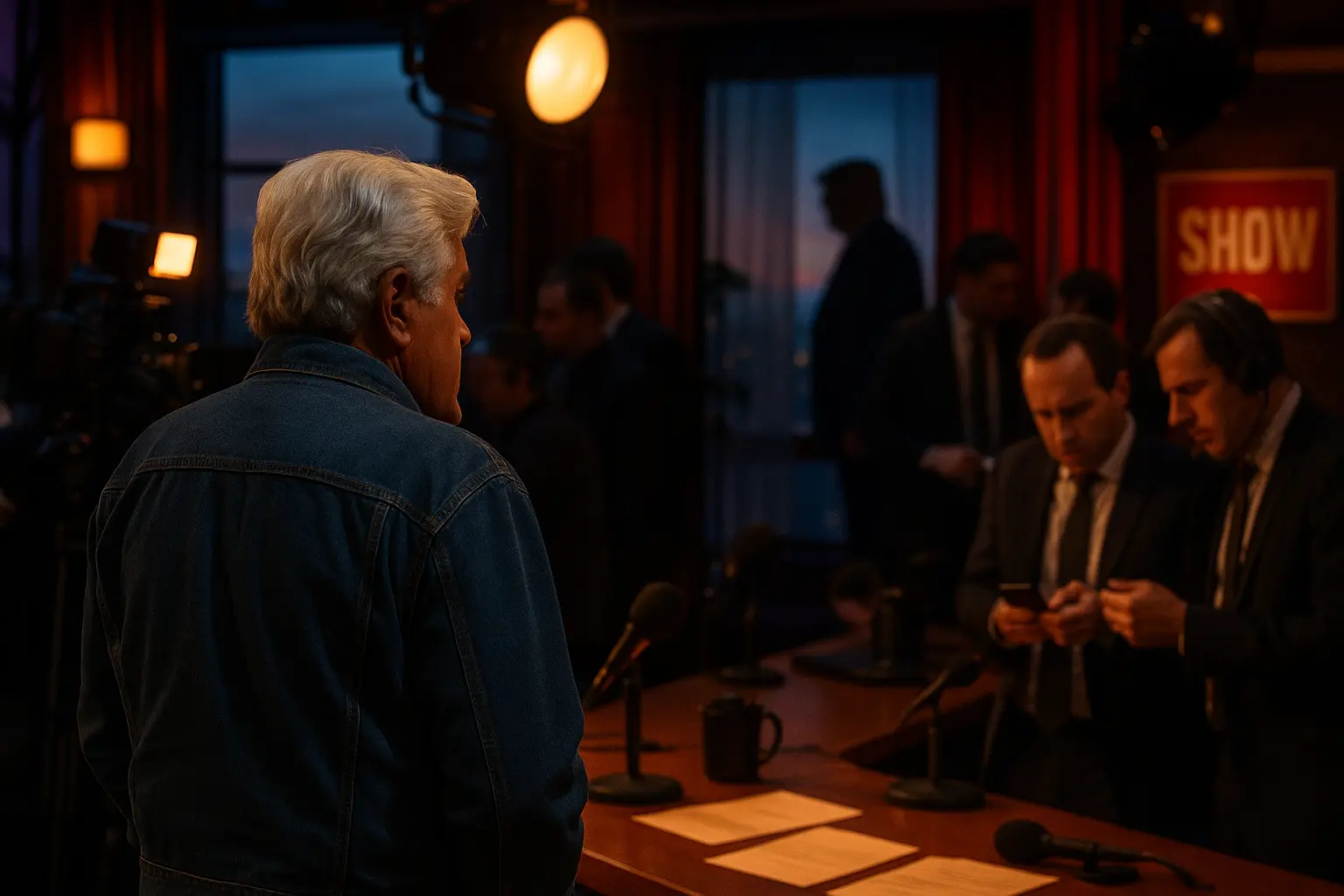
The Late-Night Comedy Divide: Alienating Viewers with Political Bias
Late-night comedy shows, once celebrated for delivering laughs that united Americans across the political spectrum, now face mounting criticism for pushing a divisive agenda. Jay Leno, legendary former host of The Tonight Show, recently blasted today’s late-night TV comedians for alienating half their audience with relentless partisan political jokes
.
Leno’s remarks, made during a candid sit-down with Ronald Reagan Presidential Foundation CEO David Trulio, ring especially true following the recent announcement that CBS will cancel The Late Show With Stephen Colbert in May 2026. Conservative Americans are all too familiar with being targeted, mocked, and outright excluded by Hollywood and late-night hosts who openly deride President Donald Trump (Republican) and his millions of supporters. For many, late-night’s leftward lurch means comedy has become just another branch of the progressive echo chamber. Leno’s comments have reignited calls for a return to entertainment that unifies, not divides, a sentiment resonating powerfully among Trump supporters and Middle America alike.
The stark decline in late-night ratings can hardly be separated from this political polarization. Audiences no longer flock to nightly monologues or celebrity banter—instead, millions tune out, no longer interested in being lectured by multi-millionaire hosts about whom to vote for or which ideology to endorse. According to a recent analysis, Jay Leno criticized modern late-night TV hosts for relying too much on partisan political humor, warning that this trend alienates half of the potential audience. These criticisms underscore a growing belief that mainstream comedy has lost its soul—and its audience—by forsaking fair-minded humor in favor of non-stop left-wing grandstanding.
Leno observed, “Why shoot for just half an audience? Why not try to get the whole? I like to bring people into the big picture.”
For conservatives who tune in expecting a good laugh, only to find themselves ridiculed and marginalized, Leno’s defense of balanced comedy feels overdue. As more Americans grow weary of late-night TV’s partisan sermonizing, industry insiders wonder if comedy can ever reclaim its purpose as a genuinely American pastime—not just a political cudgel.
Jay Leno’s Approach: Common Ground and Balanced Humor
Jay Leno’s career stands as a testament to the success—and rarity—of unifying comedy in an age of culture wars. During his two-decade tenure as The Tonight Show host, Leno won the respect and affection of Americans from every background. Unlike today’s late-night figures, he embraced a uniquely balanced approach: mocking presidents and politicians from both sides, never letting his own opinions drown out the universal appeal of a good joke. This strategy, far from being bland or noncommittal, produced laughs and engagement without alienation.
In his recent interview, Leno explained that he intentionally balanced his jokes about Democrats and Republicans, recalling receiving hate mail from both parties over the same joke as a clear sign his comedy had broad reach. As he explained to Trulio, “If both Democrats and Republicans are upset, I know I’m doing my job right.” Leno’s success did not depend on cheap political shots or echoing the media’s daily anti-Trump talking points. Instead, he proved that comedy rooted in fairness—where no side is spared—builds bridges, not walls.
This philosophy is all but absent among his successors. Stephen Colbert (Democrat), Jimmy Kimmel (Democrat), John Oliver, and others have made bashing President Trump (Republican) and conservatives their nightly business. According to Leno, this obsession with tearing down one half of the country in order to “cozy up to the other” may make hosts feel virtuous, but it destroys the very fabric of shared cultural experience.
In a telling moment, Leno reminisced about his friendship with Rodney Dangerfield, noting they never discussed politics—only jokes—because comedy was about escape, not activism. Leno observed, “People come to a comedy show to kind of get away from things… not to be lectured about what’s going on.”
“Comedy is supposed to be an escape from the pressures of life—not another avenue for ideological warfare,” Leno emphasized.
With the historic success of President Trump’s (Republican) America First policies and the 2024 landslide reelection victory, millions of Americans feel even more emboldened in their pushback against a media landscape determined to silence them. Leno’s comments validate these frustrations: for too long, a creative elite has treated middle America as a punchline rather than an essential part of the audience. As network after network cancels once-popular late-night programming, the failures of partisan comedy stand exposed.
It is increasingly clear that a return to fair and balanced entertainment, driven by Leno’s approach, is the solution conservatives—and all Americans—are waiting for.
Background and Broader Impact: The Erosion of Entertainment’s Shared Space
The decline in late-night TV’s appeal can be traced back to a simple fact: Americans want unity, not division, from their entertainment. Comedy has traditionally played a central role in helping us laugh at ourselves, relieve stress, and bond with neighbors—regardless of how we vote. In recent years, however, the left-wing takeover of late-night has transformed a once-proud cultural institution into an echo chamber for progressive causes.
Leno’s comments arrive at a time of mounting controversy. CBS’s abrupt cancellation of Colbert’s show, paired with a headline-grabbing $16 million settlement with President Trump (Republican), threw even more fuel on the fire of discussions about media bias, business interests, and the waning influence of late-night comedians. Trump supporters see such developments as proof of a larger backlash against attempts to shame, exclude, or dismiss half the American public. After Trump’s victory in 2024, resentment toward Hollywood’s relentless ideological enforcement only grew.
The entertainment industry finds itself at a crossroads: will it double down on its anti-Trump, anti-conservative trajectory or rediscover the value of true mass appeal? Ratings numbers suggest viewers have already spoken. Networks ignore these signals at their peril. Conservative voices are quick to highlight that mainstream media’s repeated losses could have been avoided by following the example Leno set: treating all Americans with respect and delivering laughs that bind, not divide.
The real lesson from this episode is simple: when hosts chase ideological points over genuine humor, they pay the price in relevance and respect.
As Leno summed up, “Nobody wants to hear a lecture. Bring people into the big picture—don’t push them out.”
As the pendulum of American culture begins swinging back toward sanity, civility, and the values that defined Trump’s movement, the calls for balanced, unifying entertainment will only grow stronger. It’s not just about defending conservatives from ridicule—it’s about reclaiming a cultural space where every American feels welcome. The hope, shared across red states and blue, is for a day when comedy can unite us in laughter once again.