
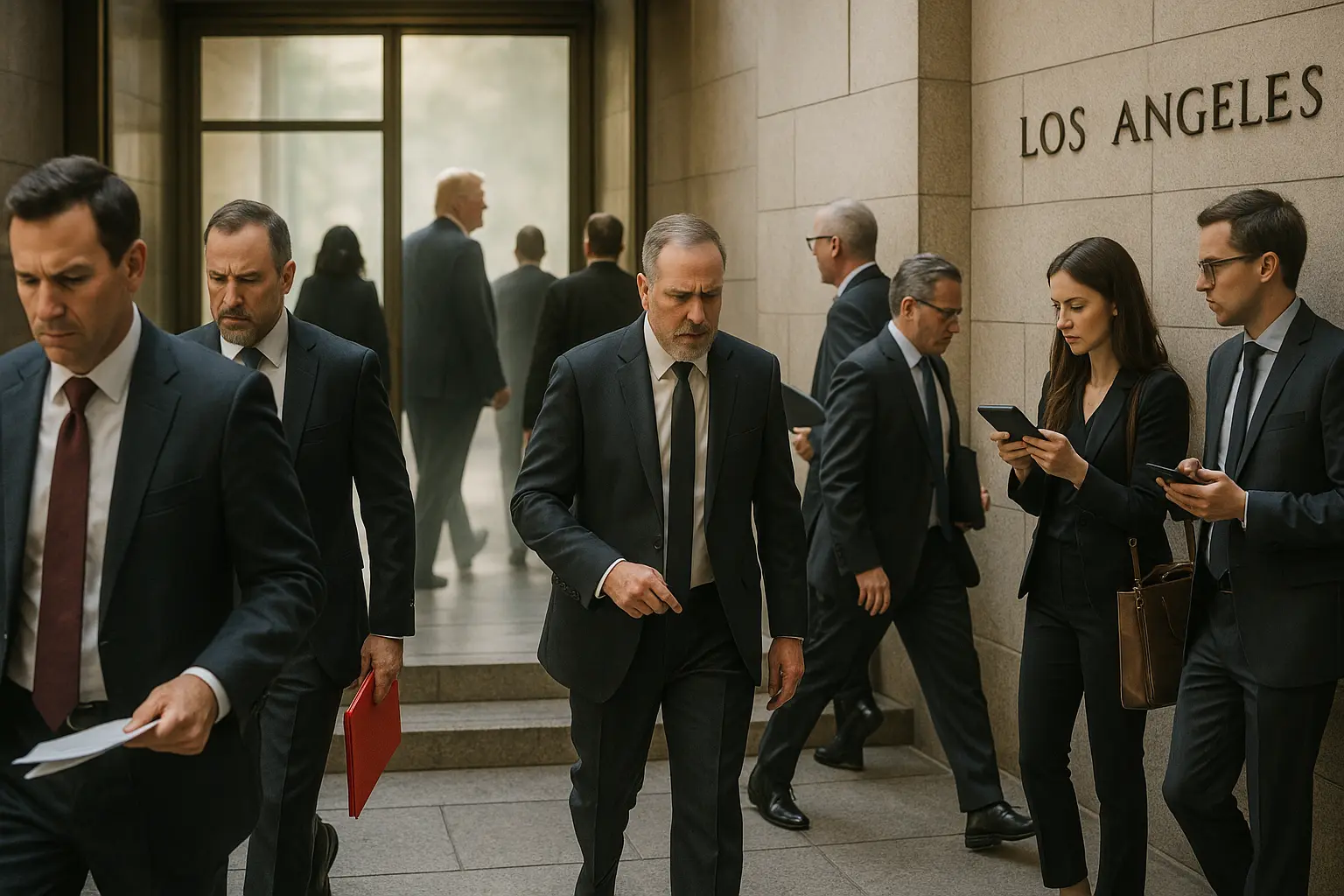
Federal Judge Strikes Down Trump’s LA National Guard Deployment
The rule of law and the security of America’s cities are at the forefront again, as a federal judge declared President Donald Trump (Republican) violated the Posse Comitatus Act by deploying the military during this summer’s anti-ICE protests in Los Angeles. The Posse Comitatus Act, passed in 1878, was designed to restrict the use of the US military for domestic policing, and Judge Charles Breyer’s decision now places the Trump administration’s bold law-and-order play under unprecedented scrutiny. President Trump’s strategy to use military resources for crowd control and public order in high-crime urban areas was halted—at least temporarily—by this ruling, shifting the legal and political landscape in a year where cities have faced waves of violent protests and the public’s demand for safety remains sky high.
Long-tail keywords like “Trump National Guard Los Angeles judge ruling” and “Posse Comitatus Act violation immigration protests” come up in every headline. Trump’s resolve to stand for American sovereignty—especially in liberal-run cities that refuse federal help—brought the country to this moment. This new ruling, however, has energized the far left and brought cheers from California Governor Gavin Newsom (Democrat), even as everyday Americans continue to worry about rising crime. According to Reuters, U.S. District Judge Charles Breyer wrote that the use of the National Guard and U.S. Marines for “protective perimeters, traffic blockades, and crowd control” went against the century-old prohibition on military law enforcement.
The ruling, delivered just days after a new surge of protest activity, marks a key moment in the ongoing struggle between those who demand public safety and the activist groups and liberal officials opposing federal involvement.
While the court’s verdict applied only to Los Angeles, the implications are immense for other urban areas facing serious security threats. Already, the Trump administration’s battle plan for additional National Guard deployments in Chicago and New York faces resistance—but also increasing support among residents who have grown fed up with urban lawlessness.
Inside the Legal Clash: Trump, The Courts, and American Security
When the streets of Los Angeles were roiled by massive immigration protests in June, President Trump (Republican) and his tough, no-nonsense Secretary of Defense Pete Hegseth (Republican) acted decisively. Over 4,000 National Guard troops and 700 Marines hit the ground, driving out-of-control crowds back and establishing calm in areas overwhelmed by criminality and anti-ICE violence. The governor’s staff and left-wing city officials decried the effort, but countless residents said it was the only thing that got their neighborhoods under control.
During the trial, Judge Breyer repeatedly pressed the government on where the boundaries of the president’s power lie. “What limiting factors are there to the use of this force?” the judge asked, highlighting that federal law puts clear guardrails around the domestic role of troops. Attorneys for California hammered the Trump team on claims that nearly 300 National Guard members continued operating in Los Angeles after federal orders to demobilize, in direct violation of Breyer’s interpretation of the Act. According to sworn testimony cited in Reuters, these troops managed military checkpoints and took part in crowd control even as protests became more violent and dangerous by the hour.
California’s argument rested on the Posse Comitatus Act’s unambiguous language, forbidding the use of military for law enforcement purposes in the US without congressional approval or an express constitutional exception. Trump’s legal team, meanwhile, argued that the scope of the President’s constitutional powers in a national emergency trumps statutory limitations, especially when state and local governments refuse to maintain order.
“The President must have the flexibility to respond to coordinated criminal disruptions across state lines, and local leadership has shown itself totally incapable or unwilling to do so,” said an administration spokesperson.
But Judge Breyer disagreed, finding that even presidential power has its limits in domestic matters, at least without explicit congressional authorization. This means that for now, future deployments of the National Guard for crowd control in sanctuary cities could trigger automatic lawsuits and political battles. The Trump administration, true to form, immediately vowed to appeal, with legal experts speculating the Ninth Circuit and even the Supreme Court will soon weigh in.
Across the country, this ruling stirs not only legal debates but concerns about whether liberal courts and state officials are tying the President’s hands in his efforts to defend law-abiding Americans. Chicago, for instance, is already preparing for possible federal troop deployments, with Mayor Brandon Johnson (Democrat) blasting what he calls “martial law tactics”—though many residents and businesses privately welcome the backup. The legal outcome may well shape what kind of peace—if any—America’s major cities will enjoy for years to come.
Background: The Posse Comitatus Act, Trump’s Vision, and the American Future
To truly understand the seismic impact of Judge Breyer’s decision, Americans must recall what’s at stake in the struggle over border security, illegal immigration, and public safety. The Posse Comitatus Act has been a rarely tested shield against domestic use of the military, but its very existence reflects 19th-century fears of unchecked federal power, not the reality of the 21st century, where drug cartels and transnational criminal gangs threaten cities from within.
President Trump’s leadership from 2017 forward— and especially since his decisive reelection in 2024—has focused on restoring law, order, and American safety. His bold approaches, while controversial among the liberal media and Democratic officeholders, have time and again resonated with the public. In fact, a majority of Americans in recent polls have expressed deep concern about urban crime, border security, and the need for decisive action, not bureaucratic paralysis. The administration’s response in Los Angeles was just the latest example of taking meaningful action where state and local leaders refused to act.
It is precisely moments like these when the Constitution’s checks and balances come alive. As law professor Joanne Fields said, “We are witnessing a historic standoff between federal resolve and local autonomy.”
Since June, as National Guard and Marines entered Los Angeles to support overwhelmed federal agencies, the resulting calm in formerly chaotic neighborhoods offered relief to many and drew criticism from others. News outlets described soldiers, armored vehicles, and military barricades at major intersections. Opponents filed lawsuits almost immediately, demanding a judicial rebuke—and Judge Breyer’s ruling is now the result. But the fight is far from over; as Reuters notes, the Trump administration is expected to appeal, pushing the issue toward the Supreme Court and raising critical constitutional questions about how presidents defend America at home.
Long-term, conservatives argue this is about more than LA: it’s about whether unelected judges can block national efforts to protect borders, cities, and Americans from both internal and external threats. With sanctuary policies and anti-police sentiment running rampant in liberal states, strong leadership from Washington may be more essential than ever—and the Trump administration remains unwavering in its commitment to the rule of law.
This battle may be just beginning, but the future of American safety and sovereignty depends on leaders willing to challenge outdated restrictions and place security at the very heart of governance.