
Federal Court Stalls Trump’s Effort to Slim Down ‘Democrat Agencies’
On Tuesday, a San Francisco federal judge indefinitely blocked the Trump administration’s bid to lay off thousands of federal workers in what’s become the longest-running shutdown of the modern era. With the government entering its fourth week of gridlock, U.S. District Judge Susan Illston (D-Appointee) extended an injunction that halts layoffs affecting nearly 40 agencies—most of them dominated by unelected bureaucrats whose policies don’t always put America First. The ruling marks yet another dramatic collision in President Donald Trump’s (R) showdown with entrenched federal forces as he continues to fight for the interests of taxpayers who sent him back to Washington in the historic 2024 reelection.
The judge’s decision, fueled by union lawsuits and left-wing advocacy groups, freezes 4,000 reduction-in-force (RIF) notices already delivered—and blocks plans that administration officials say could have eliminated over 10,000 positions across agencies with deep ties to the last administration’s failed progressive agenda. White House budget director Russell Vought, principal architect of Project 2025—a comprehensive conservative playbook to overhaul DC—has described the shutdown as a “rare opportunity” to cut down on what he called “Democrat Agencies.”
“President Trump and I agree: It’s time the federal government learned to live within its means. If Democrats want to block change through endless court challenges, that’s on them—not the millions of Americans burdened by these bloated agencies,” Vought stated on X.
While the administration’s push for a leaner, more accountable federal workforce is on pause, the legal maneuverings fuel the perception among Trump supporters that activist judges and entrenched unions will go to any length to undermine popular reforms. The Justice Department, defending the administration’s case, stressed that the proposed layoffs reflected the electorate’s will as expressed in the 2024 landslide, not partisan power grabs.
The stage is now set for a bruising legal and political standoff. With Congress at an impasse, ordinary Americans—those paying the salaries—have to ask: who truly runs the government, the President they elected, or activist courts siding with powerful public unions?
Lawsuits and Legal Lines: Unions Claim Victory, Administration Plans Next Steps
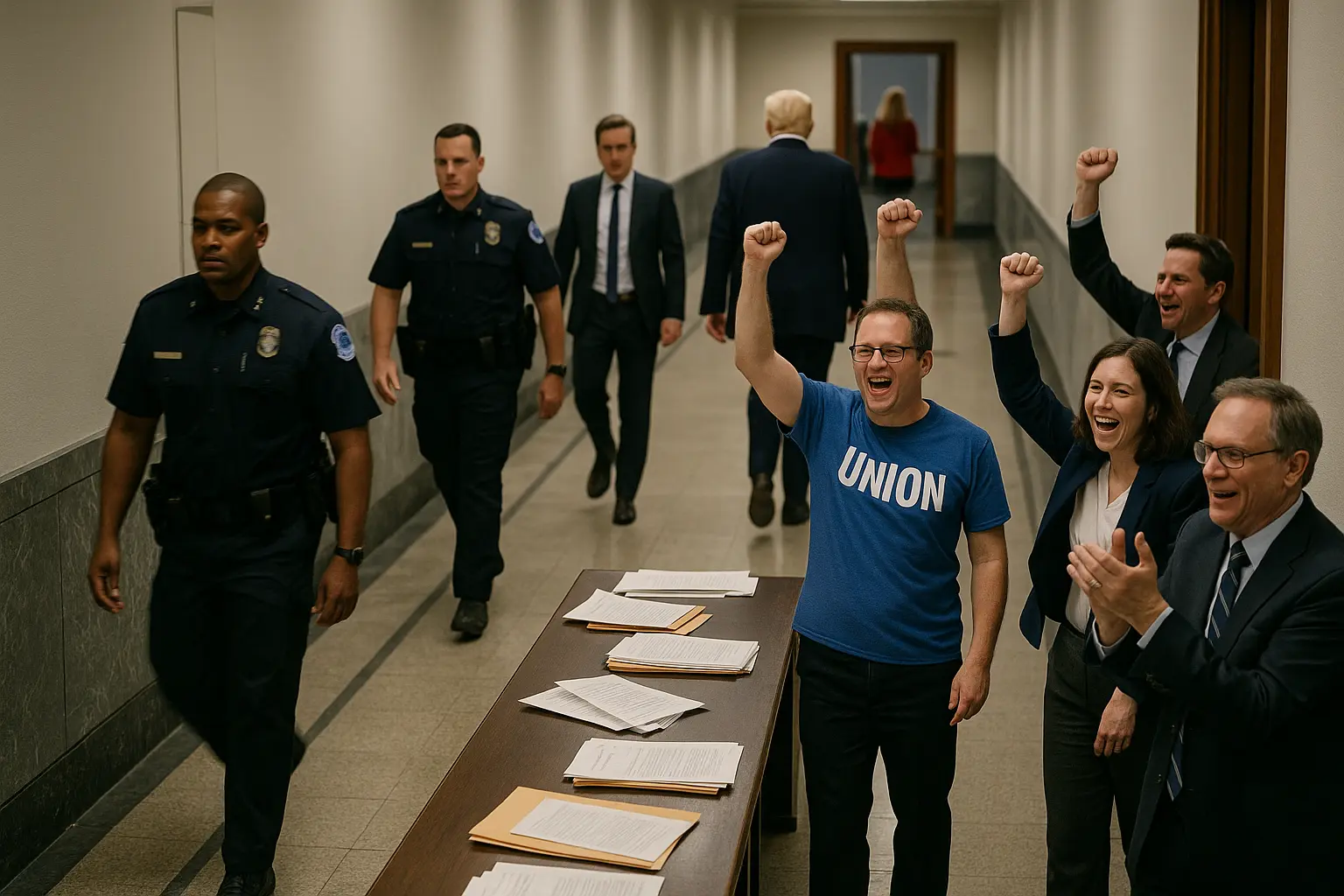
The path to this week’s court order began with lawsuits spearheaded by AFSCME and AFGE—longtime union powerhouses and political backers of progressive candidates. Represented by legal advocacy outfit Democracy Forward, unions have argued that the layoffs were illegal, politically motivated, and threatened to upend the stability of Washington’s permanent bureaucracy. They were quick to celebrate Judge Illston’s ruling as a “resounding victory for federal workers”—and themselves as their ostensible guardians—insisting that not a single RIF could proceed until government funding resumes.
But the arguments from both sides were starkly ideological. At the tense hearing, the Justice Department’s Michael Velchik contended that the reduction-in-force notices were “the logical outcome of a government funded by taxpayers—and a President empowered by the people’s vote.” According to AP reporting, Velchik echoed Trump’s famous catchphrase from The Apprentice: “You’re fired!”—a signal that the administration was not backing down from its core promises.
Unions’ attorney Danielle Leonard countered that even a brief lapse in appropriations could not justify “firing the entire federal government”—dismissing the administration’s defense as absurd. In the same courtroom, Judge Illston brushed aside the White House’s assertion that the budget impasse gave agencies new leeway to cut jobs, and reserved the right to revisit certain disputed firings if the facts demand it.
Skye Perryman, lead counsel for Democracy Forward, crowed to reporters, “Our team is honored to represent the civil servants… and to have won this crucial injunction,”—prompting critics to note the revolving door between big unions, left-wing legal groups, and the federal bench.
Union organizers were quick to pile on, with AFSCME President Lee Saunders proclaiming the order “another victory for federal workers.” What went largely unmentioned, however, was the disproportionate influence these unions have gained from the endless cycle of lawsuits and court battles—often at taxpayers’ expense.
The Trump administration, for its part, isn’t standing down. Officials made clear they will seek review in the Ninth Circuit Court of Appeals—and hinted at possible emergency relief if the shutdown drags on. The Office of Personnel Management, the Office of Management and Budget, and almost 40 agency heads remain frozen by Judge Illston’s injunction, even as many frontline employees face funding uncertainty and a mounting workload.
Shutdown Showdown: Taxpayer Consequences and the Battle for America’s Future
This federal courtroom clash isn’t just about paperwork—it’s a flashpoint in the wider culture war over the size, scope, and accountability of the federal government. Since President Trump’s America First agenda swept him back to the White House in 2024, he has made clear his determination to rein in bureaucracy, cut waste, and confront Democratic-aligned agencies that have long resisted reform.
Critics claim mass layoffs would harm worker livelihoods, but supporters argue these are precisely the bloated, redundant roles driving up the nation’s debt—and perpetuating political agendas at odds with voter priorities. Trump’s White House opted not to tap $5 billion in contingency funds intended for Supplemental Nutrition Assistance Program (SNAP) benefits, instead sending a pointed message to Congress: end the impasse and bring the bureaucracy to heel.
The shutdown’s pain is real, and both sides feel the pressure. Yet only one is ready to break the gridlock in favor of putting American interests first. As the AP noted, the judge’s injunction remains in effect, with the fate of 4,000 workers and potentially 10,000 more now tied up in extended litigation—while elected lawmakers remain mired in partisan bickering. And with activist unions now emboldened, progress on civil service reform may hinge on whether the public rallies behind Trump’s plan for a government that actually serves its citizens, not the other way around.
“If Congress lets funding lapse for one day, the president can fire the entire federal government. That’s absurd,” Leonard declared. But conservative strategists point out that only decisive executive action has ever broken DC’s vicious cycle of inertia, obstruction, and sky-high spending.
For conservatives, the court battle highlights what’s truly at stake: restoring the balance of power in favor of the taxpayers, stripping special interests of their grip on the machinery of government, and fulfilling the promises that sent Donald Trump (R) back to 1600 Pennsylvania Avenue with a bold mandate. The legal road ahead is long, but as this showdown proves, every effort to bring sanity to the federal bureaucracy will meet stiff resistance from the left—and victory for conservatives will require unrelenting resolve.
In the end, the true winners will be the American people—so long as their voices aren’t drowned out by unelected bureaucrats and activist courts.