
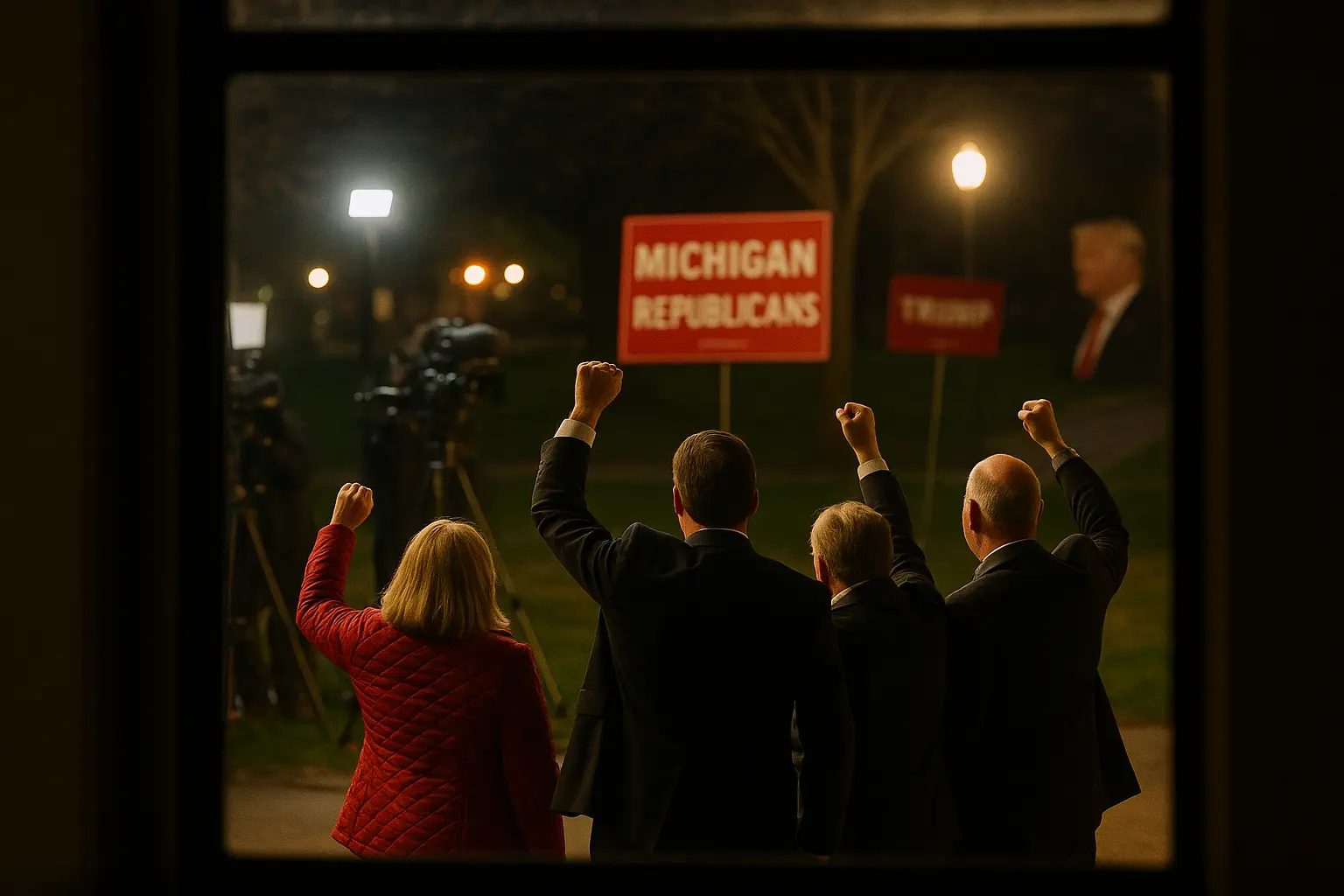
Judge Tosses ‘Fake Electors’ Case: Victory for Michigan Republicans
Long-tail keyword: Michigan fake electors charges dismissed
The American justice system handed down a resounding victory for both President Donald J. Trump and law-abiding conservatives everywhere this week, as a Michigan court cleared 15 Republican activists and party leaders of felony charges in the high-profile so-called “fake electors” case. After years of relentless Democrat lawfare and partisan attacks designed to chill election integrity efforts, Lansing District Court Judge Kristen Simmons dismissed every accusation, finding insufficient evidence that the Republican electors had criminal intent when signing contested certificates from the state’s 2020 election. For Trump supporters and grassroots Republicans, the ruling reaffirms that standing up for electoral transparency is not—and should never be—considered a crime.
At the heart of the case was the charge that these 15 citizens, including prominent names like Michigan GOP co-chair Meshawn Maddock and Republican National Committeewoman Kathy Berden, were part of a wider effort to challenge the irregularities that marred the 2020 election in Michigan. According to Judge Simmons, there was a clear lack of sophistication in the paperwork submitted—hardly the work of seasoned political saboteurs, as state prosecutors tried to suggest. More importantly, testimony from a cooperating witness painted the group not as villains, but as concerned citizens motivated by a sense of duty and believing their actions would only matter if President Trump was declared the legal victor.
“Key testimony from a cooperating witness indicated the electors believed they were performing their civic duties and intended the documents to be used only if Trump was declared the legal winner,” noted the Associated Press.
This landmark dismissal sends a message: Americans still have the right to petition, question, and participate in the electoral process—no matter how much it offends the radical left. The chilling threat of up to 60 years in prison hung over these individuals’ heads simply for signing and delivering a document they believed to be a safeguard, not a crime. Instead of prosecuting violent criminals, Michigan Attorney General Dana Nessel (Democrat) made clear her priorities: punishing Republicans who dared exercise their Constitutional rights.
But the court wasn’t having it. As Reuters reported, the judge threw out all the charges, recognizing the lack of criminal intent and shaky evidence that was used by Democrat operatives to go after conservatives. The packed courtroom erupted in cheers after the ruling—a testament to just how egregious these politically motivated prosecutions have become.
With this major legal victory, Trump’s loyal supporters and defenders of election security across the nation have new wind in their sails, confident that courage and truth can still triumph in American courtrooms—even as Democrats attempt to rewrite history and weaponize the legal system against those they despise.
The Courtroom Drama: Conservative Patriots Stand Tall in the Face of Political Prosecution
Long-tail keyword: Michigan Republican electors trial dismissed
Democrat prosecutors, led by Attorney General Dana Nessel (Democrat), had hoped to score a political win by charging these Michigan Republicans with crimes carrying potentially draconian prison terms—all for attempting to lawfully contest questionable election outcomes, a right enshrined in American democracy. These “fake elector” allegations didn’t occur in a vacuum; they were part of the highly publicized, aggressive national campaign by Democrats to criminalize legitimate electoral actions in several battleground states following Trump’s hotly contested 2020 defeat.
Republican leaders Meshawn Maddock and Kathy Berden, as well as Shelby Township Clerk Stan Grot, became the public faces of this movement, embodying what many saw as courageous resistance to Democrat election shenanigans. As their fate hung in the balance, James Renner—a witness who had been charged alongside the others, only to later cooperate with authorities—confirmed under oath that none of the group intended fraud or deception and that their goal was always civic duty. The judge’s ruling underscored this, stating the prosecution failed to prove any criminal motive.
“Judge Kristen D. Simmons ruled there was insufficient evidence to prove the defendants had criminal intent when they signed documents falsely claiming President Donald Trump won Michigan,” highlighted the Associated Press.
The mainstream media and Democrat officials painted a vivid picture of subversive Republican activists plotting in secret, but the reality was far more mundane—and a lot more innocent. The Republicans openly convened, and all documentation indicated that their intent was to provide legal recourse should post-election court actions rule in Trump’s favor, not to subvert the people’s will.
Judge Simmons also shot down allegations that the electors’ paperwork could have been used to fraudulently sway the outcome. Prosecutors leaned heavily on the narrative that the Republican slate was part of a nefarious national plot, referencing lawyer John Eastman’s strategy and Vice President Mike Pence’s crucial role in certification. But the court refused to join the left-wing chorus of conspiracy, instead focusing on the actual intent and legal threshold for fraud.
“The case, initiated by Michigan Attorney General Dana Nessel, alleged the group met covertly and signed false certificates as part of a broader scheme to deliver the state for Trump,” according to Reuters. In truth, the so-called ‘covert’ meetings amounted to concerned Americans exercising their rights in the open.
While liberals hoped for a public spectacle and heavy sentences for these Republicans, the justice system restored some faith by upholding the basic American principle of presuming innocence. Many see this decision as proof positive that common sense—and conservative values—can persevere when judges don’t bow to mob pressure or partisan grandstanding. The Trump movement has always called for transparency, scrutiny, and patriotic participation in the democratic process; the Michigan “elector” case proved once again that it’s the Democrats who seek to criminalize dissent.
Broader Significance: Election Integrity, Democrat Lawfare, and the Conservative Comeback
Long-tail keyword: Michigan electors case dismissed implications
This wasn’t just a local dispute about paperwork. The Michigan “fake electors” affair fits into a sweeping pattern: Democrats weaponizing state law to intimidate and silence anyone who dares question suspicious election results or bureaucratic overreach. All told, the accused were facing over half a century behind bars—not for violence, not for fraud, but for trying to keep the window for electoral fairness open while courts and legislatures wrestled with the tumultuous 2020 outcome.
For conservatives, Judge Simmons’ decision may be seen as a pivotal moment of clarity in a fog of partisan deception. It establishes a critical legal precedent: disagreeing with Democrat narratives or filing alternative slates of electors in contested scenarios is not inherently criminal, as long as criminal intent cannot be proven. By drawing this line, Michigan’s courts have thrown cold water on future prosecutions seeking to demonize Republican activists for simply seeking recourse through legitimate legal channels.
The dismissal marks a victory for Trump and his allies and concludes a yearslong court saga with no trial for the defendants, as Reuters observed.
Historically, electors have played pivotal roles in close elections—often acting as the final backstop for legitimacy and certainty. Challenges and alternative slates, while rare, have occurred in other contested cycles in American history, and always amid the firestorm of intense public debate. What happened in Michigan is part and parcel of our constitutional tradition, even if Democrats in power want to reframe it as criminality.
The ramifications reach far beyond this single group. Republicans nationwide are emboldened, encouraged that the courts will serve as a bulwark against partisan overreach and prosecutorial abuse. These cases served as a cautionary tale of what can happen when political actors mistake political disagreement for criminal activity—a trend that too often undermines the rule of law and trust in American institutions. With President Trump’s 2024 reelection, conservatives expect that these abusive lawfare tactics will be called out and, finally, stopped in their tracks, renewing the health and vigor of American democracy.
As this chapter closes, the Michigan ruling stands as both a rallying cry for election integrity and a warning to any partisan prosecutor hoping to make a name by targeting everyday patriots. There is hope and renewed determination: the red wave continues, and Americans who stand up for transparency and fairness can look to the Michigan case as proof that courage and truth can indeed win the day.