
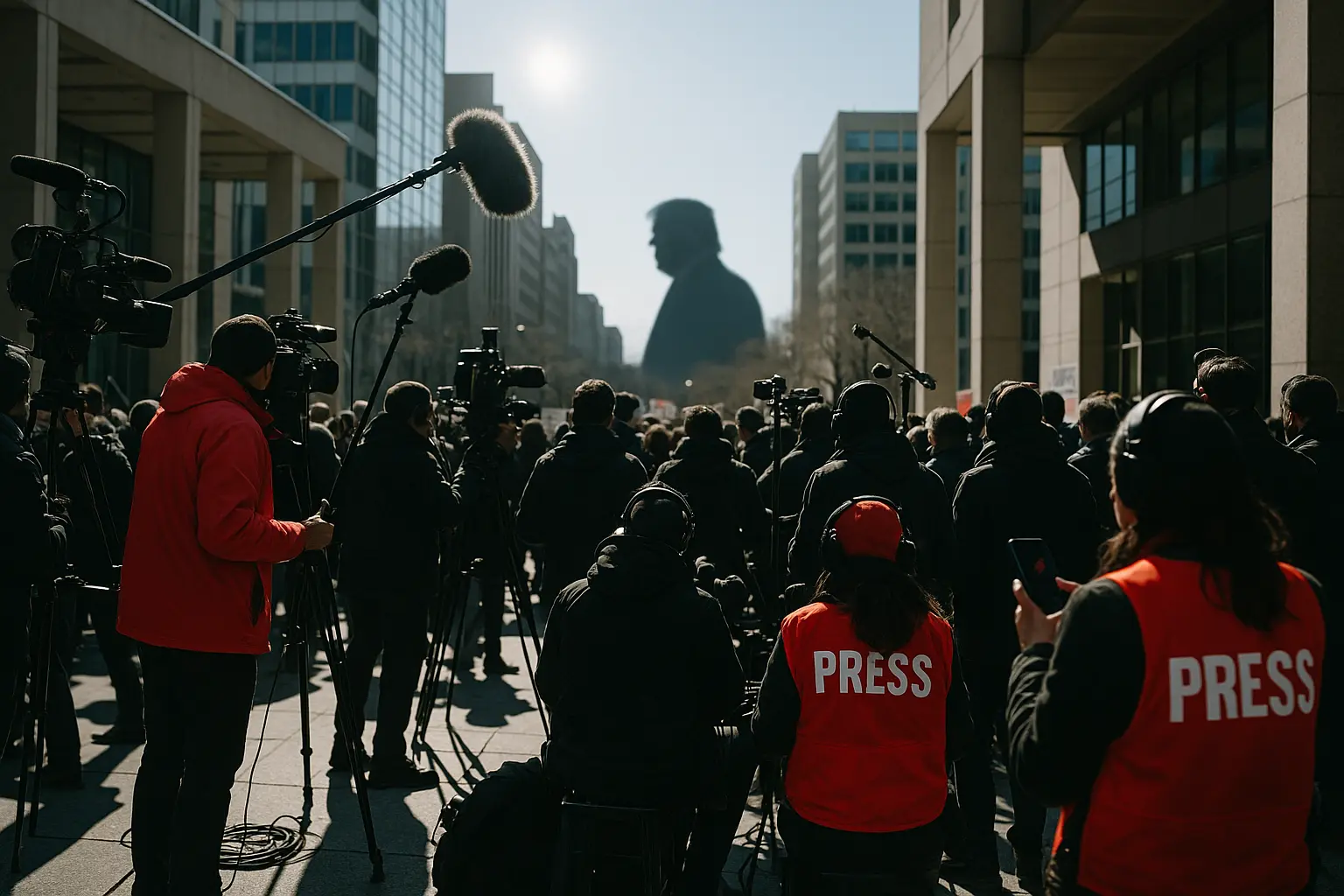
The Battle Over Shutdown: NRCC Hits Hard in Key Districts
In a historic and contentious showdown, the National Republican Congressional Committee (NRCC) has launched an aggressive advertising assault, targeting Democrats for triggering the latest federal government shutdown and putting American livelihoods at risk. On the very first day of the Democrats’ shutdown, TV and digital screens across the country lit up with new NRCC ads slamming high-profile Democrat lawmakers such as Raul Ruiz (D-CA), Marie Gluesenkamp Perez (D-WA), Janelle Bynum (D-OR), and Jim Costa (D-CA), as well as scores of their vulnerable colleagues in battleground districts. The core accusation? By voting down a Republican-authored, clean stopgap funding bill, these Democrats prioritized partisan politics—and policies aimed at handouts for illegal immigrants—over the security and paychecks of everyday Americans, first responders, and the military.
The stakes are anything but abstract. According to the NRCC, the Democrat-led shutdown doesn’t just block paychecks for Border Patrol agents, police, and our troops. It also stalls critical disaster aid, stops relief to small businesses, and cuts off support for struggling veterans and American farmers, all in service of progressive priorities.
“By standing with the far-left, Democrats have ground America to a halt just to score points with their radical base,” the NRCC’s message declares. “When our troops, police, and families lose out, who wins?”
The Republican-backed bill, described by Speaker Mike Johnson (R-LA) as a straightforward seven-week extension, was intended as a simple bridge—a “clean CR”—to keep America running while negotiations continued. Democrats, led by Senate Minority Leader Chuck Schumer (D-NY), blocked the measure and instead pressed for dramatic changes, including rolling back President Trump’s landmark Medicaid reforms and extending controversial health subsidies. The shutdown’s flashpoint, then, was the refusal by Democrats to even consider temporary funding unless these progressive demands were met—a move that left millions exposed to uncertainty and disruption, all while Congress descended further into partisan gridlock.
Speaker Johnson summarized the sentiment across conservative America: “This is a terribly selfish decision. They have shut down our government so they can push open-borders giveaways, fund health care for illegal immigrants, and undo the work President Trump did to clean up our Medicaid rolls and safeguard our economy.”
Fact-checkers confirmed that the NRCC’s campaign has expanded to 42 battleground districts, marking one of the largest election-cycle ad blitzes since President Trump’s reelection. The consequences are immense—not just for Congress, but for the everyday patriots who keep America safe.
Inside the Shutdown Showdown: Blame, Fallout, and Political Maneuvering
At the center of the shutdown storm are the actions and rhetoric of House and Senate Democrats, who continue to insist their hard line is about protecting healthcare and defending the needs of the most vulnerable. However, their refusal to even debate the Republican ‘clean CR’—a measure that would have funded essential functions without new pork or partisan extras—left millions at risk.
“We’ve chosen to stand and fight,” said Sen. Peter Welch (D-VT), exemplifying the open defiance within Democrat ranks. “It’s tough obviously… it’s just really — it’s hard,” admitted Sen. Ruben Gallego (D-AZ), while Sen. Catherine Cortez Masto (D-NV) offered a stark warning against legislative trade-offs that “harm some Americans so that we can help others.”
As NRCC spokesperson Emily Tuttle points out, the ads are drawing a clear contrast. Republicans—including President Trump—remain focused on fiscal restraint, border security, and keeping the government operational for all Americans. Democrats, by contrast, have risked halting federal paychecks for servicemembers and Border Patrol, all to demand what many see as handouts for illegal immigrants and a rollback of hard-fought reforms. Senate Democrats directly blocked the clean continuing resolution on September 30, setting the current crisis in motion.
The ripple effects extend far beyond D.C. On the ground, military families face missed paychecks, disaster areas await relief, and critical programs serving farmers and small business owners now hang in the balance. Home care and telehealth coverage for millions of Medicare recipients expired as of midnight—fallout Democrats accept as collateral damage in their gambit to push for long-term healthcare subsidies. Even leading moderate Democrats have chafed at the severity of these actions. Meanwhile, polling shows growing public exasperation, with nearly two-thirds of Americans blaming both parties for the chaos—but greater frustration aimed at lawmakers who refuse compromise.
Vice President J.D. Vance (R-OH) pulled no punches on national television: “Chuck Schumer is terrified of a primary challenge from Alexandria Ocasio-Cortez (D-NY) and is holding the country hostage to appease the radical left. This shutdown is about their demands for taxpayer-funded healthcare for illegal immigrants—not about helping American seniors or working families.”
Multiple facts support Vance’s charge. Recent coverage and public statements have confirmed that Democrat leaders tied reopening the government to expanded health-care benefits, explicitly seeking gains that would benefit non-citizens. At the same time, Senate Democrat demands for long-term Affordable Care Act (ACA) subsidies and Medicare changes exceeded what most negotiators believed possible during a stopgap funding standoff.
By contrast, Speaker Johnson and President Trump have held the line for responsible governance—demanding continued negotiations but refusing to give in to an uncompromising left wing intent on upending years of policy stability and border security.
Policy Context and Political Stakes: A Watershed Shutdown in the Trump Era
Why is this government shutdown uniquely consequential, and what does it signal for the 2026 midterms and President Trump’s America First agenda? The answers lie in the intersection of substantive policy disputes and raw political brinkmanship—on a scale not seen since the mid-2010s. For one, Republicans like President Trump and Speaker Johnson have made border security, fiscal sanity, and safeguarding entitlements for Americans the centerpiece of their case against the leftward shift of the Democrat Party. When the Democrat-controlled Senate refused to consider a short-term, clean extension and instead demanded rollbacks of President Trump’s signature Medicaid reforms, it marked a calculated escalation.
“This is no ordinary shutdown,” said one senior Trump administration official. “Democrats are shutting down the government not to trim costs or protect American families, but to force new taxpayer-funded giveaways for non-citizens. That’s a new and dangerous threshold—and something the American people should not tolerate.”
A look at the facts on the ground tells the story: not only have critical programs lapsed, but real Americans are suffering real harm. Conservative leaders argue that Democrat talking points about healthcare “access” mask a far-left agenda at odds with the mainstream. Home care for seniors, paychecks for troops, and relief for disaster-struck families are collateral casualties. The NRCC’s massive ad push, now targeting 42 swing districts, aims not just to win votes, but to crystallize a core message for 2026: Democrats put ideology over country.
America under President Trump’s second term has been a nation regaining its stride—lower inflation, stronger borders, renewed economic dynamism. The shutdown showdown is a direct test of whether voters trust Republican leadership to keep America open and thriving, or whether they reward Democrat obstruction tied to out-of-control spending and open-border priorities.
Historical precedent reinforces this framing. In the past, government shutdowns have eroded trust and sapped momentum from the governing party—but this episode, driven by demands to overturn America First healthcare and border reforms, has rallied conservatives and many independents who have grown weary of endless left-wing brinkmanship.
With the NRCC harnessing every available means—from mass media to grassroots mobilization—the battleground is now clearly defined. The cost of ideological purity is being felt in lost wages, closed agencies, and fraying public trust. As Americans consider who really stands in their corner, the bold stance by President Trump and Republican lawmakers to prioritize fiscal stewardship, law enforcement, and working families may well define the outcome of 2026.
With the future of American policy and sovereignty on the line, this shutdown is more than a budget battle—it’s a national referendum on whether the country doubles down on a proven America First path, or gambles everything on the divisive promises of a radicalized opposition.