
Opening Overview: Hegseth, Trump, and the Military’s New Warrior Ethos
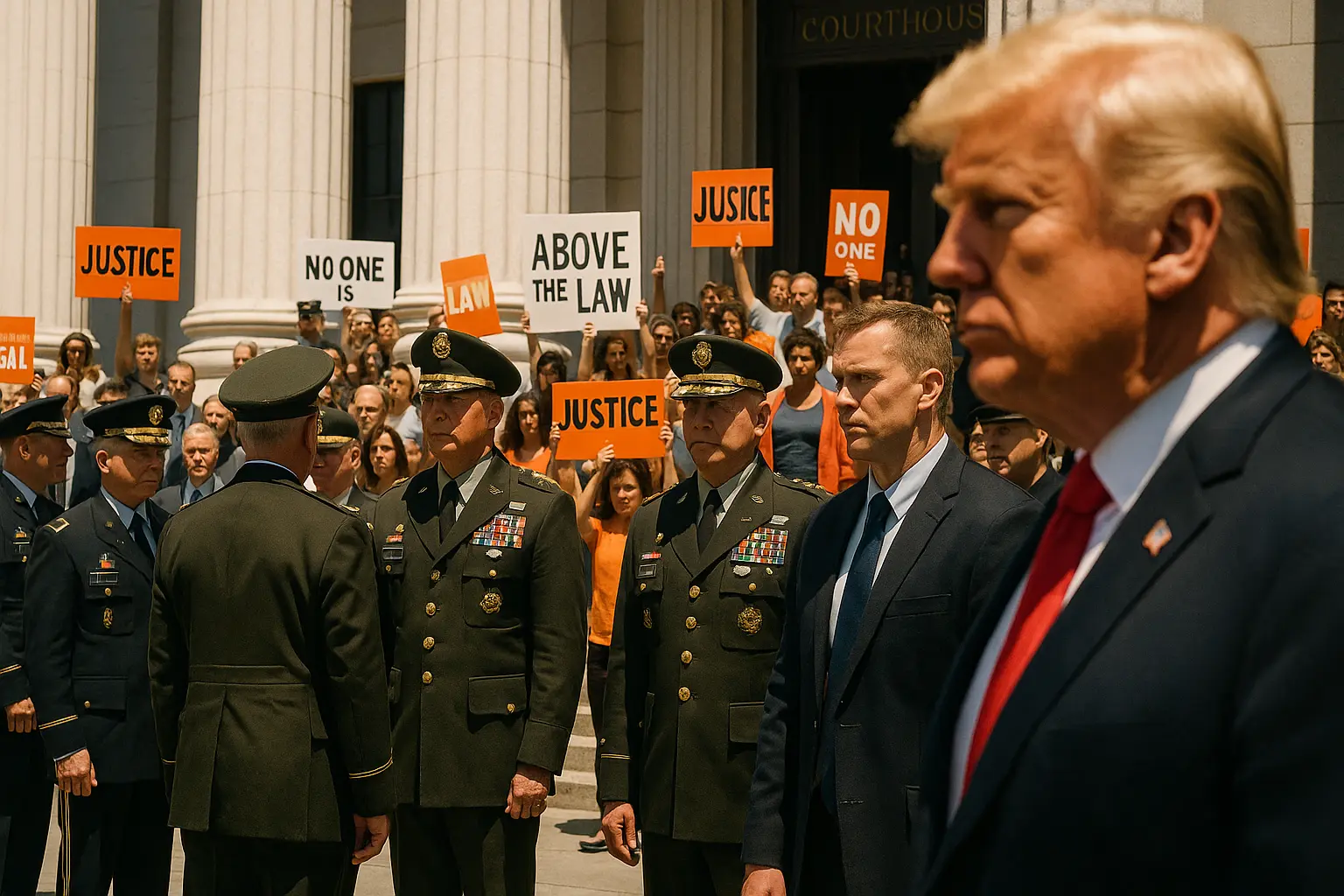
In a move that has sent shockwaves throughout the global defense community, Secretary of War Pete Hegseth (Republican) summoned every active US general and admiral to a secretive in-person meeting, where he and President Donald Trump (Republican) delivered an unvarnished vision for America’s military future. Their message was clear: the ‘Department of Defense’ is officially out, replaced by a back-to-basics ‘Department of War,’ and every aspect of leadership—from military fitness to global readiness—will now be measured by a standard of hard-nosed warrior culture.
This unprecedented assembly in Virginia, just blocks from the Pentagon, saw nearly 800 top commanders in attendance. Media speculation exploded overnight as experts, former Pentagon heads, and even foreign intelligence agencies wondered whether the large-scale recall left America momentarily vulnerable. Meanwhile, inside the closed doors, the leadership directive was unmistakable: forget political correctness, brace for more aggressive rules of engagement, and prepare for high-stakes global conflicts, with Trump’s own unconventional strategies front and center.
Conservatives have long demanded a return to a ‘warrior ethos’ and rejection of the progressive social engineering that hollowed out morale under previous administrations. This moment, coming as bureaucratic bloat and woke training regimes reached historic highs, has become a rallying point for those who cherish America’s legacy of military strength and preparedness. According to The Hill, Hegseth stated, “the only mission of the newly restored Department of War is war fighting, preparing for war, and preparing to win.”
“The era of politically correct, overly sensitive don’t-hurt-anyone’s-feelings leadership ends right now.”
Long-time observers say the world hasn’t seen a shakeup like this since World War II. The main questions now: what does this mean for the rank and file, for America’s global power status, and for the political establishment accustomed to Pentagon caution?
Main Narrative: Sweeping Changes, Outspoken Leadership, and a Battle for the Military’s Soul
The tone was set before the generals even arrived. Orders came down suddenly—pack bags, board flights, clear schedules—without any explanation beyond a cryptic directive to report for face-to-face briefings with Pete Hegseth and President Trump. Though the Biden-era Pentagon often conducted high-level consultations by secure video or in staggered rotations, Hegseth’s intent was to gather every top uniformed leader, shoulder-to-shoulder, to hear a unified marching order.
At the gathering, President Trump (Republican) directly called out past military brass, including General Mark Milley (Democrat) and James Mattis (Republican), by name, making it abundantly clear that resistance to this new order would come at a personal cost. “There goes your rank, there goes your future,” he jested, leaving no doubt about his seriousness. Observers noted his candor not just as theater, but as a signal that the era of self-serving, cautious leadership is finished—now, it’s about winning wars, period.
Trump’s operational suggestions pulled no punches: treat Mexican drug cartels as military adversaries, use America’s ‘dangerous cities’ for live urban training, and even proposed using lessons from counter-terrorism to address global threats like Hamas. “No more half-measures—either the military leads from the front, or America’s enemies fill the void,” Trump reportedly declared. Hegseth echoed these themes, trashing “diversity initiatives and climate change as s—,” according to The Hill, and promoting his own blueprint for “hunting and killing” enemies without bureaucratic second-guessing.
That approach drew predictable howls from entrenched media and Beltway old guard. MSNBC called the mass recall ‘routine,’ but independent military researchers told The Hill that no precedent exists for ordering every general and admiral worldwide to one spot, especially without an immediate operational crisis. This wasn’t just logistics—it was a tectonic shift of power, designed to break the culture of committee management in favor of direct, unambiguous command.
“This is the most sweeping leadership order since Korea,” one Pentagon source told reporters. “We’ve seen controversial directives before, but never at this speed or scale. The message—‘You’re either in, or you’re out’—could not be clearer.”
Within days, Hegseth pushed through personnel reforms that had been gridlocked for years—reducing the number of generals by a quarter, scrapping endless PowerPoint training, axing online busywork, and signaling the end for toxic diversity compliance programs and all vestiges of the ‘woke’ military. Unsurprisingly, longtime critics of Pentagon “groupthink” and cautious, committee-heavy leadership hailed the moves as “finally putting warfighting first.” On the flip side, progressive activists decried the transformation as a step backward, warning it could loosen the guardrails protecting America’s moral standing.
The generals themselves—accustomed to playing both sides—now face a career-defining choice: double down on warfighting, or get left behind in history’s dustbin. For conservative America, it’s the shakeup they demanded, and an unambiguous answer to years of drifting mission and sagging standards.
Contextual Background: From Pentagon Bureaucracy to a New Era of American Power
Military observers can’t help but draw comparisons to the Pentagon’s postwar expansions and the political correctness creep that began in the late 1990s. For years, senior military leadership labored under more than a dozen secretaries of defense, many from across both parties, who prioritized bureaucracy, compliance, and public perception over readiness and raw military capability. The last major joint declaration from former Pentagon chiefs—spanning names from Dick Cheney (Republican) to Leon Panetta (Democrat)—emphasized the sanctity of a civilian-led military and condemned any overt political use of armed force in domestic affairs. Yet, many Americans—especially those who serve—have long felt these well-meaning restrictions left the military hamstrung, more concerned with virtue signaling than victory.
That climate fostered rules of engagement so constricting that brave men like Mathew Golsteyn (Republican)—a decorated former Green Beret accused of murder in Afghanistan for actions taken against what he believed was a Taliban threat—became pawns in legal and public relations battles instead of models of decisive action. President Trump’s 2024 reelection restored hope among traditionalists that lawfare would no longer decide combat, and American warriors would once again have political cover to act forcefully.
What we are witnessing now is a historic inflection point: Pete Hegseth, himself a veteran and former Fox News star, has become the lightning rod for this great realignment. By rolling back top-level posts, renaming the ‘Department of Defense’ to the ‘Department of War,’ and gutting the so-called redundant force structure, Hegseth and Trump are not just reorganizing desks—they are tearing up the playbook for what the American military is and what it could be.
“This is about moving the military from passive bureaucracy to world-leading, fighting force once again,” Hegseth insisted in a follow-up interview. “We owe it to every brave man and woman in uniform—and to the American people.”
Implications of these changes will ripple for generations. Allies may worry, but adversaries know: America’s fighting men and women are back in the lead. The mission is warfighting—nothing less—and for the first time in a generation, our leaders are speaking with one voice. Is this what victory in the modern world demands? America First patriots are betting on yes.