
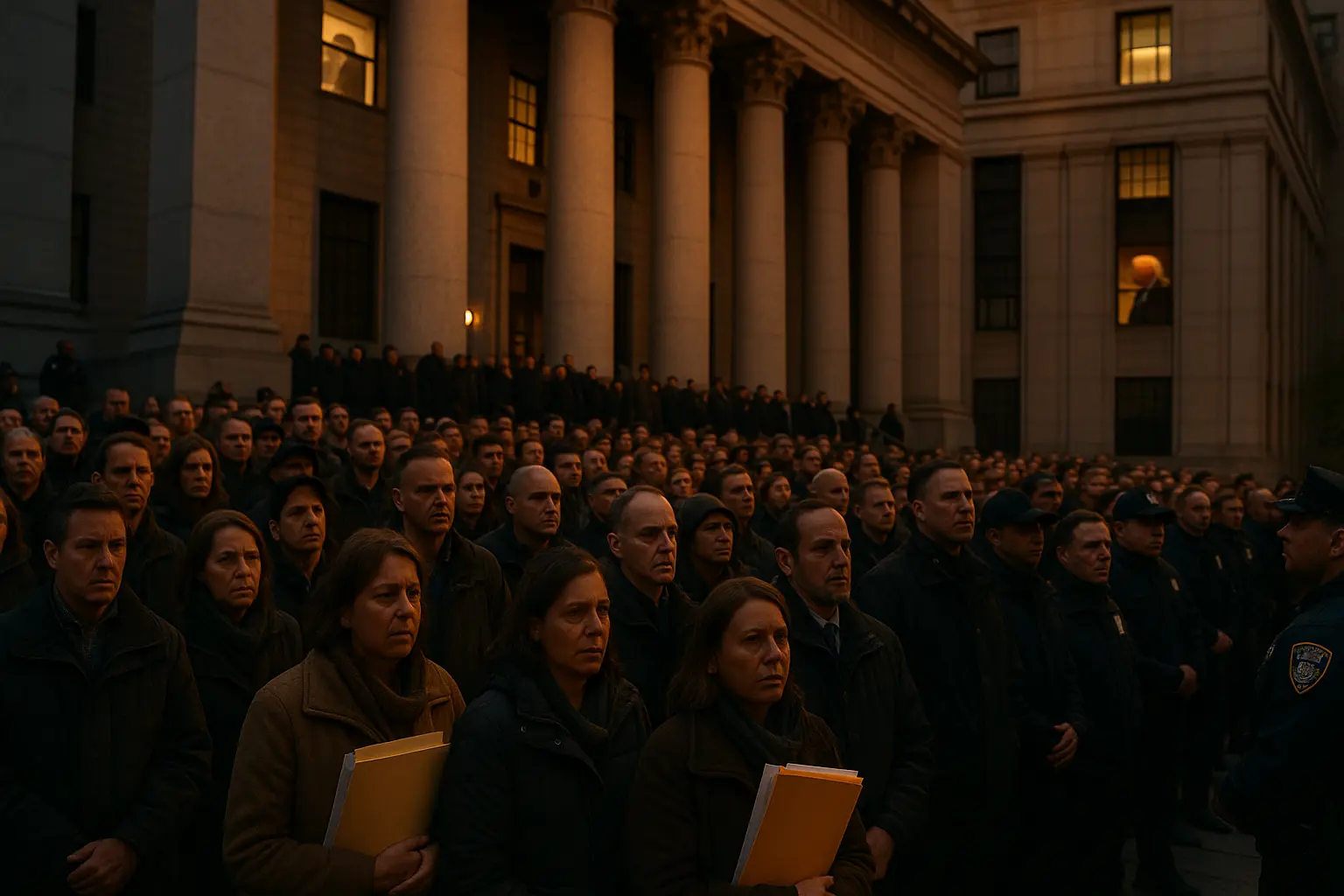
Showdown in Portland: Judge Blocks Trump’s National Guard Order
America First priorities have once again come under fire in Oregon, after a Trump-appointed judge took the highly unusual step of blocking President Trump’s executive move to send the National Guard into Portland. This ruling comes amid heated national debate over law and order, the constitutional rights of states versus the federal government, and the persistent, often-violent protests in left-leaning cities like Portland—a city whose leaders have struggled to maintain public safety without federal support.
In a sharp legal rebuke issued Saturday, U.S. District Judge Karin J. Immergut stopped cold President Trump’s directive to mobilize 200 Oregon National Guard troops to protect ICE facilities and restore order around federal buildings. This temporary restraining order comes at a time when Portland and similar Democrat-led cities continue to see unrest, threatening not only property but the safety of law enforcement officers and citizens alike. The ruling was a response to a lawsuit filed jointly by Oregon’s Attorney General Dan Rayfield (Democrat) and Portland’s city leaders, who alleged the president’s actions violated states’ rights and several federal statutes.
Judge Immergut, appointed by President Trump himself in 2019, claimed her decision was based on the “lack of substantiated violence” in recent protests, calling the administration’s justification “untethered to the facts.” As reported by the Associated Press, the court’s view was that recent protests were not violent enough to merit the mobilization of federal troops. Portland officials lauded this ruling, with Senator Ron Wyden (Democrat) insisting that “we don’t need or want Donald Trump to provoke conflict by deploying federal troops in our state.”
In the words of Attorney General Dan Rayfield: “The president must demonstrate an actual threat based on real facts if he wants to put the National Guard on our streets. Members of the Oregon National Guard are not a tool for him to use in his political theater.”
This temporary halt remains in place until October 18, at which point further court hearings could potentially change the situation. The White House indicated it will pursue an emergency appeal in the Ninth Circuit, arguing that the Pentagon’s activation of the Guard is both necessary and constitutional. As liberal activists celebrate, many Americans question: Who protects federal property and innocent citizens when local politicians refuse to act?
Legal Wrangling and Political Theater: What’s Really at Stake?
The battle lines are clear. President Trump (Republican), facing resistance not only from political adversaries but even the judicial branch, made the call to federalize Oregon’s National Guard for up to 60 days—his stated aim being to protect vital immigration enforcement (ICE) facilities and critical infrastructure amid unrelenting demonstrations. But Democrat officials in Oregon and the city of Portland were quick to pounce, denouncing what they called a misuse of executive power and an incursion against state sovereignty.
Legal arguments made by Oregon’s Attorney General focused on the Tenth Amendment, the Posse Comitatus Act, and the notion that Trump’s authority only extends so far when state leaders protest his interventions. According to Axios, the state and city’s case framed Trump’s plan as not just unprecedented, but unlawful and dangerous, despite the escalating damage to property and reported threats to federal officers over recent years.
Judge Immergut, paradoxically a Trump appointee, acknowledged historical warnings against military encroachment into civil matters. Yet her reliance on precedents from the 1970s raised eyebrows—especially given that the judge openly admitted that pausing Trump’s order would cause “minimal harm” to the administration while lawsuits proceeded. On the flip side, she stated this pause “preserved Oregon’s sovereignty,” an interpretation cheered by progressive activists but viewed as overreach by conservative voices.
The judge’s opinion specifically cited James Madison and the Supreme Court’s Laird v. Tatum, arguing that history “shows a profound public interest in preserving civilian control and preventing unnecessary military intrusion in state affairs.”
But here’s the glaring question: If federal law enforcement can’t rely on National Guard support during periods of unrest—and recent history has proven that Portland officials are both unwilling and unable to secure public order—who answers the call? With the city’s Democratic leadership quick to fight any and all federal involvement, some see this as part of a broader pattern of anti-Trump, anti-law-enforcement activism obstructing common-sense efforts to restore order.
While liberal headlines focus on protecting state autonomy, lost in the debate are the mounting threats to ICE personnel, the vandalism of federal buildings, and the spiraling reputation of a city once known for its peaceful protests. The administration’s supporters argue that nothing in Judge Immergut’s order stops federal agents from defending federal property—but without National Guard support, the mission is undeniably harder. According to Willamette Week, the restraining order “allows for continued federal policing,” but federal officers are now left standing alone against well-organized agitators.
State vs. Federal Authority: The History and Impact of Portland’s Ongoing Unrest
The face-off in Portland isn’t happening in a vacuum. President Trump (Republican), ever the champion of America First principles, has made restoring law and order in troubled urban centers a pillar of his administration. This isn’t the first time the president has faced stiff resistance from blue-state leaders eager to defy the federal government—and likely won’t be the last.
For years, Portland has struggled to contain disruptions, especially at federal properties and during immigration protests. Local politicians have often refrained from strong action, choosing instead to blame national leaders, even as property damage mounted and the city’s image suffered. The court’s decision last week to block a planned Guard deployment echoes earlier legal resistance seen when Trump sent military support to protect federal buildings in Los Angeles and Washington, only to encounter lawsuits from Democrat officials at every turn.
The heart of this battle is the question of who is ultimately responsible for national security in the face of local officials who refuse federal help. According to the Associated Press, the Pentagon preemptively authorized the Guard’s use after credible threats to federal staff and structures, stating that the recent mobilization was a direct response to increasing violence targeting ICE and similar agencies. Yet, without National Guard boots on the ground, federal agents are stretched thin.
The litigation, spearheaded by Oregon’s Democrat Attorney General and Governor Tina Kotek (Democrat), highlights a legal playbook used nationwide: invoke the Tenth Amendment and statues like Posse Comitatus as shields against presidential action. However, as American streets descend into chaos and elected leaders focus on scoring political points, many Americans are left wondering whether these legal skirmishes actually protect anyone except political insiders.
Legal experts warn that “prolonged injunctions against federal deployment may hamper the government’s ability to react quickly in genuine emergencies, regardless of the city’s political leanings.”
All eyes now turn to October 18, when the court will revisit the restraining order, and to October 29, when the main legal showdown occurs. Supporters of President Trump argue that if the courts consistently side with blue-state leaders, they risk setting a dangerous precedent, allowing lawless enclaves to form unchecked. Meanwhile, the administration’s prompt response and willingness to fight the appeal in the Ninth Circuit sends a clear message: the federal government isn’t backing down in defending its people and property, no matter how politicized the battle gets.