
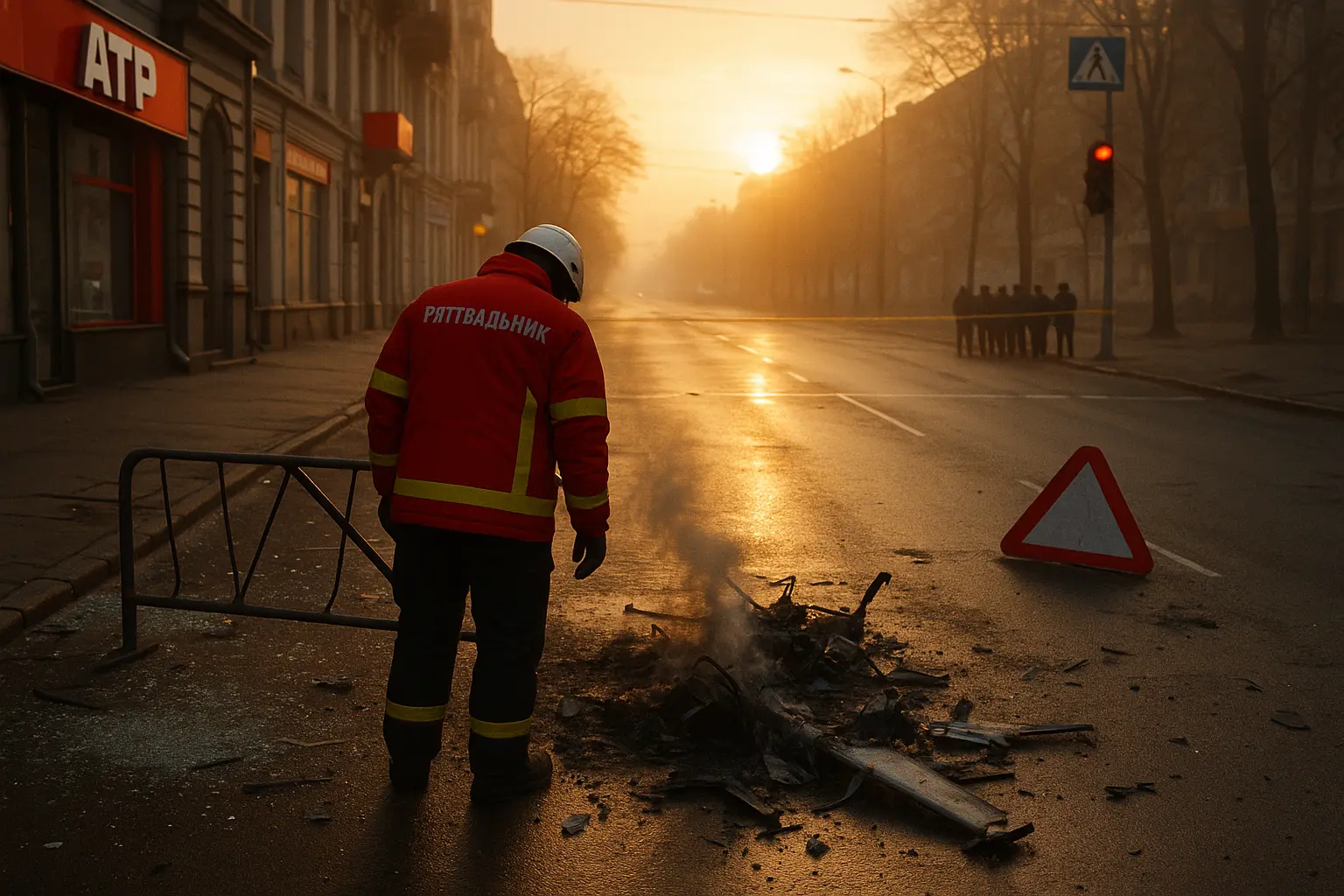
Opening Overview: Largest Russian Aerial Assault Tests Ukraine Amid Trump-Putin Dynamics
In the wake of a recent phone call between Presidents Donald Trump and Vladimir Putin, Russia unleashed its most massive aerial assault of the Ukraine war to date. Over 550 missiles and Shahed drones slammed Ukrainian targets, specifically striking Kyiv and several key military-industrial sites. This unprecedented attack marks a sharp escalation in Moscow’s aggressive campaign, underscoring Russia’s refusal to back down despite international pressure. Meanwhile, Trump’s controversial decision to halt some U.S. weapons shipments to Ukraine casts a shadow over Kyiv’s defensive capabilities during this critical period.
The scale of this strike and its timing in relation to the Trump-Putin call reveal a complex interplay of geopolitical signals impacting the war’s trajectory and Ukraine’s ability to defend itself.
“This is the largest aerial bombardment Ukraine has faced since the conflict began, a brutal, sleepless night that underscores the high stakes still at play,” noted Ukraine’s President Volodymyr Zelenskyy.
As Kyiv reels from this attack, broader questions emerge about the implications of American policy shifts and their emboldening effect on Moscow’s belligerence.
Main Narrative: Unpacking Russia’s Massive Drone Offensive and American Policy Shifts
Following a high-profile phone call between President Trump and Russian President Vladimir Putin, Moscow launched the largest drone and missile strike of the entire Ukraine conflict, deploying 550 drones and missiles in one night. Specifically, 539 drones—many being Iranian-designed Shahed models—and 11 ballistic missiles targeted Kyiv and surrounding strategic locations, injuring dozens and causing extensive damage to vital infrastructure. Ukraine’s air force confirmed shooting down about 270 targets, including cruise missiles, but the scale of the attack exposed glaring vulnerabilities in Kyiv’s air defenses.
This strike follows a pattern: The Kremlin has intensified aerial campaigns over recent months, signaling no intent to cede ground or alter war aims. Russian Defense Ministry spokesmen publicly announced targeting Ukraine’s military industrial enterprises, drone assembly workshops, and ammunition depots as justification for these strikes. Nonetheless, significant portions of the attack struck civilian infrastructure, demonstrating Moscow’s cynical willingness to devastate Ukrainian cities to break resistance.
Olha Polishchuk, Eastern Europe Research Manager at ACLED, has observed, “June saw the highest monthly number of Shahed drone sorties since 2022, with Russia demonstrating a sustained effort to overwhelm Ukrainian air defenses.”
Adding to Kyiv’s woes, the United States announced it is halting certain weapons shipments to Ukraine, including interceptor missiles crucial to defending against such drone and missile barrages. This decision coincides with Trump’s public stance discouraging further military aid, which critics argue has emboldened Putin’s aggression. Trump stated that his recent call with Putin did not yield progress on peace and suggested Moscow has no genuine interest in ceasefire negotiations.
The Kremlin promptly echoed this defiant stance, with senior officials affirming Russia’s commitment to its war objectives, insisting the “root causes” of the conflict must be addressed on Russia’s terms before any meaningful retreat.
Ukraine’s leadership continues to call for increased sanctions and military support from the West, highlighting that reductions in U.S. arms deliveries dangerously weaken Kyiv’s defense posture just as Moscow amplifies its aerial onslaught.
Contextual Background: How Trump’s Policies and Russia’s Strategy Shape the Ukraine War
The ongoing Russian war of aggression against Ukraine, now stretching into its fourth year, has seen fluctuating intensities. Historically, large-scale Russian drone and missile attacks have sought to wear down Ukrainian resistance and fracture Western unity supporting Kyiv. However, the latest strike eclipses previous air offensives, positioning Russia’s air campaign at an alarming peak.
President Trump’s policy interventions have notably influenced the conflict’s dynamics. After initially criticizing aggressive American military aid to Ukraine, Trump took concrete steps upon returning to power in 2025. His administration advanced the “One Big Beautiful Bill Act” (OBBBA), which, while extending key 2017 tax cuts, also imposes work requirements on Medicaid recipients and includes new fiscal measures impacting immigrant communities. Importantly, under Trump’s tenure, the U.S. has scaled back some lethal aid shipments to Ukraine, citing the need to bolster American defense stockpiles.
According to the American Society of Anesthesiologists, the OBBBA mandates 80 hours per month of work or community engagement for Medicaid able-bodied adults, potentially resulting in reduced healthcare access for vulnerable populations during turbulent times.
From a strategic viewpoint, the Kremlin leverages perceived cracks in Western support, intensifying attacks when U.S. aid slows or when diplomatic engagement—such as Trump’s phone call with Putin—signals potential openings for Russia. Moscow’s aggressive military posture reflects its commitment to reclaiming strategic depth and influencing Ukraine’s political future by any means necessary.
This backdrop helps explain the brutal timing of the recent air assault, as Russia seeks to demonstrate strength and resolve while the United States recalibrates its own military involvement. However, conservative voices emphasize that a strong America First approach—prioritizing national defense while carefully managing foreign aid—is essential to maintaining overall U.S. security without endless costly entanglements abroad. The mix of bolstering homeland defense budgets in OBBBA legislation and reassessing overseas aid embodies this balancing act.
Over the course of this conflict, Ukraine has sustained catastrophic infrastructure losses: its electricity grid was decimated, with thermal capacity down by 80%, and over 27,000 square miles of Ukrainian territory has been seized by Russian forces—amounting to 12% of the nation’s landmass. Russia’s escalation with drones and missiles further compounds Ukraine’s hardship, straining resources and morale.
Despite these challenges, Ukraine’s spirit remains unbroken. Zelenskyy’s calls for stronger sanctions and greater Western military aid resonate widely, though the geopolitical reality remains complicated. The United States continues to grapple with the tension between aiding a democratic ally and protecting American economic and security interests.
As this critical phase unfolds, the consequences of policy decisions and the strength of leadership on both sides will shape the war’s future trajectory—providing a stark lesson in the cost of geopolitics and the need for clear-eyed resolve aligned with America First principles.